

By Friday, Nov. 6, voters had passed 44 measures restricting data centers, with two more leading and only one measure producing a victory for supporters of construction. The broad result gives communities a strong local signal as they weigh new projects tied to artificial intelligence and growing demand for computing space. These election results matter to residents, local officials, and developers, but the votes do not create one rule for every town. A moratorium is a temporary pause on specified approvals or development. Returns were still being counted in two communities, so those outcomes could change. The results offer a clear view of voter sentiment, while each community’s legal and practical choices remain local. Treat these returns as a strong local signal, not as a single nationwide rule.
Key Takeaways
- By Nov. 6, 44 local measures restricting development had passed.
- Two more restrictive measures held significant leads in ongoing counts.
- One reported measure produced a win for construction supporters.
- Local results do not establish one nationwide policy.
- Each community’s outcome depends on its own vote and rules.
AI Data Center Ballot Measures November 2026: The National Results
The ballot brought 41 local data center measures to voters in 10 states, with more than twice as many proposals aimed at limiting development as facilitating it. More than twice as many proposals sought limits, but each question applied only to its own locality. The ballot count describes scheduled measures, not a national referendum.
Twenty-eight proposals would have limited development if approved, while 13 would have made development easier. Those numbers describe proposed local measures, not one uniform policy for the country. Voters decided each question separately, and a proposal’s outcome determined its local effect.
| Measure group | Count | What the count represents |
|---|---|---|
| All measures | 41 | Local measures scheduled across 10 states |
| Restrictive | 28 | Would limit development if approved |
| Facilitative | 13 | Would make development easier if approved |
A local ballot question is not a national referendum, and its language does not set policy beyond its jurisdiction.
The scheduled measures covered communities with different land-use rules, infrastructure needs, and approaches to economic development. Their questions could not be treated as interchangeable, even when they shared a broad goal.
For voters, the central distinction was whether a proposed change would make local development harder or easier. The final outcome also depended on the precise language approved at the polls.
The 28-to-13 split describes the proposals on the ballot, while the final vote on each measure determined its local effect.
What Restrictions Did Voters Consider?
The proposed limits ranged from outright prohibitions to temporary pauses and added conditions before a project could proceed. Their reach depended on definitions and thresholds in each ballot measure, not just on its general label. The proposals addressed data center development in different ways.
Of the 28 measures that would limit development, 17 proposed bans. Twelve would apply above a specified size threshold, while five would cover all data centers. Those distinctions could determine whether a smaller facility or a particular project fell within a ban.
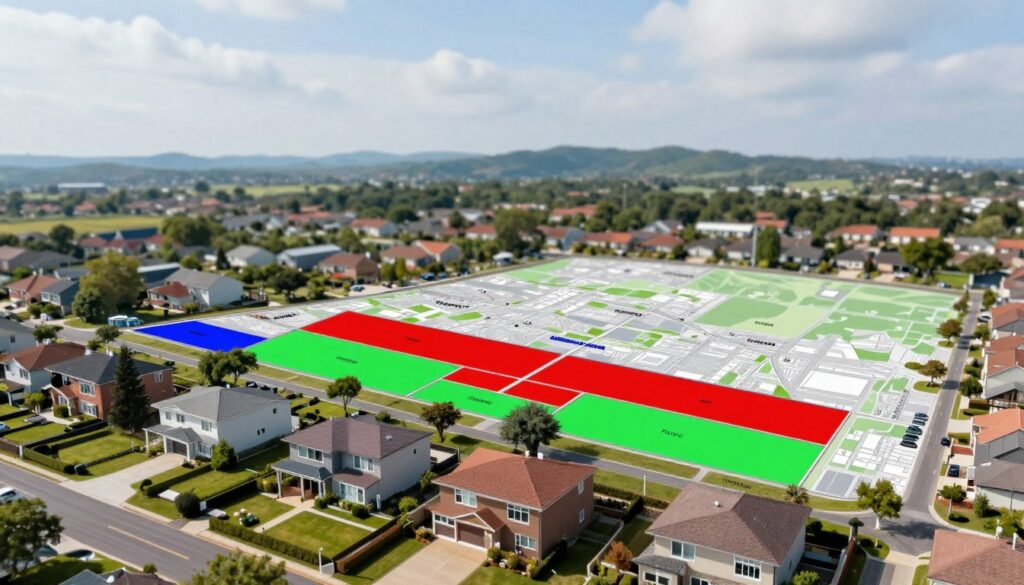
Bans and temporary pauses
Three measures proposed six-month moratoriums. A moratorium temporarily pauses the approvals or development specified in its terms. It does not automatically stop every project or cancel work already approved; the wording sets the boundary.
Size-based bans may turn on a project’s land area, power use, or another threshold stated in the measure. A ban covering all data centers uses a broader definition, though its terms still control which facilities count.
Reviews, zoning, and community safeguards
A North Dakota measure would require independent professional review and a public hearing for projects exceeding specified land-area, power-use, or water-use thresholds, or requiring a major air-quality permit. Ohio proposals included zoning rules for unincorporated areas and financial guarantees from developers receiving tax incentives.
These approaches can add review, shape where construction is allowed, or require a financial commitment. Each measure’s wording controls its reach, including how it treats new buildings and related work.
- Defined project and expansion
- Applicable thresholds
- Approvals covered
- Effective date and treatment of existing permits
Read the actual measure language before assuming a ban or pause covers every project in a community.
Which Measures Could Enable or Endorse Projects?
Some voters also considered measures that would support projects or signal approval, rather than impose a new restriction. Not every ballot question changed land-use rules; some asked voters to express an opinion. The distinction matters when interpreting what a vote can do.
Seven nonbinding measures in Illinois, New Jersey, and Ohio would express voter approval of data center projects, while two Illinois measures would express disapproval. A nonbinding advisory measure communicates public opinion but does not itself create a legally enforceable land-use rule.

| Measure type | Count | What it would do |
|---|---|---|
| Nonbinding approval | 7 | Express voter approval of projects |
| Nonbinding disapproval | 2 | Express voter disapproval |
| Other facilitative actions | No count reported | Add a land-use designation or uphold a town agreement |
Other proposals had a direct land-use or agreement-related effect. A Nevada measure would add data centers as an approved use for a particular area of land. An Ohio measure would uphold a town agreement with a specific data center company.
An advisory vote can still convey a clear public preference to officials and project teams. Its meaning differs from a measure that changes a local rule or confirms a specific agreement.
Check whether a ballot question changes a rule or records an advisory preference before interpreting its result.
Why Did Data Centers Become a Local Election Issue?
The debate is not only about where servers are built; it is also about who pays for the power, water, and infrastructure they need. Resource demands can bring national energy trends into a neighborhood’s election. Residents may weigh those demands against jobs, tax revenue, and local investment.
The U.S. Department of Energy estimated that data centers used 4.7% of U.S. electricity in 2024. Its reference case projects they could account for 11.8% by 2030. That potential increase puts power demand and household utility costs at the center of local concerns.
Electricity and other local resources
Energy use is only one part of the discussion. A data center may also raise questions about water use, noise, emissions, and land conversion. The impact on nearby residents depends on the site and the project’s design.
The Department of Energy’s earlier report on data center energy use put U.S. consumption at 176 terawatt-hours in 2023, or about 4.4% of total electricity use. It projected 325-580 terawatt-hours by 2028.
Community costs and promised benefits
Developers may point to construction spending, jobs, tax revenue, and infrastructure investment. Residents may ask how much public support a project receives, whether tax concessions reduce expected revenue, and how many permanent jobs remain after construction ends.
Those questions do not have one answer for every site. Project economics and local impacts vary, and a community’s assessment depends on the terms and likely effects of the specific proposal.
A November 2026 CNBC Voter Poll found that 56% of voters considered data centers a crucial or major factor in their election decision. That figure shows the issue reached beyond the immediate host communities.
A useful community discussion asks developers to explain both the project’s resource demands and who will bear its costs.
How Could the Results Affect New Projects?
The results add local approval risk for affected projects, but they do not automatically stop data center construction across the country. Projects within a measure’s scope may face delays, extra review, or a direct barrier. The outcome does not amount to a nationwide prohibition.
A new restriction does not automatically apply to every established facility. A project’s exposure depends on its location, the measure’s scope, and the approvals it still needs. Existing permits and pending applications may receive different treatment under local rules.
Local approvals and project exposure
Developers may need to reassess a site if a local measure changes the rules that govern it. A delay can affect project plans even when it does not permanently block construction. The practical effect turns on which approvals remain outstanding.
The vote alone cannot answer how officials will apply a new local rule to a particular application. Projects in other jurisdictions are not automatically covered by a community’s measure.
Public sentiment and state incentives
Local opposition sits alongside state efforts to attract investment. As of April 2026, 38 states had created tax incentives to encourage data center construction. Those incentives show that local and state policies can point in different directions.
A 2026 UMass Amherst poll found that 11% of Americans would support building an AI data center in their community. Public sentiment can shape the political climate for proposals, while state incentives can affect where developers consider building.
A project’s exposure turns on the location, the measure’s scope, and the approvals it still needs.
What Should Communities and Developers Watch Next?
Voters had already favored greater limits in all six data center-related measures decided earlier in 2026. November continued that pattern, though not every community voted against development. As of Nov. 5, Harwood, North Dakota, was the only reported exception.
Harwood voters rejected an added review requirement for industrial projects that included data centers. That result is a reminder that local votes can differ even amid a broader pattern of opposition. Certified returns and the final text provide the clearest record of what each community decided.
The Harwood vote shows why a national pattern cannot predict every community’s result.
After Election Day, residents and developers can focus on a few practical records and decisions:
- Check the certified returns.
- Read the final measure text and its effective-date clause.
- Confirm how local officials interpret its effect on pending approvals.
- Track related state or local policy changes.
These checks help distinguish a reported election result from a rule in effect for a particular project. Local officials may need to apply the approved language to existing applications and future proposals.
For a specific project, start with the certified local result and the final language voters approved.
Conclusion
Local votes have made community consent and project accountability harder for developers to treat as afterthoughts. The results leave each community’s rules and decisions at the center of future proposals.
Residents who want to understand a local proposal can read the certified measure and contact local officials with questions about its scope and implementation. That step can clarify what voters approved and how the change applies in practice.
Read the certified measure for your area to see exactly what voters approved.