
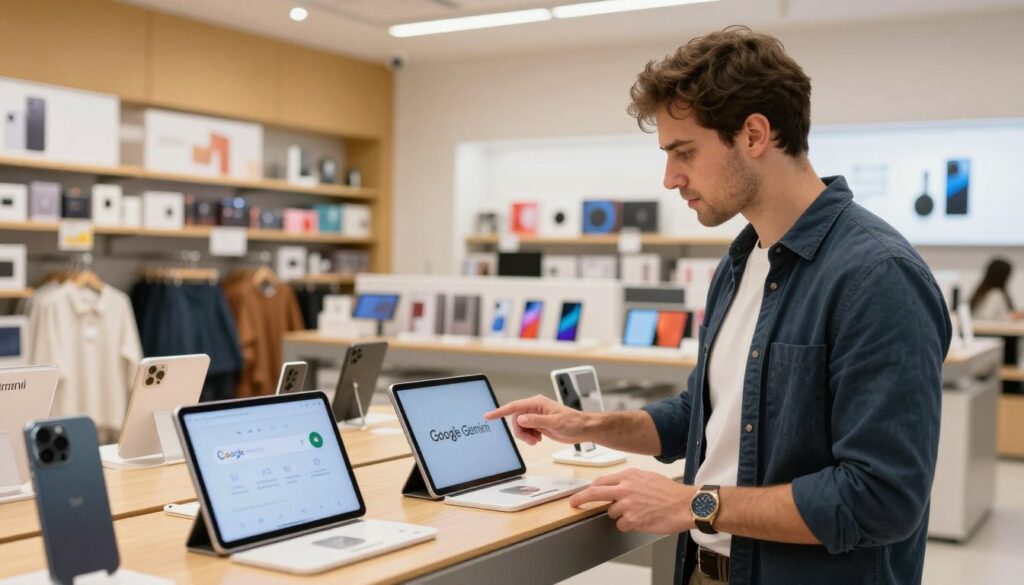
Google began rolling out direct checkout for Canadian shoppers on November 4, bringing purchases from selected retailers into Gemini and AI Mode in Google Search. The new path lets shoppers move from product discovery toward buying without leaving the AI experience.
Agentic commerce means commerce in which AI helps a person move from finding a product toward actions such as buying, while the shopper keeps permission over the purchase. The rollout includes lululemon, Shoppers Drug Mart, Simons and select Shopify merchants. For shoppers, the change may shorten the route from a recommendation to an order. For retailers, it puts another place to discover products and complete a transaction in the mix.
Key Takeaways
- Direct checkout began rolling out in Canada on November 4, 2026.
- Shoppers can encounter it in Gemini and AI Mode in Google Search.
- The initial Canadian partners include lululemon, Shoppers Drug Mart, Simons and select Shopify merchants.
- Only eligible products from participating retailers can be bought through the feature.
- Retailers remain responsible for the sale and the customer’s order.
- Canada’s launch is distinct from U.S.-specific Shopify eligibility rules.
For now, the purchase path is limited to eligible products and participating retailers.
Google Gemini Direct Checkout Canada 2026: What the Canadian Launch Includes
Canadian shoppers can now buy eligible products from four initial partner groups without leaving AI Mode or the Gemini app. The launch adds a purchase option to product recommendations, so discovery and checkout can happen in the same Google experience.
This is not a universal buy button for every product listing or retailer in Google Search. The option appears only for eligible products offered by participating merchants, and availability may differ across products from the same store.
Direct checkout applies to eligible products from participating retailers, not every listing a shopper sees in Google.
Where the checkout appears
The two launch surfaces are AI Mode in Google Search and the Gemini app. A shopper may see product information, compare options and then complete an eligible purchase within the same Google interface.
The Canadian launch partners are lululemon, Shoppers Drug Mart, La Maison Simons and select Shopify merchants. Simons is also known as Simons, and the launch announcement names the retailer as La Maison Simons.
What the launch does and does not cover
Retailer participation does not mean every item in a merchant’s catalog is available for direct checkout. A product can appear in an AI shopping result but lack the checkout option if it does not meet the applicable requirements.
The new route keeps the shopper in Google for the purchase step, while the merchant’s product and order remain tied to that retailer. It is a change to how shoppers may complete some orders, not a switch to buying from Google as a store.
Retailers can take part through different integration paths, and the shopper-facing experience can depend on the merchant’s setup. That distinction matters when comparing one product listing with another.
Treat the named partners as the initial rollout, not as a complete list of every Canadian store that may join later.
How UCP Connects AI Shopping to Checkout
UCP gives AI shopping experiences a shared way to connect product discovery with a retailer-supported transaction. The Universal Commerce Protocol, or UCP, is an open standard designed to support discovery, purchase and post-purchase help.
Agentic commerce needs a shared language between AI agents, businesses, consumer surfaces and payment providers. UCP is intended to provide that connection, rather than require a separate technical link for every agent and retailer.
One standard across agents, retailers and payments
Google launched UCP on January 11, 2026. It is compatible with Agent2Agent (A2A), Agent Payments Protocol (AP2) and Model Context Protocol (MCP), which connect different tools and systems.
UCP is a protocol, not a store or payment service. It describes how participating systems can exchange commerce information and support a transaction. Retailers still choose how to connect their own business systems.
The Google UCP guide describes native checkout in AI Mode and Gemini, along with an optional embedded path for approved merchants. Those paths shape the interface, not the underlying purpose of the protocol.
Native and embedded checkout paths
| Checkout path | Google surface | Best-fit condition | Branding or flow |
|---|---|---|---|
| Native checkout | AI Mode and Gemini | Standard integrated purchase flow | Google AI surface |
| Embedded checkout | Approved merchant integration | Bespoke branding or complex checkout | Merchant-specific presentation |
| Merchant website completion | Retailer’s website after leaving the AI surface | Shopper chooses or is routed to finish there | Retailer website |
The native path offers a standard integrated purchase flow in Google’s AI surfaces. An approved merchant may use embedded checkout when its brand presentation or transaction flow needs more customization.
Some shoppers can also finish on a retailer’s website after leaving the AI experience. That route keeps the merchant’s own interface in the purchase process.
The protocol connects systems, while the merchant’s integration determines how the checkout is presented.
What Shoppers Need to Complete a Gemini Purchase
A shopper needs an eligible personal Google Account, an address and a valid saved payment method before a Gemini purchase can be completed. Sign-in is required, but work, school and supervised accounts do not qualify.
Gemini shopping is for users aged 18 or older who have Keep Activity turned on. A listing must also offer a Buy button in the Gemini web app for the direct checkout path to be available.
Google Account and activity settings
Use a personal Google Account with Keep Activity on. A work or school account is not eligible, and a supervised account cannot use Gemini shopping checkout.
Keep Activity is an account setting that affects access to this shopping feature. Meeting the account rules does not guarantee that every product listing will have a Buy button.
The Buy button and saved checkout details
For a Gemini purchase, follow these steps:
- Sign in to an eligible personal Google Account.
- Turn on Keep Activity in the account settings.
- Find an eligible listing with a Buy button in the Gemini web app.
- Check the shipping address and payment method saved to the account.
- Review the details filled in on the purchase screen before confirming.
Google Pay can prefill the payment method and shipping address saved with Google Wallet. A valid payment method and saved address are required to complete the transaction.
The purchase screen gives the shopper a chance to inspect the filled-in information before placing an order. Take a moment to check the destination address and selected payment method, especially when saved details may be out of date.
Check the prefills on the purchase screen before submitting the order.
Which Products May Not Be Eligible
A product can appear in a shopping conversation yet remain ineligible for checkout if its sale or delivery requires a special step. Product eligibility depends on the item and merchant, so not every catalog follows the same rules.
Gemini checkout excludes products that require identity verification, including alcohol and tobacco. Certain digital products are also excluded when they need customization or special delivery.
Items that need identity checks
Some goods require a seller to check a customer’s identity before completing a sale. Alcohol and tobacco are examples of products that need this kind of verification, so they cannot use the described Gemini checkout path.
This is a product-level restriction, not a statement about whether a shopper can access Gemini shopping. Account eligibility and item eligibility are separate questions.
Digital products with special requirements
Use this checklist for the main excluded product types:
- Products requiring identity verification, including alcohol or tobacco.
- Digital products that need customization.
- Digital products that require special delivery.
A digital item may seem simple to deliver, but customization or a special delivery step can make the standard checkout flow unsuitable. Merchant catalog rules may also differ by item, even within one retailer’s product range.
Seeing a product in an AI shopping result does not mean the Buy button will appear. The shopping experience can still help someone discover an item even when the transaction must happen another way.
If the listing has no Buy button, use the retailer’s own product page to check its available purchase route.
How Google Pay, Wallet and Other Payment Options Fit
The described checkout uses Google Pay to draw on payment and shipping details saved in Google Wallet. The current flow uses those saved details to fill in the purchase screen for an eligible transaction.
PayPal, Affirm and Klarna were announced as additions, not universal Canadian options. Their announcements should not be read as confirmation that every Canadian shopper can select them in direct checkout.
Saved payment and shipping details
Google Pay is the payment method in the described UCP flow. Google Wallet holds the saved payment method and shipping information that Google Pay can use during checkout.
UCP also supports tokenized payments and payment handlers. In plain terms, a token can stand in for payment details during a transaction, while a payment handler lets a merchant use an existing payment integration.
PayPal and buy-now-pay-later plans
| Payment route | What it uses | Announced status or role | Canadian availability claim |
|---|---|---|---|
| Google Pay | Saved Google Wallet payment and shipping details | Checkout method | Used in the described UCP flow |
| PayPal | PayPal account or payment option | Announced as a forthcoming option | Not claimed as universally available |
| Affirm or Klarna | Buy-now-pay-later option embedded in Google Pay | Announced in May 2026 | Not claimed as universally available |
Google announced PayPal as a forthcoming UCP checkout option in January 2026. In May 2026, Google said Affirm and Klarna options would be embedded in Google Pay.
Tokenization and existing payment handlers describe how the system can support different payment setups. They do not promise a particular security outcome or mean every provider is active in every market.
Shoppers should confirm the payment choices shown in their own checkout rather than assume every announced option is live for them.
Who Sells the Product When Checkout Happens on Google
The retailer, not Google, remains the seller of record when a shopper completes a UCP checkout. The AI surface changes where the transaction is completed, but it does not change who sells the goods.
The retailer keeps the commercial relationship and order operations. That distinction matters when a customer needs help with an order, and when a merchant configures its own checkout experience.
The retailer’s role in the sale
The seller of record is the business legally selling the goods. Under UCP, that remains the retailer, even when the shopper completes checkout in a Google experience.
The retailer manages the sale and its order operations. Google’s interface provides a route to complete the transaction, not a replacement for the merchant’s role in selling its products.
How merchants can tailor the integration
Retailers can customize their checkout integration. Native checkout is the standard path in AI Mode and Gemini, while an optional embedded path can suit approved merchants with bespoke branding or complex checkout flows.
An embedded checkout may be useful when a merchant needs a different presentation or a more involved transaction flow. The native path offers a more standard experience in Google’s AI surfaces.
For customers, the retailer’s identity still matters after the checkout screen. The merchant’s policies and order systems remain central to what happens when the transaction is complete.
Retailers should map each checkout route to the systems that already manage their customer orders.
Which Retailers and Markets Are in the Rollout
The Canadian launch is concentrated in four partner groups, while Google’s earlier expansion announcement named additional retailers and markets. The timing matters: a brand named in an expansion plan is not automatically part of the Canadian launch.
Canada’s November 4 launch includes lululemon, Shoppers Drug Mart, Simons and select Shopify merchants. Google’s May 2026 announcements described other retailers and future market plans separately.
Canadian launch partners and announced additions
The Canadian group is the one shoppers should use to understand the opening rollout. Select Shopify merchants are included, rather than every store that uses Shopify.
In May 2026, Google named Nike, Sephora, Target, Ulta Beauty, Walmart and Wayfair among retailers for upcoming checkout features. The announcement also named Shopify merchants Fenty and Steve Madden.
The wider rollout timeline
| Market or group | Named participants | Timing or status |
|---|---|---|
| Canada launch | lululemon, Shoppers Drug Mart, Simons, select Shopify merchants | Launched November 4, 2026 |
| May 2026 retailer announcements | Nike, Sephora, Target, Ulta Beauty, Walmart, Wayfair, Fenty and Steve Madden | Features described as coming soon |
| International plan announced May 2026 | Canada and Australia, then U.K. | Canada launched November 4; Australia in coming months; U.K. later |
In May 2026, Google said Canada and Australia would roll out in the coming months, with the U.K. later. Canada has since launched, while the other timing remains part of that announced expansion plan.
The later retailer names do not mean those brands joined the Canadian launch on November 4. Market plans and brand participation can have different timelines.
Check the retailer and product shown in the live experience rather than infer access from a company’s name alone.
What Shoppers Can Do in the Universal Cart
A shopper can finish through Google Pay in the Universal Cart or move items to the retailer’s website to complete the purchase. The two paths offer a choice of interface, though the Canadian launch has an important item limit.
The initial Canadian experience supports one item at a time. That limit can interrupt a planned multi-product order, including a basket assembled to meet a free-shipping threshold.
Pay inside Google or continue on the merchant site
Google said in May 2026 that shoppers could use Google Pay from the Universal Cart or transfer items to a merchant’s website to complete a purchase. The first route keeps checkout in Google; the second hands the shopper back to the retailer’s site.
For a single eligible item, the in-Google route may be a direct way to finish. A shopper who wants several products may prefer the merchant website, where a broader basket can be assembled.
The single-item launch constraint
UCP’s roadmap includes multi-item carts, loyalty-account linking, post-purchase tracking and returns. These are roadmap capabilities, not features with a fixed Canadian launch date.
| Route | Where the shopper pays | What it means for the order |
|---|---|---|
| Universal Cart with Google Pay | Google experience | Initial Canadian launch supports one item at a time |
| Transfer to merchant website | Retailer website | Shopper completes the purchase on the merchant’s site |
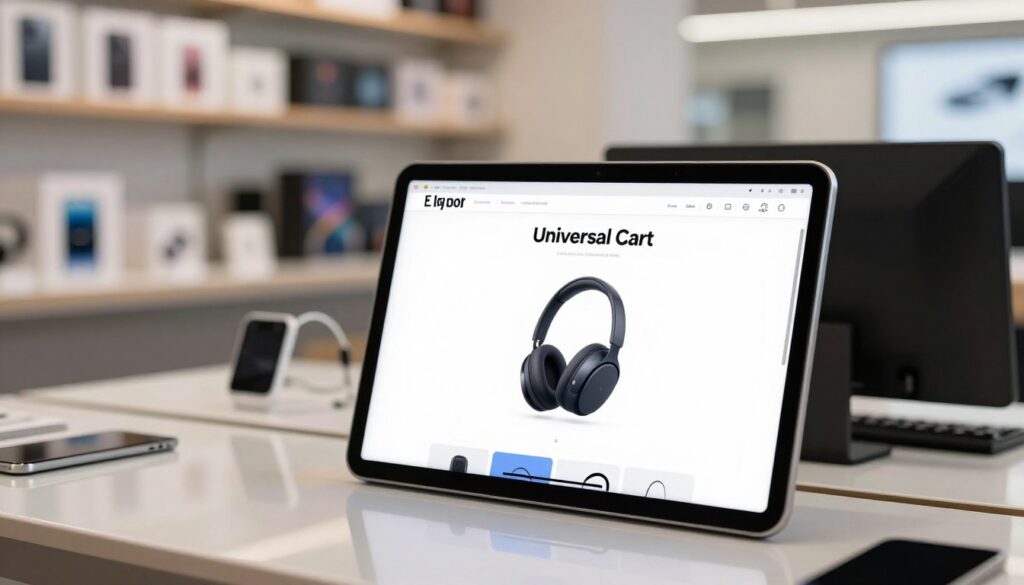
A multi-item cart, loyalty account links and tracking or returns would add capabilities beyond the initial experience. Their place on the roadmap does not set a date for when Canadian shoppers will get them.
For a multi-product order, check whether the merchant’s own site is the more practical route.
What Canadian Shoppers Should Weigh Before Trying It
Direct checkout is most useful when a shopper finds an eligible item from a participating retailer and wants to finish without changing apps. It can reduce interface changes, but access and product limits still shape the experience.
Interest in AI shopping is not evidence that every respondent has used direct checkout. Two Canadian surveys show interest in AI-assisted shopping, not adoption of this particular purchase path.
Convenience and fewer steps
A Mastercard survey found 41% of Canadians were open to AI shopping online. More than half of those respondents would consider letting agents make purchases.
An October 2026 Google-Angus Reid survey found 59% of Canadian respondents planned to use AI to find holiday gifts. That figure measures stated plans, not completed purchases through Gemini or AI Mode.
Limits that affect the purchase
Here are the main trade-offs to weigh:
- Fewer interface changes when an eligible purchase stays in Google.
- Limited access because only participating retailers and eligible products qualify.
- Saved account details and an eligible Google Account are required for Gemini shopping.
- The initial Canadian experience supports only one item at a time.
For a shopper buying one straightforward item, avoiding a switch to another app may make the feature convenient. A product that needs special handling or belongs to a larger basket can make the retailer’s site more useful.
Before confirming, compare the in-app option with the retailer site if the order needs several items or special handling.
What the Shift Means for Retailer Discovery and Customer Access
A product can shape an AI-assisted shopping decision even when the shopper does not begin with the retailer’s website. That creates a new point of discovery where a product may lead directly to a transaction.
Retailers need to be findable in AI experiences while keeping their own product pages useful. Those pages still support product detail, brand trust and browsing across a full catalog.
AI visibility alongside traditional search
Generative engine optimization is work to make products understandable and discoverable in AI-generated results. It sits alongside traditional search work rather than making a retailer’s website obsolete.
Google Canada’s retail director said search’s year-over-year growth rate was at its highest level in five years. The Canadian rollout announcement named participation from lululemon, Simons and Shoppers Drug Mart.
The customer relationship after discovery
An AI surface may introduce a product and provide a purchase path without a conventional website visit. That can help a retailer reach shoppers in a new interface, but fewer direct visits may reduce opportunities to build a relationship on the retailer’s own site.
Product pages remain useful for dimensions, materials, care details and a brand’s wider range. They can answer questions that a short result or checkout panel may not address.
Retailers should track whether AI visibility is helping customers reach a useful product and a satisfactory purchase path.
How Retailers Can Prepare Product Data and Operations
Retailers should start by making each product listing accurate enough to match what shoppers ask for and what the business can actually sell. Complete product information can reduce avoidable mismatches, but it does not guarantee AI visibility or checkout access.
Accurate listings and tested order workflows are practical readiness steps. They help connect a product shown in an AI experience with the item, price and fulfillment the merchant can support.
Keep product listings transaction-ready
Google announced new Merchant Center attributes for conversational commerce in January 2026. Planned attributes include answers to common product questions, compatible accessories and substitutes.
Retailers can use this five-part checklist:
- Audit product titles and attributes for clear, accurate descriptions.
- Keep price and availability current.
- Validate size, color and SKU variants.
- Review Merchant Center account health and policy compliance.
- Test tax, fulfillment, return and refund workflows.
Check checkout and fulfillment workflows
A listing may describe a product well but still create trouble if its size or color does not match available inventory. Variant checks can catch those mismatches before they reach a shopper.
Merchant Center account health and policy compliance also matter to a retailer’s shopping presence. Product data helps systems understand what is offered, but it cannot ensure placement or access to direct checkout.
Simplified UCP integration in Merchant Center is planned for 2027. That future integration is intended to make it easier for retailers to enable direct checkout and other listing capabilities.
Test the item data against the merchant’s live price, inventory and fulfillment rules before enabling a new purchase path.
What Shopify Merchants Should Check Before Enabling Direct Checkout
Shopify merchants should treat the platform’s U.S. direct-checkout rules as a separate program from Google’s Canadian partner announcement. U.S.-specific conditions do not establish eligibility requirements for Canadian stores.
The September 2026 Shopify rollout described here applies to eligible U.S. stores selling to U.S. customers. A Shopify store alone does not place a merchant in Canada’s select launch group.
U.S. Shopify eligibility and unsupported cases
Shopify said eligible U.S. stores with a valid Google Merchant Center account could use direct checkout beginning in September 2026. Eligible stores had direct checkout on by default while the rollout continued.
Unsupported U.S. cases include subscriptions, bundles, customizable products, B2B-only products, local delivery, store pickup, pickup points and checkout requiring customer sign-in.
Direct checkout versus sending shoppers to the store
| Shopify case | Eligibility or capability | Checkout outcome | Scope |
|---|---|---|---|
| Eligible U.S. store | U.S.-based, sells to U.S. customers, valid Merchant Center account | Direct checkout available | U.S. rollout |
| Opted-out eligible store | Remains discoverable in AI Mode and Gemini | Shopper pays on store website | U.S. rollout |
| Unsupported checkout setup | Examples include subscriptions, bundles, pickup or required customer sign-in | Use store website checkout | U.S. rollout |

Shopify supports Shopify Functions, automatic discounts and discount codes in the described U.S. program. Shopify charges no fee beyond standard payment processing.
An eligible U.S. store that opts out remains discoverable in AI Mode and Gemini, but shoppers pay on the store’s website. That choice preserves discovery without using direct checkout.
Confirm the store’s own market, catalog and checkout setup before assuming it qualifies.
Who Handles Order Updates, Cancellations and Returns
For a Gemini purchase, the merchant sends the order confirmation and handles questions about the item or order. A Google checkout interface does not replace the retailer’s policies or customer support channels.
Contact the merchant about cancellations, returns and item-specific issues. The merchant remains responsible for helping customers with the order after the transaction.
Order confirmation and merchant support
Order confirmations and post-purchase follow-ups come directly from the merchant. The retailer can identify the order and apply its own policies when a customer needs help.
A shopper who needs to cancel, return an item or report a product issue should contact the retailer. Google’s purchase interface does not take the place of the merchant’s order support.
Post-purchase capabilities on the roadmap
UCP is designed to cover post-purchase support as well as discovery and purchase. Its roadmap includes tracking and returns, but that broader scope does not mean every planned feature is already available in Canada.
There is a difference between what the protocol is designed to support and what shoppers can use today. Order messages and support remain merchant-led in the described Gemini purchase flow.
Keep the retailer’s order confirmation so the correct merchant can locate the purchase if a problem arises.
How Retailers Should Measure AI Checkout Activity
A lower count of website visits would not, by itself, show whether AI-driven product discovery is succeeding or failing. UCP can connect discovery and checkout across AI Mode and Gemini, so some activity may not resemble a conventional website visit.
Retailers should separate discovery signals from completed orders wherever reporting permits. A session count alone cannot show whether shoppers found products through an AI surface or completed a transaction there.
Separate discovery from completed orders
Track product impressions, AI-surface referrals, checkout activity and completed orders as distinct measures when the available reporting allows. Each describes a different point between a product appearing and a sale being completed.
Teams should confirm how UCP orders appear in their own reporting before comparing them directly with website sessions or standard Shopping conversions. Different reporting paths may not count the same customer action.
Avoid reading traffic changes in isolation
A website visit can fall while product discovery continues elsewhere, or visits can rise without a matching increase in completed orders. Session totals alone cannot resolve that difference.
Google’s planned 2027 Merchant Center integration is intended to let retailers enable direct checkout and other listing capabilities. Retail teams should treat that as a planned development, not assume it defines current reporting.
Changes in traffic deserve context from product views, checkout activity and order records. A decline in one measure can tell a different story from a rise in another.
Reconcile checkout activity with completed merchant orders before changing acquisition targets.
How the U.S. Rollout Helps Put Canada in Context
The Canadian launch followed an earlier U.S. rollout that began with Etsy and Wayfair. Google was working on integrations with Shopify, Target and Walmart as the U.S. program expanded.
U.S. availability and sign-in details should not be treated as Canadian rules. Markets can have different partners, tests and access conditions.
Earlier U.S. checkout partners
UCP checkout was live in the United States with Etsy and Wayfair. Google was working on integrations with Shopify, Target and Walmart, which were planned additions rather than a list of Canadian launch partners.
During early U.S. testing of Wayfair free listings, shoppers had to sign in to a Google Account to see the Buy button. That was a U.S. test detail, not a universal rule for Canadian shoppers.
Account access and continued expansion
In May 2026, Google described Canada and Australia as markets expected to roll out in the coming months, with the U.K. to follow later. Canada’s November launch followed that announcement.
The same product experience can vary by market as retailers and integrations join at different times. A U.S. listing or test condition does not establish what a Canadian shopper will see.
U.S. rollout details are market-specific. Do not assume that a U.S. retailer, test or account rule applies in Canada.
Retailers should verify the conditions of the market where they sell rather than carry over another country’s test rules.
Conclusion
Canada’s UCP rollout makes AI shopping more transactional, but the purchase still depends on a participating retailer and an eligible product. AI Mode and Gemini can now serve as purchase paths for eligible goods, while the merchant remains responsible for the sale and customer support.
For shoppers, the useful next step is to check product eligibility and order details before confirming. A convenient interface still needs to match the item, delivery and payment details the shopper intends to use.
Retailers can start with accurate product information and tested checkout operations, then confirm their own integration access. That work connects what an AI experience displays with what a merchant can fulfill.
Shoppers can test the option on an eligible listing, while retailers can start by checking catalog accuracy and order handling.