
Business leaders face mounting pressure to innovate and compete in an increasingly digital marketplace. Artificial intelligence has emerged as a transformative force that reshapes how companies operate, serve customers, and drive revenue growth. Yet many organizations struggle to move beyond the hype and implement practical AI solutions that deliver measurable results.
This comprehensive guide walks you through proven strategies for leveraging AI to accelerate business growth. You’ll discover specific tools, techniques, and best practices that organizations of all sizes can implement immediately. Whether you’re just beginning your AI journey or looking to expand existing initiatives, these insights will help you harness the power of artificial intelligence to gain competitive advantage.
Start Your AI Journey Today
Get weekly practical AI implementation tips, tool recommendations, and growth strategies delivered straight to your inbox.
Understanding AI’s Impact on Modern Business Operations
Artificial intelligence transforms business operations by automating repetitive tasks, analyzing vast amounts of data, and providing insights that humans might miss. Companies that successfully integrate AI into their workflows report significant improvements in productivity, customer satisfaction, and profitability.
The technology processes information at speeds impossible for human teams. It identifies patterns in customer behavior, predicts market trends, and optimizes operations in real-time. This capability allows organizations to make data-driven decisions faster and more accurately than ever before.
Core AI Capabilities for Business
Modern artificial intelligence systems offer several fundamental capabilities that drive business value. These technologies work together to create comprehensive solutions that address complex organizational challenges.
- Natural language processing enables computers to understand and generate human communication
- Machine learning algorithms improve automatically through experience and data exposure
- Computer vision allows systems to interpret and analyze visual information from the world
- Predictive analytics forecasts future outcomes based on historical data patterns
- Automation tools execute repetitive tasks without human intervention
Measurable Business Benefits
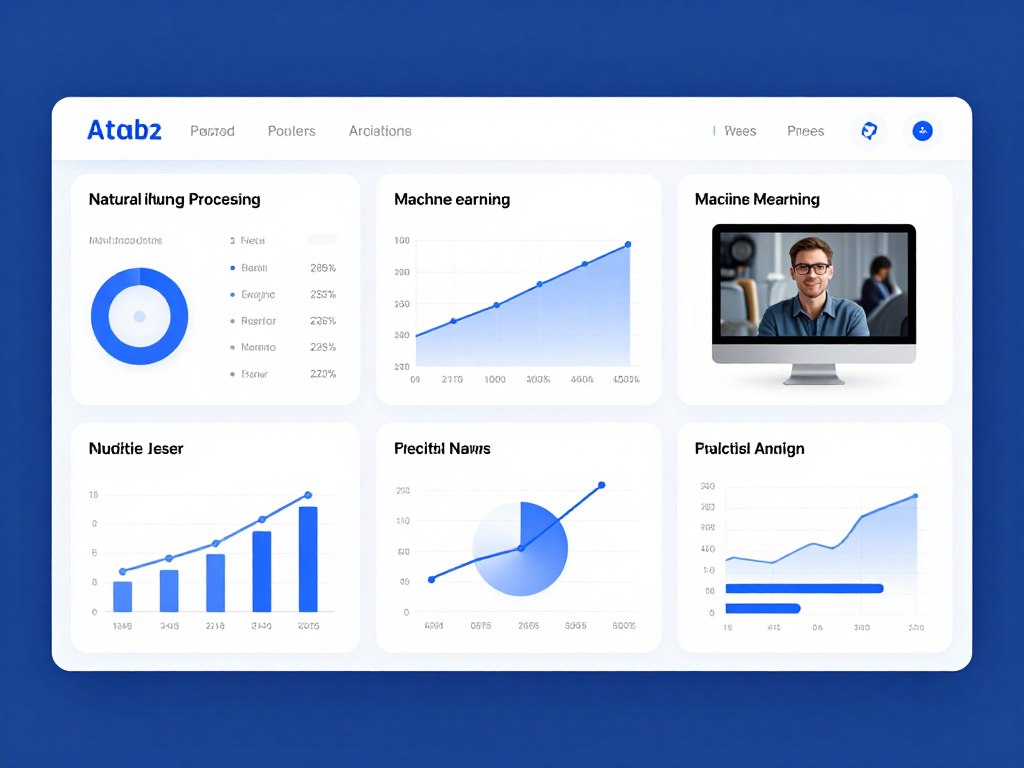
Organizations implementing AI solutions track specific metrics to measure return on investment. These quantifiable benefits demonstrate the tangible value that artificial intelligence brings to business operations across different departments and functions.
| Business Area | AI Application | Average Impact | Time to Value |
| Customer Service | Chatbots and virtual assistants | 40-60% reduction in support costs | 2-4 months |
| Sales | Lead scoring and prediction | 30-50% increase in conversion | 3-6 months |
| Marketing | Content personalization | 25-45% engagement improvement | 1-3 months |
| Operations | Process automation | 35-55% efficiency gain | 4-8 months |
| Finance | Fraud detection | 50-70% fewer incidents | 3-5 months |
These metrics represent averages across industries. Individual results vary based on implementation quality, data availability, and organizational readiness. Companies that invest time in proper planning and execution typically see better outcomes than those rushing deployment.
Getting Started with AI Implementation
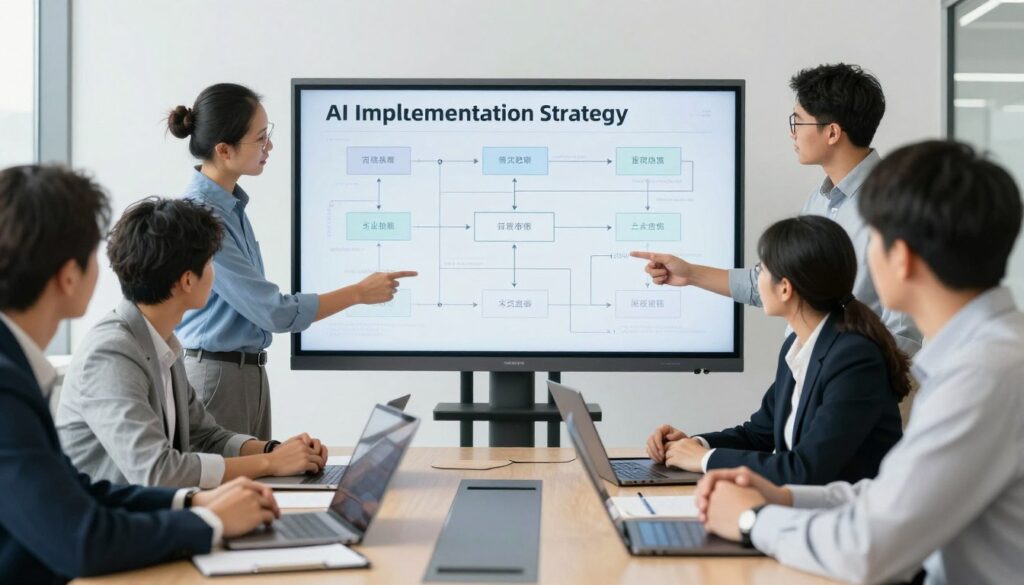
Beginning your AI journey requires careful planning and realistic expectations. Many businesses fail because they attempt overly ambitious projects before building foundational capabilities. Success comes from starting small, learning from results, and scaling gradually.
The first step involves assessing your current business processes and identifying areas where AI can deliver immediate value. Look for repetitive tasks, data-heavy workflows, and customer-facing operations that consume significant time and resources. These represent prime opportunities for AI enhancement.
Essential Preparation Steps
Before implementing any AI solution, organizations must establish the groundwork for success. This preparation phase determines whether your AI initiatives will thrive or struggle to gain traction within your company.
- Audit your existing data infrastructure and quality to ensure you have the information AI systems need
- Identify specific business problems or opportunities where AI can make measurable impact
- Assess your team’s current technical capabilities and knowledge gaps that require training
- Set realistic budgets that account for tools, training, and potential consultant support
- Define clear success metrics that align with your overall business objectives
- Secure executive buy-in and establish governance frameworks for responsible AI use
Building Your AI Team
Successful AI implementation requires collaboration between technical experts and business stakeholders. You don’t need to hire an entire data science team immediately, but you do need people who understand both technology and your business domain.
Technical Roles
These team members handle the implementation and maintenance of AI systems.
- Data scientists to build and train models
- Software engineers to integrate AI into existing systems
- IT specialists to manage infrastructure
Business Roles
These stakeholders ensure AI solutions address real business needs.
- Process owners who understand workflows
- Product managers to define requirements
- Department leaders to champion adoption
Hybrid Roles
These positions bridge technical and business perspectives.
- Business analysts to translate needs
- Project managers to coordinate efforts
- Change management specialists for adoption
Small businesses and startups can get started with external consultants or AI-powered tools that don’t require extensive technical expertise. As you grow and see results, you can build internal capabilities progressively.
Download Your AI Readiness Assessment
Get our comprehensive checklist to evaluate your organization’s preparedness for AI implementation and identify priority areas for investment.
Leveraging AI for Marketing and Customer Acquisition
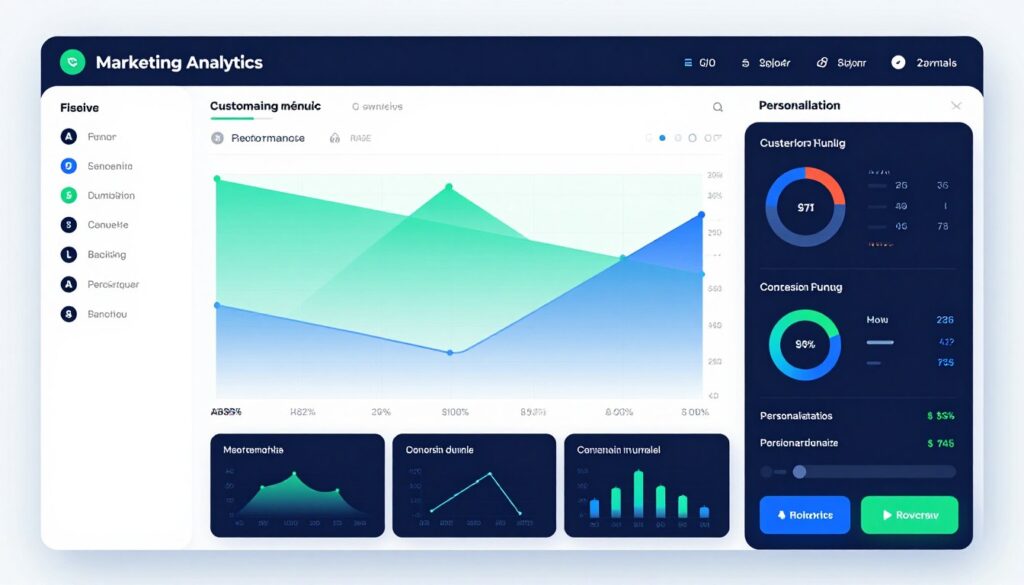
Marketing teams gain tremendous advantages from AI-powered tools that analyze customer data, personalize content, and optimize campaigns automatically. These technologies help businesses reach the right audience with the right message at precisely the right time.
Artificial intelligence processes customer information to create detailed segments based on behavior, preferences, and likelihood to convert. This segmentation enables highly targeted marketing campaigns that generate better results while spending less on advertising and outreach.
Content Creation and Optimization
AI tools now assist marketers in generating blog posts, social media content, email campaigns, and advertising copy. While these systems don’t replace human creativity, they dramatically speed up content production and help maintain consistency across channels.
The technology analyzes which content performs best with different audience segments. It identifies optimal posting times, suggests improvements to headlines, and even predicts which topics will resonate most strongly with your target market.
Top AI Content Tools for Businesses
Jasper AI
This platform helps teams create marketing copy, blog content, and social media posts. It offers templates for different content types and learns your brand voice over time.
Copy.ai
Specialized in short-form content like product descriptions, ad copy, and social posts. The tool provides multiple variations so you can test different approaches quickly.
Grammarly Business
Beyond grammar checking, this tool ensures brand consistency across all team communications. It suggests tone adjustments and clarity improvements for professional content.
Personalization and Customer Targeting
AI systems track customer interactions across your website, emails, and other touchpoints. They build detailed profiles that predict what each person wants to see, read, or purchase next. This level of personalization was impossible before machine learning made it scalable.
E-commerce companies use these insights to recommend products based on browsing history and purchase patterns. Content publishers serve articles matched to individual reader interests. Service businesses customize their outreach based on where prospects are in the buyer journey.
Implementing AI Personalization
Website Personalization
Dynamic content that adapts to each visitor creates more engaging experiences and higher conversion rates.
- Product recommendations based on browsing behavior
- Customized landing pages for different traffic sources
- Personalized calls-to-action matched to visitor intent
- Dynamic pricing for different customer segments
Email Marketing
AI optimizes email campaigns by predicting the best time to send and personalizing content for each recipient.
- Subject line optimization based on past engagement
- Send time optimization for individual subscribers
- Content blocks tailored to recipient preferences
- Automated re-engagement campaigns for inactive contacts
Advertising Optimization
AI improves advertising ROI by targeting the right audience and continuously optimizing campaign performance.
- Audience segmentation based on likelihood to convert
- Automatic bid adjustments for best performance
- Creative testing and optimization
- Budget allocation across channels and campaigns
Social Media Management
Artificial intelligence helps teams manage social presence more effectively with less manual work.
- Optimal posting time recommendations
- Content suggestions based on trending topics
- Sentiment analysis of audience responses
- Automated response to common questions
These personalization strategies work best when you have sufficient data about your audience. Start with one or two approaches, measure results carefully, and expand as you see success and gather more customer information.
Enhancing Sales Performance with AI Tools

Sales organizations leverage artificial intelligence to identify the best prospects, predict deal outcomes, and automate time-consuming administrative tasks. These capabilities allow sales teams to spend more time building relationships and closing deals rather than managing data.
AI-powered sales tools analyze historical data to score leads based on their likelihood to convert. This scoring helps teams prioritize outreach efforts and focus energy on opportunities with the highest potential value. The result is shorter sales cycles and improved conversion rates.
Lead Scoring and Qualification
Traditional lead scoring relies on simple rules like job title or company size. AI systems consider hundreds of factors simultaneously, identifying subtle patterns that indicate buying intent. They continuously learn from outcomes to improve accuracy over time.
These systems track website visits, content downloads, email engagement, and social media interactions. They combine this behavioral data with demographic information to create comprehensive lead profiles. Sales teams receive notifications when prospects show strong buying signals.
Key Sales AI Applications
| Application | Function | Primary Benefit | Best For |
| Predictive Lead Scoring | Ranks prospects by conversion probability | 30-50% improvement in conversion rates | B2B companies with long sales cycles |
| Sales Forecasting | Predicts revenue and deal closure | More accurate planning and resource allocation | Organizations with multiple sales teams |
| Email Automation | Personalizes outreach at scale | 60% time savings on follow-up | High-volume outbound sales |
| Conversation Intelligence | Analyzes sales calls for insights | Improved coaching and performance | Teams focused on skill development |
| Price Optimization | Recommends optimal pricing | 15-25% revenue increase | Businesses with flexible pricing |
Sales Process Automation
Administrative tasks consume significant portions of a salesperson’s day. AI tools automate data entry, meeting scheduling, proposal generation, and follow-up communications. This automation frees sales professionals to focus on high-value activities that require human judgment and relationship skills.
Modern customer relationship management systems incorporate AI to suggest next best actions, draft personalized emails, and update records automatically. Voice-activated assistants capture notes during calls, eliminating manual data entry after meetings.
Recommended Sales AI Platforms
Salesforce Einstein
Built into Salesforce CRM, Einstein provides predictive lead scoring, opportunity insights, and automated activity capture. It learns from your sales data to provide increasingly accurate recommendations.
- Predictive lead and opportunity scoring
- Automated email responses and follow-ups
- Forecasting accuracy improvements
- Activity timeline automation
Gong.io
This conversation intelligence platform records and analyzes sales calls. It identifies winning behaviors, flags risks, and provides coaching insights based on actual customer interactions.
- Call recording and transcription
- Deal risk identification
- Competitive intelligence extraction
- Sales coaching recommendations
HubSpot Sales Hub
Combines traditional CRM with AI-powered features like email tracking, meeting scheduling, and predictive lead scoring. The platform grows with your business from startup to enterprise.
- Email templates with performance tracking
- Meeting scheduler integrated with calendar
- Pipeline management and forecasting
- Conversation routing and chatbots
Maximize Your Sales Team’s Potential
Download our comprehensive guide to implementing AI in your sales process, including tool comparisons, implementation checklists, and ROI calculators.
Transforming Customer Service with Artificial Intelligence
Customer service departments benefit enormously from AI technologies that handle routine inquiries, provide instant responses, and route complex issues to appropriate human agents. These systems operate continuously, ensuring customers receive help whenever they need it.
Chatbots and virtual assistants now resolve common questions without human intervention. They understand natural language, access knowledge bases, and even complete transactions. When issues require human expertise, AI systems gather context and direct customers to the most qualified team member.

Intelligent Chatbots and Virtual Assistants
Modern chatbots understand context, remember previous interactions, and provide personalized responses based on customer history. They handle everything from order tracking to product recommendations to basic troubleshooting.
These systems integrate with your existing customer data platforms, giving them access to purchase history, preferences, and previous support tickets. This integration enables truly helpful conversations rather than frustrating scripted responses.
Benefits of AI-Powered Customer Service
Advantages
- Available around the clock without staffing costs
- Instant responses reduce customer wait times
- Handles multiple conversations simultaneously
- Consistent quality across all interactions
- Reduces support team workload by 40-60%
- Gathers valuable data about common issues
- Scales easily during peak demand periods
- Provides multilingual support automatically
Limitations
- Cannot handle complex or emotional situations
- May frustrate customers seeking human connection
- Requires ongoing training and updates
- Initial setup demands significant time investment
- Depends on quality of knowledge base
- Can make errors with ambiguous questions
Sentiment Analysis and Escalation
AI monitors customer interactions to detect frustration, confusion, or dissatisfaction. When it identifies negative sentiment, it can automatically escalate the conversation to a human agent before the situation deteriorates. This proactive approach prevents minor issues from becoming major complaints.
The technology also analyzes support tickets, reviews, and social media mentions to identify trends in customer feedback. Organizations use these insights to improve products, update documentation, and train support teams on emerging issues.
Top Customer Service AI Solutions
Intercom
Combines live chat, chatbots, and help center tools in one platform. The AI routing ensures customers reach the right resource quickly, whether automated or human.
- Smart chatbot with custom workflows
- Automated ticket routing
- Proactive messaging based on behavior
- Integrated knowledge base
Zendesk Answer Bot
Integrates with Zendesk’s support platform to suggest relevant help articles and resolve tickets automatically. It learns from agent responses to improve over time.
- Automatic article suggestions
- Ticket deflection to self-service
- Multi-language support
- Integration with existing Zendesk setup
Drift
Focuses on conversational marketing and sales alongside customer service. The platform uses AI to qualify leads while providing support, turning service interactions into revenue opportunities.
- Conversational AI for sales and support
- Meeting scheduler integration
- Custom bot playbooks
- Real-time visitor intelligence
Streamlining Operations and Productivity with AI

Operations teams deploy artificial intelligence to optimize supply chains, manage inventory, predict equipment maintenance needs, and automate workflows. These applications reduce costs while improving reliability and speed across business processes.
AI systems monitor operations continuously, identifying inefficiencies and suggesting improvements. They adjust to changing conditions in real-time, ensuring optimal performance even as variables shift. This adaptive capability makes operations more resilient and responsive.
Process Automation and Workflow Optimization
Robotic process automation uses AI to handle repetitive digital tasks like data entry, report generation, invoice processing, and system updates. These bots work faster than humans and make fewer errors, freeing employees to focus on work requiring creativity and judgment.
Organizations implement RPA for tasks that follow predictable patterns and clear rules. The technology integrates with existing software systems without requiring major infrastructure changes, making it accessible even for smaller companies.
Common RPA Applications
- Invoice processing and accounts payable automation that extracts data, validates information, and routes approvals
- Employee onboarding workflows that provision accounts, assign training, and track completion automatically
- Data migration between systems that maintains accuracy and saves countless hours of manual work
- Report generation that pulls data from multiple sources and creates standardized documents on schedule
- Customer data updates across platforms ensuring consistency without duplicate manual entry
- Compliance monitoring that flags violations and maintains audit trails automatically
Predictive Maintenance and Resource Management
AI analyzes sensor data from equipment to predict when components will fail. This predictive maintenance prevents unexpected breakdowns, reduces downtime, and extends asset lifespan. Companies save money by replacing parts only when necessary rather than following rigid schedules.
The same predictive capabilities apply to inventory management. AI forecasts demand based on historical patterns, seasonal trends, and external factors like weather or economic indicators. Businesses maintain optimal stock levels, reducing both shortages and excess inventory costs.
Operations AI Tool Categories
Process Mining Tools
These platforms analyze how work actually flows through your organization, identifying bottlenecks and inefficiencies invisible to traditional analysis methods.
- Celonis for enterprise process discovery
- UiPath Process Mining for workflow analysis
- Microsoft Process Advisor for Dynamics users
RPA Platforms
Robotic process automation tools execute repetitive tasks across applications, mimicking human actions but with greater speed and accuracy.
- UiPath for comprehensive automation
- Automation Anywhere for scalable bots
- Blue Prism for enterprise deployment
Supply Chain AI
Specialized solutions optimize inventory, predict demand, and manage logistics using machine learning algorithms trained on operational data.
- Blue Yonder for demand forecasting
- Llamasoft for supply chain design
- Kinaxis for supply chain planning
Quality Control and Anomaly Detection
Computer vision systems inspect products for defects faster and more consistently than human inspectors. They identify subtle flaws that might escape notice, ensuring higher quality standards and reducing waste from defective items.
Beyond manufacturing, AI detects anomalies in data patterns that signal problems. Financial systems flag suspicious transactions. Network monitoring tools identify security threats. These early warnings allow teams to address issues before they cause significant damage.
Optimize Your Operations with AI
Schedule a free consultation to discover how AI can streamline your specific operational challenges and deliver measurable efficiency gains.
Harnessing AI for Advanced Data Analysis and Insights
Data represents one of your most valuable business assets, but only when you can extract meaningful insights from it. Artificial intelligence processes vast datasets to uncover patterns, correlations, and trends that inform strategic decisions and competitive advantages.
Traditional analytics tools require humans to formulate questions and design queries. AI systems autonomously explore data, identifying unexpected relationships and surfacing insights analysts might never think to seek. This discovery capability transforms how organizations understand their business and market.
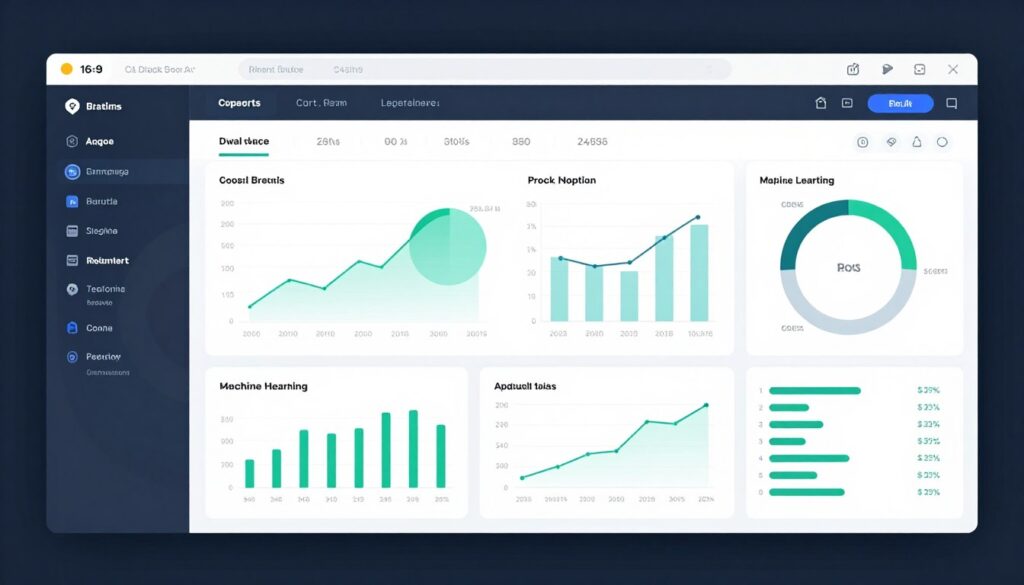
Automated Reporting and Business Intelligence
AI-powered analytics platforms generate reports automatically, highlighting key metrics and flagging significant changes. They monitor business performance continuously, alerting teams to opportunities and problems as they emerge rather than waiting for scheduled reviews.
These systems create natural language summaries of complex data, making insights accessible to non-technical stakeholders. Executives receive plain-English explanations of what the data means and why it matters, accelerating decision-making across the organization.
AI Analytics Capabilities
Descriptive Analytics
Understanding what happened in your business and why specific outcomes occurred.
- Automated dashboard creation and updates
- Anomaly detection in key metrics
- Trend identification across time periods
- Performance comparison analysis
Predictive Analytics
Forecasting future outcomes based on historical patterns and current trends.
- Revenue and sales forecasting
- Customer churn prediction
- Demand planning and inventory optimization
- Risk assessment and mitigation
Prescriptive Analytics
Recommending specific actions to achieve desired business outcomes.
- Marketing budget allocation recommendations
- Pricing optimization suggestions
- Resource allocation guidance
- Strategy scenario modeling
Diagnostic Analytics
Explaining why certain events occurred and what factors contributed most.
- Root cause analysis of problems
- Attribution modeling for marketing
- Performance driver identification
- Correlation discovery between variables
Customer Behavior Analysis
AI tracks how customers interact with your business across all touchpoints. It builds comprehensive profiles showing preferences, purchase patterns, and engagement history. These insights drive personalization strategies and help predict future behavior.
The technology segments customers automatically based on behavior rather than simple demographics. It identifies your most valuable customer groups, predicts which segments have growth potential, and highlights customers at risk of churning.
Leading AI Analytics Platforms
Tableau with Einstein Discovery
Combines powerful data visualization with AI-driven insights. The platform identifies patterns automatically and explains findings in plain language.
- Automated pattern detection
- Natural language explanations
- Predictive modeling without coding
- Integration with multiple data sources
Google Analytics 4
Uses machine learning to provide predictive metrics about customer behavior and automatically surfaces insights about your website and app performance.
- Predictive audience creation
- Automated insights and alerts
- Cross-platform user tracking
- Privacy-focused measurement
Microsoft Power BI
Integrates AI capabilities like automated insights, natural language queries, and machine learning model deployment directly within business intelligence workflows.
- Quick insights generation
- Q&A natural language interface
- AutoML for predictive models
- Azure integration for advanced analytics
Market Intelligence and Competitive Analysis
AI monitors competitor activities, market trends, and industry developments automatically. It tracks pricing changes, product launches, marketing campaigns, and customer sentiment across the competitive landscape. This intelligence helps you respond quickly to market shifts.
The technology also analyzes broader market conditions, identifying emerging opportunities and potential threats. It processes news articles, social media discussions, regulatory filings, and economic indicators to provide comprehensive market understanding.
Developing Your AI Implementation Strategy

Successful AI adoption requires thoughtful planning and realistic expectations. Organizations that rush implementation often encounter technical difficulties, user resistance, and disappointing results. A structured approach increases your chances of achieving meaningful business impact.
Your strategy should align AI initiatives with specific business objectives. Technology for its own sake delivers limited value. Focus on areas where AI can solve real problems, create new opportunities, or provide measurable competitive advantages.
Assessing Organizational Readiness
Before implementing AI solutions, evaluate whether your organization has the necessary foundations. Success requires adequate data infrastructure, technical capabilities, and cultural openness to change. Gaps in these areas must be addressed first.
Data quality matters more than quantity. AI systems trained on inaccurate or biased information produce unreliable results. Audit your data collection processes, storage systems, and governance policies before proceeding with AI projects.
Readiness Assessment Checklist
- Centralized data storage and management
- Consistent data quality standards
- Sufficient historical data volume
- Clear data governance policies
- Integration between data sources
Data Readiness
- Cloud infrastructure or capacity to build it
- API connectivity for integrations
- Cybersecurity measures in place
- Technical talent or access to consultants
- IT support for new systems
Technical Capabilities
- Executive sponsorship and support
- Budget allocated for AI initiatives
- Willingness to change processes
- Cross-functional collaboration culture
- Clear success metrics defined
Organizational Factors
Choosing the Right AI Solutions
The market offers countless AI products, from simple plug-and-play tools to custom enterprise solutions. Select options that match your technical capabilities, budget constraints, and specific business needs rather than chasing the most advanced technology.
Start with pre-built solutions for common use cases like customer service chatbots or email marketing optimization. These tools require minimal technical expertise and deliver value quickly. As you gain experience and see results, you can tackle more complex custom implementations.
Solution Selection Criteria
| Consideration | Questions to Ask | Why It Matters |
| Business Alignment | Does this solve a priority problem? Will it impact key metrics? | Ensures investment delivers meaningful business value |
| Integration Requirements | Does it connect with existing systems? What data access is needed? | Complex integrations slow deployment and increase costs |
| Implementation Complexity | Can our team deploy this? What training is required? | Determines time to value and resource requirements |
| Scalability | Will it grow with our business? Can we add users easily? | Avoids costly migrations as needs expand |
| Total Cost | What are ongoing costs? Are there hidden fees? | Prevents budget overruns and ensures sustainable ROI |
| Vendor Stability | Is the company established? What is their support like? | Reduces risk of solution becoming unsupported |
Creating an Implementation Roadmap
Map out your AI journey in phases, starting with quick wins that build momentum and confidence. Early successes demonstrate value, secure stakeholder buy-in, and fund more ambitious projects. Avoid the temptation to tackle everything simultaneously.
Each phase should have clear objectives, success metrics, timelines, and resource requirements. Plan for training, change management, and ongoing optimization. AI systems improve over time as they process more data and receive feedback.
Sample 12-Month AI Implementation Roadmap
- Months one to two – Conduct readiness assessment, identify priority use cases, and establish governance framework
- Months two to three – Select initial tools for highest-priority use case, begin vendor evaluation and procurement
- Months three to five – Implement first pilot project, train initial users, and establish measurement baselines
- Months five to six – Evaluate pilot results, gather user feedback, and make necessary adjustments
- Months six to eight – Expand successful pilot to broader user base, begin second use case implementation
- Months eight to ten – Launch second AI initiative, optimize first deployment based on learnings
- Months ten to twelve – Assess overall program results, plan next phase expansions, and share success stories
Get Your Personalized AI Strategy
Work with our AI implementation specialists to create a customized roadmap for your business. We’ll assess your readiness, identify opportunities, and guide you through successful deployment.
Measuring AI Success and Return on Investment
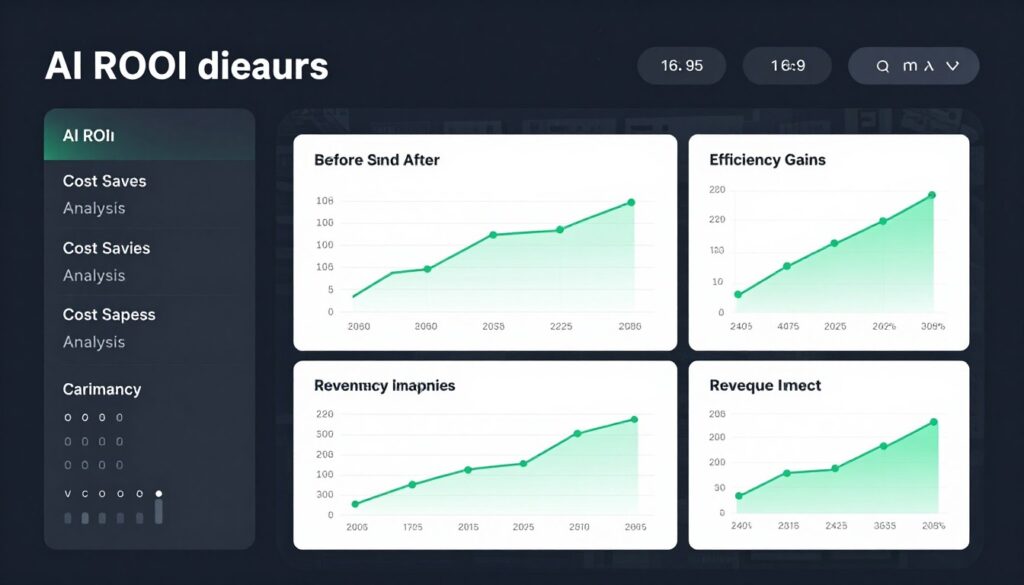
Tracking the right metrics proves whether your AI investments deliver value and guides ongoing optimization efforts. Establish baseline measurements before implementation so you can quantify improvements accurately and demonstrate ROI to stakeholders.
Different AI applications require different success metrics. Customer service chatbots might track resolution rates and customer satisfaction. Sales tools focus on conversion rates and revenue impact. Choose metrics that align with your original business objectives for each initiative.
Key Performance Indicators for AI Initiatives
Select a balanced set of metrics covering different aspects of performance. Financial metrics demonstrate business impact. Operational metrics show efficiency gains. User metrics indicate adoption and satisfaction. Together, they provide a comprehensive view of success.
Track both leading indicators that predict future performance and lagging indicators that confirm results. Leading indicators like user adoption rates signal whether an initiative is on track. Lagging indicators like revenue growth confirm ultimate business impact.
Essential AI Metrics by Category
Financial Metrics
- Return on investment percentage
- Revenue increase attributed to AI
- Cost savings from automation
- Customer lifetime value improvements
- Time to break-even on investment
Operational Metrics
- Process efficiency improvements
- Time saved on automated tasks
- Error rate reductions
- Throughput increases
- Resource utilization optimization
User Metrics
- Adoption rate among target users
- User satisfaction scores
- Engagement frequency
- Training completion rates
- Support ticket volume related to AI
Calculating ROI for AI Investments
AI return on investment includes both hard savings like reduced labor costs and soft benefits like improved customer satisfaction. Quantify as many benefits as possible, even if you must estimate some values conservatively.
Compare total costs including software licensing, implementation services, training, and ongoing maintenance against benefits over a defined period. Most organizations evaluate ROI over a one to three year timeframe, depending on the investment size.
ROI Calculation Framework
Total Costs to Consider
- Software licensing or subscription fees
- Implementation and integration services
- Internal resource time for deployment
- Training and change management programs
- Ongoing maintenance and support
- Infrastructure upgrades if needed
Measurable Benefits to Track
- Labor cost reductions from automation
- Revenue increases from better targeting
- Faster sales cycles and improved conversion
- Reduced customer churn and higher retention
- Lower error rates and quality improvements
- Decreased operational expenses
Continuous Optimization and Improvement
AI systems require ongoing attention to maintain and improve performance. Monitor metrics regularly, gather user feedback, and make adjustments based on what you learn. The most successful organizations treat AI as a continuous improvement journey rather than a one-time project.
Schedule regular reviews to assess whether AI initiatives still align with business priorities. Markets change, strategies evolve, and new opportunities emerge. Your AI roadmap should adapt accordingly, shifting resources to areas with highest potential impact.
Overcoming Common AI Implementation Challenges

Every organization encounters obstacles when implementing artificial intelligence. Anticipating common challenges and preparing strategies to address them increases your likelihood of success and helps you navigate difficulties when they arise.
Technical issues often prove easier to resolve than organizational resistance. Change management, skills gaps, and cultural barriers frequently present bigger hurdles than the technology itself. Address these human factors proactively to smooth your AI adoption journey.
Data Quality and Availability Issues
Poor data quality represents one of the most common reasons AI projects fail. Systems trained on incomplete, inaccurate, or biased data produce unreliable results. Invest time in data cleaning and preparation before implementing AI solutions.
Many organizations discover they don’t have the data they need for their desired AI applications. Building data collection processes takes time. Start now to ensure you have quality information when you’re ready to deploy AI systems.
Data Challenge Solutions
Common Data Problems
- Inconsistent formats across systems
- Missing values in critical fields
- Outdated or duplicate records
- Insufficient historical data volume
- Data silos preventing integration
- Privacy and compliance concerns
Practical Solutions
- Establish data quality standards
- Implement validation at point of entry
- Regular data audits and cleaning
- Gradual collection of needed information
- Break down organizational silos
- Clear governance and security policies
Skills Gaps and Training Needs
Most organizations lack sufficient AI expertise internally. While you don’t need a team of data scientists immediately, someone must understand how AI works, what it can accomplish, and how to evaluate solutions. Consider external consultants or training programs to build internal knowledge.
End users need training too. Even the most sophisticated AI tool fails if people don’t understand how to use it effectively. Invest in comprehensive training programs that go beyond basic features to help users maximize value from new systems.
Building AI Competency
Executive Education
Leadership needs strategic understanding of AI capabilities and implications.
- Executive briefings on AI potential
- Strategic planning workshops
- Industry-specific use case reviews
- Vendor demonstrations and evaluations
Technical Training
IT and implementation teams require deeper technical knowledge and skills.
- AI fundamentals courses
- Platform-specific certifications
- Integration and deployment training
- Troubleshooting and optimization
User Enablement
End users need practical guidance on using AI tools in daily work.
- Role-specific training programs
- Hands-on practice sessions
- Reference guides and resources
- Ongoing support and coaching
Managing Change and Adoption
People resist change, especially when technology might alter their roles or make certain skills obsolete. Address these concerns transparently. Explain how AI will augment human capabilities rather than replace people. Involve users early in planning to build ownership and reduce resistance.
Celebrate early wins and share success stories to build momentum. Identify champions within each department who can advocate for AI adoption and support their peers. Recognition and incentives tied to successful AI use encourage broader acceptance.
Change Management Best Practices
Share your AI vision and plans well before implementation begins. Explain the business rationale, expected benefits, and how changes will affect different teams. Regular updates keep everyone informed as projects progress.
Include representatives from affected departments in planning and selection processes. Their input ensures solutions address real needs and workflows. Participation builds ownership and reduces resistance to adoption.
Make help easily accessible during transition periods. Offer multiple support channels including documentation, training sessions, help desk resources, and peer mentoring. Quick assistance prevents frustration from derailing adoption.
Begin with pilot groups who are open to innovation. Use their feedback to refine approaches before broader rollout. Early successes convince skeptics better than any communication campaign.
Be honest about how AI will change roles, but emphasize opportunities for growth and higher-value work. Provide retraining for displaced employees. Demonstrate your commitment to your workforce through actions, not just words.
Future AI Trends and Preparing for What’s Next
Artificial intelligence continues evolving rapidly, with new capabilities emerging constantly. Organizations that stay informed about trends and experiment with new technologies gain competitive advantages. Understanding where AI is headed helps you make strategic investments today.
Several trends will shape how businesses use AI over the next few years. Advances in natural language processing make AI more accessible to non-technical users. Edge computing brings AI processing closer to data sources. Improved explainability helps people trust and understand AI recommendations.

Emerging AI Technologies to Watch
Generative AI that creates text, images, code, and other content is transforming creative and technical work. These tools augment human capabilities, enabling individuals to accomplish tasks that previously required specialized expertise or significant time investment.
Multimodal AI systems that process different types of information simultaneously become more sophisticated. They combine text, images, audio, and video to understand context more completely. This capability enables richer interactions and more accurate analysis.
Key Emerging Trends
Generative AI Expansion
Tools that create original content continue advancing in quality and accessibility.
- Text generation for marketing and communication
- Code generation to accelerate development
- Image and video creation for visual content
- Synthetic data generation for training models
No-Code AI Platforms
Business users build AI solutions without programming expertise using visual interfaces.
- Drag-and-drop model builders
- Pre-trained models for common tasks
- Automated machine learning pipelines
- Integration with business tools
Edge AI Processing
Intelligence moves to devices and local networks for faster response and better privacy.
- Real-time analysis without cloud latency
- Reduced bandwidth requirements
- Enhanced data privacy and security
- Offline AI capabilities
Explainable AI
Systems that explain their reasoning build trust and enable better human oversight.
- Transparent decision-making processes
- Bias detection and mitigation
- Regulatory compliance support
- Improved human-AI collaboration
Preparing Your Organization for AI Evolution
Build flexible systems and processes that can adapt as AI technology advances. Avoid proprietary solutions that lock you into specific vendors or approaches. Choose platforms with open APIs and integration capabilities that work with emerging technologies.
Develop a culture of continuous learning where teams stay current with AI developments. Encourage experimentation with new tools and techniques. Small pilot projects let you test emerging capabilities without significant risk or investment.
Future-Proofing Strategies
- Establish AI governance frameworks that adapt to new capabilities and regulations
- Build data infrastructure that supports multiple AI applications and approaches
- Invest in team skills development and continuous learning programs
- Monitor industry trends and competitor AI adoption strategies
- Maintain flexibility in vendor relationships and technology choices
- Allocate budget for experimentation with emerging AI technologies
- Participate in industry groups and knowledge-sharing communities
- Consider ethical implications as AI capabilities expand
Responsible AI and Ethical Considerations
As AI becomes more powerful, responsible deployment grows increasingly important. Organizations must consider bias in training data, transparency in automated decisions, privacy implications of data collection, and broader societal impacts of their AI systems.
Establish ethical guidelines for AI use within your organization. Consider fairness, accountability, transparency, and privacy in every AI initiative. These principles protect your company from reputational damage while ensuring technology benefits all stakeholders.
Critical Ethical Considerations
Address these questions before deploying AI systems that affect customers or employees:
- Does training data reflect and potentially amplify historical biases?
- Can affected individuals understand and contest automated decisions?
- Are privacy protections adequate for the data being collected?
- Who is accountable when AI systems make errors or cause harm?
- Does the system treat all demographic groups fairly?
- Are there adequate safeguards against misuse or unintended consequences?
Taking Action on Your AI Journey

Artificial intelligence offers tremendous potential for business growth across every industry and company size. The organizations that thrive in the coming years will be those that embrace AI strategically, implement it thoughtfully, and continuously optimize their approaches based on results.
Your AI journey begins with understanding your specific business challenges and opportunities. Identify areas where automation, prediction, or optimization can deliver meaningful impact. Start with manageable projects that build confidence and demonstrate value. As you gain experience and see results, expand your AI initiatives strategically.
Remember that successful AI implementation extends beyond technology. It requires quality data, skilled people, supportive culture, and commitment to continuous improvement. Address these foundational elements while deploying AI solutions to maximize your chances of success.
The competitive landscape continues shifting as more businesses adopt AI capabilities. Companies that wait too long risk falling behind competitors who leverage these technologies to serve customers better, operate more efficiently, and make smarter decisions. The best time to start was yesterday. The second best time is today.
Your Next Steps
Begin by assessing your organization’s readiness for AI. Evaluate your data quality, technical capabilities, and organizational preparedness. Identify your highest-priority use cases where AI can solve real problems or create new opportunities. These initial steps cost nothing but provide clarity on your path forward.
Educate yourself and your team about AI possibilities and limitations. Attend webinars, read case studies, and talk with vendors about their solutions. This research phase helps you make informed decisions and avoid costly mistakes when you’re ready to implement.
Start small with your first AI project. Choose something manageable that addresses a real business need and can deliver results within a few months. Early success builds momentum and secures support for more ambitious initiatives. Learn from this initial project, refine your approach, and scale gradually.
Download the Complete AI for Business Growth Implementation Guide
Get our comprehensive 50-page guide covering everything you need to successfully implement AI in your organization. Includes readiness assessments, vendor evaluation frameworks, ROI calculators, implementation checklists, and real-world case studies.
Need Expert Guidance?
Our AI implementation specialists help businesses like yours navigate the complexities of artificial intelligence adoption. Schedule a complimentary consultation to discuss your specific challenges and opportunities.
The future belongs to organizations that combine human creativity and judgment with AI’s computational power and analytical capabilities. By taking deliberate steps now to understand, plan, and implement artificial intelligence strategically, you position your business for sustained growth and competitive advantage in an increasingly AI-driven marketplace.









Comments are closed