

Google AI Overviews optimization for business now matters more than ever. Google introduced the feature across the United States on May 14, 2024. Today, Gemini models gather information from several web sources and create a direct answer within google search.
These ai-generated summaries can appear above standard results. That shift changes how visibility, clicks, and branded search behavior connect. A clear answer may shape a user’s view of a company before that person visits its website.
Overviews differ from one organic page. They combine facts, sources, and context into one overview. Google overviews now reach more than 200 countries and territories in over 40 languages, giving useful content a wider audience.
This guide frames optimization as an extension of established seo best practices. Strong content, sound site structure, and trusted information still matter. The goal is to earn a place near the top of search results, whether users click at once or remember a brand later.
Key Takeaways
- AI Overviews can influence customers before a website visit.
- Gemini draws answers from multiple web sources.
- Helpful content can support stronger visibility.
- Citations and brand mentions may build awareness.
- Core SEO practices remain central to this shift.
What Google AI Overviews Mean for Business Visibility
Search visibility now includes more than a list of blue links. A generated overview can appear near the top, below sponsored or unpaid results, and combine facts from several sources. This format gives users an answer before they open a page.
How AI-generated summaries differ from traditional search results
Traditional search presents separate pages that users compare. New summaries bring information together around one query. Pew Research Center found that people clicked a standard result 8% of the time when an overview appeared, versus 15% without one.
Links inside these summaries received clicks only 1% of the time. Still, a cited source can build recognition and trust. Visibility does not end when a user skips the link.
Why citations, mentions, and qualified clicks matter
Informational queries led many triggers: Semrush reported 89.03% in October 2024 and 57.16% in October 2025. This shift shows why product and service topics deserve attention. Clear facts, trusted mentions, and useful answers can guide later visits across more than 200 countries and 40 languages.
“Users clicked links within AI Overviews only 1% of the time.”
| Search format | User experience | Visibility signal |
|---|---|---|
| Traditional results | Separate pages | Organic clicks |
| Generated overview | Combined answer | Citations and recall |
| Brand mention | Early awareness | Qualified later visits |
How Google AI Overviews Work
Behind each overview, a retrieval step gathers fresh pages before a model writes a response. This approach, called retrieval-augmented generation, connects the answer to public web information instead of relying on stored knowledge alone. The result can blend facts from several relevant sources.
Search rankings, retrieval, and query fan-out
Search rankings guide the first pool of pages. The system also uses query fan-out, which sends several related queries at once. For example, “how to fix a lawn that’s full of weeds” may lead to searches about herbicides, chemical-free removal, and weed prevention.
This wider path helps the model cover different needs within one query. It can also surface useful content when a question has several parts.
How sources enter generated answers
Relevance, freshness, source quality, and ranking strength affect which pages become citation candidates. Google Search supplies the evidence, while the generative system combines it into concise summaries. Publicly accessible pages support these features, so a site does not need a separate AI-only index.
Strong SEO best practices still matter: clear facts, helpful content, and credible links improve visibility across traditional search results and generated answers.
Google AI Overviews Optimization for Business: Start With SEO Foundations
Reliable visibility begins with access. A page must be indexed and eligible to show a snippet in Google Search before it can enter generative features. Inclusion in Search Console also supports eligibility, though it does not promise crawling, indexing, or placement.
Meet technical requirements
Check robots.txt rules, noindex tags, redirects, and broken URLs. Make sure important pages remain open to crawlers. JavaScript content can appear when scripts are not blocked. These checks help search systems read useful information and return accurate results.
Connect intent with goals
Each page should answer a clear user need. Match service pages with leads, product pages with purchases, and local pages with store visits. This way, content supports both search results and measurable growth.
Build a crawlable structure
Use clear categories, descriptive links, and a logical path from the homepage. Strong internal organization helps users and crawlers find key pages. Simple SEO best practices create a stable base for future visibility.
| Check | Action | Purpose |
|---|---|---|
| Indexing | Review coverage | Keep key pages discoverable |
| Crawl access | Test robots.txt and scripts | Allow useful information through |
| Page goals | Map intent to conversions | Measure meaningful outcomes |
Create Helpful, Original Content That Earns Visibility
Distinctive expertise gives a page more value than a polished rewrite. Before drafting, identify what your team has seen, tested, measured, or learned from real customers. That insight can make content more useful in search and in overviews.
Show experience, evidence, and a clear point of view
Share firsthand reviews, expert interviews, original data, and practical examples. Verify claims with trusted sources, then refresh details that may change over time. Relevant photos or videos can also support written information when they help users understand the topic.
Answer real questions with care
Study customer questions from sales calls, support tickets, and site searches. Give direct answers, explain limits, and avoid vague summaries. Useful content should satisfy the user after time spent on the website.
Do not create many near-identical pages around minor wording changes. That practice may look like scaled content abuse rather than helpful SEO. One strong page can serve related questions while earning trust across web results and summaries.
| Content approach | Strong signal | Practical action |
|---|---|---|
| Firsthand insight | Unique perspective | Share tested lessons |
| Original research | Reliable evidence | Publish clear data |
| Customer answers | Useful clarity | Resolve common questions |
Target Specific Queries That Trigger AI Overviews
Specific wording often reveals a user’s real need. A phrase such as “best dog food for sensitive stomach” offers more direction than “dog food.” It can also create a clearer path to useful visibility.
Find long-tail questions and commercial searches
Review search volume, ranking difficulty, customer value, and current results. Note whether an overview appears for each query. Semrush found that informational terms caused 89.03% of triggers in October 2024, yet that share fell to 57.16% in October 2025. This change highlights the value of commercial coverage.
Match intent with the right resource
Use guides to answer informational questions. Send local intent to service or location pages. Direct transactional searches to product, pricing, or comparison content. Google’s query fan-out process explores related searches, so group connected questions around one strong resource. A focused page serves users better than many thin variations.
| Intent | Useful page type | Sample query |
|---|---|---|
| Informational | Detailed guide | How to choose sensitive-stomach dog food |
| Local | Service page | Dog nutritionist near Austin |
| Transactional | Product comparison | Best dog food brands for allergies |
Structure Business Pages for Easy Understanding and Extraction
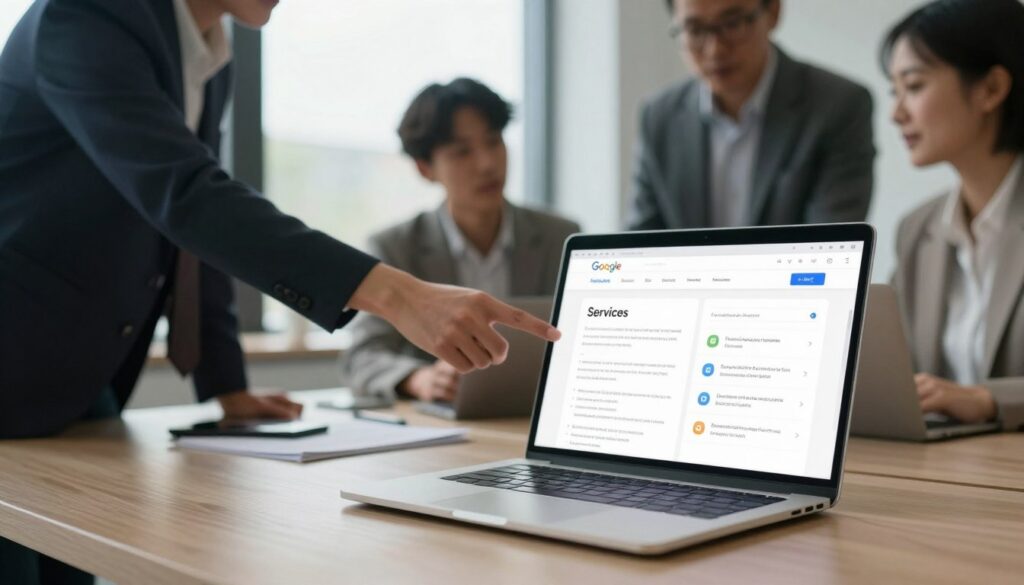
Clear page structure helps search systems and people find the main point quickly. Lead with a direct answer, then add proof, detail, and useful next steps. A focused overview can support visibility without forcing every page into tiny sections.
Use direct answers and scannable sections
Place a 40–60-word answer beneath a descriptive heading. Then expand with examples, limits, and evidence. This format gives an overview a concise target while giving users more context. Use short paragraphs, numbered steps, FAQs, and comparison lists to organize information.
Support key points with media
Add relevant images or videos when they explain a process or product. High-quality media can create extra discovery paths in generative features. Keep every asset close to related content, and use clear alternative text.
Apply accurate structured data
Structured data can clarify page details, but it is not required for overview visibility. Use only markup that matches visible information.
“There’s no special schema markup that you need to use.”
| Element | Best practice | Value |
|---|---|---|
| Answer | State the main point first | Fast understanding |
| Media | Add relevant images or video | More discovery paths |
| Markup | Describe visible page data | Clearer page meaning |
Improve Technical SEO and Page Experience
A healthy technical foundation helps search systems access, read, and present important pages. It also gives users a smoother path from search features to your website.
Resolve crawlability, indexability, and duplicate content issues
Review robots.txt, noindex tags, 4XX errors, redirects, canonical links, and XML sitemaps. Check duplicate pages and select one preferred URL. Duplicate content can waste crawl resources and create poor user experiences.
Robots.txt, noindex, and nosnippet can limit AI Overviews exposure. Yet each control may also reduce normal search visibility. Use them with care, and test key pages after every change.
Optimize speed, mobile usability, security, and JavaScript rendering
Google Search can process JavaScript when scripts remain accessible. Blocked files or client-side-only content may hide vital information. Test rendered pages, mobile layouts, HTTPS security, and loading time across major templates.
Clear content structure, responsive design, and reduced latency support users and SEO best practices. Review crawl budget, rendering, and page experience across the whole site, not one URL at a time.
| Check | Risk | Action |
|---|---|---|
| Crawl controls | Hidden pages | Test directives and sitemaps |
| Page templates | Slow or poor display | Improve speed and mobile layout |
| Duplicate URLs | Wasted crawl time | Use canonical tags and redirects |
Strengthen Local and Ecommerce Visibility
Accurate profiles and product feeds help people find the right local business or item. They also give search systems dependable details when overviews combine information from several sources.
Keep Google Business Profile and business details accurate
Review your profile each month. Confirm the address, hours, phone number, services, photos, and review responses. Match these details across your website, location pages, and trusted local sources. Clear information helps nearby customers act with confidence.
Service-area pages should name the regions you serve and explain what you actually provide. This local content can support visibility in search and generative features. It also helps prevent confusion when users compare several providers.
Use Merchant Center to support product visibility
Merchant Center feeds can share product names, prices, availability, images, and other data. Keep each field current, especially during sales or stock changes. Accurate product content may appear in listings, product details, and overviews.
Consistent data creates a stronger customer path. These best practices matter across more than 200 countries and 40 languages, where local details and product information can reach new audiences.
Build Authority Through Links, Citations, and Brand Mentions
Trusted recognition grows when respected publishers connect with useful company resources. Strong links can support rankings and give credible sources a clear way to discover valuable content. This approach builds visibility beyond one site or search result.
Earn relevant backlinks from trusted industry sources
Publish original research, customer surveys, expert comments, or proprietary data. These assets give journalists and industry sites a real reason to cite your page. Review broken resources, competitor citations, and gaps in trusted pages. Then offer a more accurate resource that answers the same query.
Increase visibility across reputable roundups and third-party pages
Prioritize respected comparisons, reviews, and listicles that already serve your audience. Commercial overviews often use these sources, along with blogs, videos, and forum discussions. Relevance matters more than volume. Avoid paid-looking mentions or copied praise, since weak sources can harm trust and dilute SEO practices.
A genuine citation reflects value, not a shortcut. Keep outreach helpful, specific, and focused on the topic.
| Authority action | Best source | Expected benefit |
|---|---|---|
| Share original data | Industry publication | Earn editorial links |
| Fix a broken resource | Relevant website | Improve source usefulness |
| Join a trusted roundup | Review or comparison site | Reach qualified readers |
Measure AI Overview Performance and Refine Your Strategy
Good reporting turns changing search behavior into clear next steps. Use data to learn which pages gain visibility through generative features, then connect those findings with leads and sales.
Use Search Console to monitor generative AI performance
Google Search Console includes a Generative AI performance report across Search and Discover. It can reveal discovery patterns, cited pages, queries, and traffic linked to AI features. Remember that its click data combines organic listings, SERP features, AI Overviews, and AI Mode.
Review this information beside rankings, crawl signals, and page quality. Meeting technical requirements does not guarantee crawling, indexing, or placement in Google search results.
Compare rankings, citations, clicks, and qualified conversions
Measure more than sessions. Compare branded mentions, cited sources, query groups, qualified leads, purchases, and assisted conversions. Pew Research Center found traditional result clicks reached 8% when an overview appeared, versus 15% without one. That gap makes awareness and conversion quality essential.
Run a monthly review. Find weak content, missing topics, technical barriers, and gaps across trusted sites. Then refine content and link plans using these SEO best practices.
| Signal | What to review | Next action |
|---|---|---|
| Discovery | Cited pages and queries | Expand useful topics |
| Engagement | Clicks and rankings | Improve page clarity |
| Value | Leads and purchases | Prioritize high-intent content |
Conclusion
Google Overviews build on established search systems, so technical SEO, useful content, and strong rankings still shape visibility. A people-first plan remains more durable than short-term AI hacks. The feature reached the United States on May 14, 2024. Traditional search still rewards clear pages and strong results.
Each business should create original content that answers real queries with evidence, expertise, and a clear next step. Direct language, useful media, accurate local or product data, and a crawlable site help systems understand information. Trusted links, citations, and honest brand mentions widen reach across credible web sources.
Track search results in Search Console, then compare clicks with qualified leads, sales, and other conversion data. An overview may change traffic patterns, while generated summaries influence user choices over time. Review each query, improve weak pages, and protect trust. Helpful answers remain the best path to lasting visibility.