

Artificial intelligence is reshaping how businesses operate across every major sector. From hospitals using predictive maintenance to banks employing fraud detection systems, organizations worldwide are discovering new ways to improve operational efficiency and customer satisfaction.
The transformation goes beyond simple automation. Advanced systems now analyze massive amounts of data in real time, uncovering actionable insights that were previously impossible to detect.
This comprehensive guide explores the profound impact of AI on different industries, examining specific applications, measurable benefits, implementation challenges, and future implications. Whether you’re a business leader evaluating AI adoption or a professional seeking to understand industry trends, you’ll find detailed examples of how artificial intelligence is creating competitive advantages across sectors.
Understanding AI Technologies Powering Industry Transformation
Before examining specific sectors, we need to understand the core technologies driving change. Several key systems work together to create intelligent solutions that address complex business challenges.
Machine Learning and Deep Learning Foundations
Machine learning algorithms enable systems to improve performance through experience without explicit programming. These models analyze patterns in historical data to make predictions about future outcomes.
Deep learning takes this concept further by using neural networks with multiple layers. These sophisticated architectures excel at processing unstructured information like images, speech, and text.
Financial institutions use these approaches to detect fraudulent transactions. Manufacturing facilities employ them for quality control. Healthcare providers leverage them for diagnostic support.
Natural Language Processing Capabilities
Natural language processing allows machines to understand, interpret, and generate human language. This technology powers chatbots, virtual assistants, and automated content analysis tools.
Customer service departments deploy natural language systems to handle routine inquiries. Legal teams use language processing to review contracts and identify risks. Marketing departments apply sentiment analysis to understand consumer opinions across social media platforms.
The sophistication of natural language processing continues to advance. Modern systems can detect subtle contextual meanings, recognize intent, and maintain coherent conversations across multiple exchanges.
Computer Vision Applications
Computer vision enables machines to interpret and understand visual information from the world. These systems process images and videos to identify objects, detect anomalies, and make decisions based on visual data.
Retail stores use computer vision for inventory management and theft prevention. Manufacturing plants employ it for defect detection on production lines. Healthcare facilities apply it to analyze medical imaging and support diagnostic processes.
The accuracy of computer vision systems now rivals or exceeds human performance in many specialized tasks. This capability opens new possibilities for automation and quality improvement across industries.
Machine Learning Benefits
Organizations implementing machine learning systems report significant improvements in operational efficiency and decision-making capabilities.
- Predictive accuracy improvements of 40-60% over traditional methods
- Automated pattern recognition in complex datasets
- Continuous performance improvement through learning
- Reduced manual analysis time and labor costs
Natural Language Processing Impact
Natural language processing transforms how organizations interact with customers and process textual information across business operations.
- 24/7 automated customer support availability
- Multi-language communication without human translators
- Rapid document review and information extraction
- Real-time sentiment tracking across communication channels
Computer Vision Applications
Visual recognition technologies enable automated inspection, monitoring, and analysis tasks that previously required constant human attention.
- Defect detection rates exceeding 99% accuracy
- Continuous quality monitoring without fatigue
- Instant anomaly identification in visual data
- Automated compliance verification and reporting
Integration Advantages
Combining multiple AI technologies creates synergistic effects that amplify benefits and enable sophisticated solutions to complex challenges.
- Multi-modal data analysis for comprehensive insights
- Enhanced accuracy through cross-validation
- Broader application scope across business processes
- Stronger competitive positioning through advanced capabilities
Healthcare Industry: Revolutionizing Patient Care and Medical Research

The healthcare sector experiences some of the most significant transformations from artificial intelligence adoption. Medical professionals now access powerful tools that enhance diagnostic accuracy, personalize treatment plans, and improve patient outcomes.
Diagnostic Support and Medical Imaging Analysis
Medical imaging analysis represents one of the most successful AI applications in healthcare. Computer vision systems examine X-rays, MRIs, CT scans, and other imaging modalities to detect abnormalities that might escape human observation.
Radiologists using AI-assisted tools can process images faster while maintaining or improving diagnostic accuracy. These systems flag potential issues for closer examination, reducing the risk of overlooked conditions.
Studies show that AI systems can match or exceed human expert performance in detecting certain conditions. For instance, deep learning models achieve over 94% accuracy in identifying diabetic retinopathy from retinal images.
The combination of human expertise and machine analysis creates a powerful diagnostic approach. Physicians maintain final decision authority while leveraging AI-generated insights to inform their clinical judgment.
Predictive Analytics for Patient Care
Healthcare providers use predictive maintenance concepts applied to patient care. Machine learning models forecast which patients face higher risks of complications, readmissions, or adverse events.
These predictions enable proactive interventions before problems escalate. Hospital systems can allocate resources more effectively, focusing attention on high-risk patients who need closer monitoring.
Predictive models analyze electronic health records, vital signs, lab results, and other clinical data. They identify subtle patterns that indicate deteriorating conditions earlier than traditional monitoring approaches.
One major hospital network reduced readmission rates by 18% after implementing predictive analytics. The system identified at-risk patients and triggered enhanced discharge planning and follow-up care protocols.
Drug Discovery and Development Acceleration
Pharmaceutical research traditionally requires years of laboratory work and clinical trials. Artificial intelligence dramatically accelerates multiple stages of this process, reducing both time and cost.
AI systems analyze molecular structures to predict which compounds might effectively target specific diseases. This computational screening eliminates many dead-end research paths before expensive lab work begins.
Machine learning models also optimize clinical trial design, identify suitable patient populations, and predict potential side effects. These capabilities help bring new treatments to market faster while maintaining safety standards.
Some pharmaceutical companies report that AI-assisted drug discovery reduces development timelines by 30-40%. This acceleration could bring life-saving treatments to patients years earlier than traditional methods.
Personalized Treatment Planning
Generic treatment protocols give way to personalized approaches tailored to individual patient characteristics. AI systems analyze genetic information, medical history, lifestyle factors, and treatment responses to recommend optimal care strategies.
Oncology particularly benefits from this personalization. Machine learning models predict which cancer treatments will work best for specific patients based on tumor genetics and patient profiles.
This precision medicine approach improves treatment effectiveness while reducing unnecessary side effects from ineffective therapies. Patients receive targeted interventions more likely to succeed for their unique conditions.
Stay Informed About Healthcare AI Innovations
Join 45,000+ healthcare professionals receiving weekly insights on AI applications, implementation strategies, and industry trends delivered to your inbox.
Administrative Process Automation
Healthcare administration involves massive amounts of paperwork and data entry tasks. Natural language processing automates many of these routine processes, freeing staff to focus on patient care.
AI-powered systems extract information from medical documents, populate electronic health records, process insurance claims, and handle appointment scheduling. This automation reduces administrative burden and minimizes errors from manual data entry.
Medical coding represents another area benefiting from automation. Natural language systems read clinical notes and assign appropriate billing codes, improving accuracy and reducing claim denials.
One large healthcare network reported saving over 40,000 hours of administrative staff time annually after implementing AI-powered documentation tools. These cost savings help offset AI implementation investments while improving staff satisfaction.
| Healthcare AI Application | Primary Benefit | Implementation Complexity | ROI Timeline |
| Medical Imaging Analysis | Improved diagnostic accuracy and speed | Medium | 6-12 months |
| Predictive Patient Analytics | Reduced readmissions and complications | High | 12-18 months |
| Drug Discovery Acceleration | Faster time to market for new treatments | Very High | 3-5 years |
| Administrative Automation | Reduced operational costs and errors | Low to Medium | 3-6 months |
| Virtual Health Assistants | 24/7 patient engagement and triage | Medium | 6-9 months |
Financial Services: Enhancing Security, Efficiency, and Customer Experience
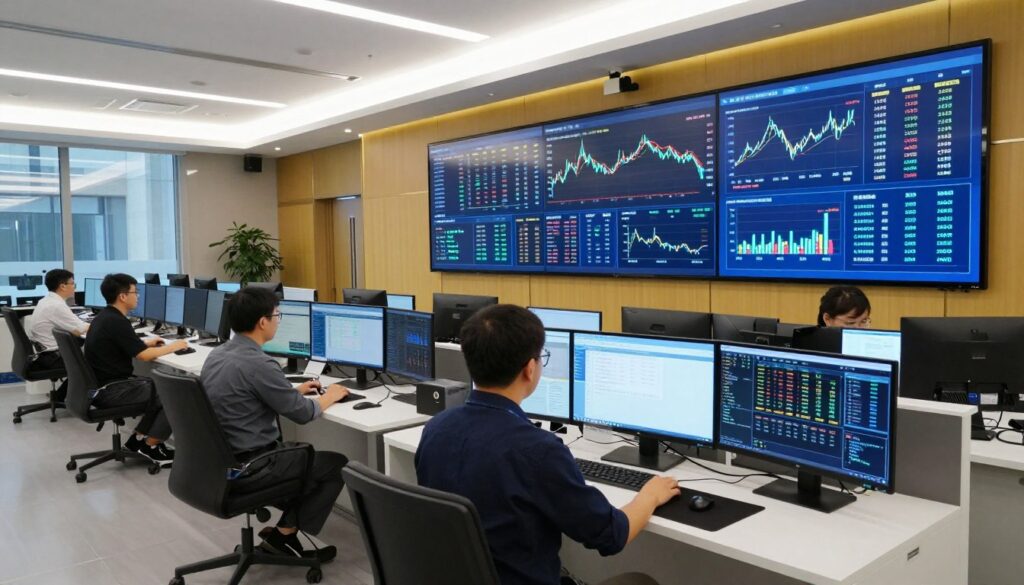
Financial institutions face enormous data volumes, complex regulatory requirements, and sophisticated security threats. Artificial intelligence provides tools to manage these challenges while improving customer satisfaction and operational efficiency.
Fraud Detection and Prevention Systems
Traditional fraud detection relies on rule-based systems that flag transactions matching predefined patterns. Criminals quickly adapt to circumvent these static rules, creating an ongoing cat-and-mouse game.
Machine learning models take a different approach. They analyze historical transaction data to learn normal behavior patterns for each customer. Any deviation from these patterns triggers alerts for further investigation.
These adaptive systems detect new fraud schemes without requiring manual rule updates. They continuously learn from new data, improving detection accuracy while reducing false positives that frustrate legitimate customers.
Major credit card networks report that AI-powered fraud detection systems identify suspicious activities with 95% accuracy while reducing false positive rates by 70%. This improvement saves millions in fraud losses while enhancing customer experience.
Real time analysis represents a critical capability. Fraud detection systems must evaluate transactions within milliseconds to approve or decline them before completion. Advanced machine learning models achieve this speed while maintaining high accuracy.
Algorithmic Trading and Market Analysis
Financial markets generate massive amounts of data every second. Human traders cannot possibly process this information quickly enough to identify fleeting opportunities.
Algorithmic trading systems analyze market data, news feeds, social media sentiment, and economic indicators in real time. They execute trades based on complex strategies far faster than human traders.
These systems identify arbitrage opportunities, predict price movements, and manage portfolio risk across global markets. High-frequency trading firms rely entirely on algorithmic systems to compete effectively.
Machine learning models also forecast market trends by analyzing historical patterns and current conditions. Investment firms use these predictions to inform trading strategies and portfolio allocation decisions.
Risk management benefits significantly from AI analysis. Systems evaluate portfolio exposure across multiple dimensions, simulate potential market scenarios, and recommend hedging strategies to protect against losses.
Credit Risk Assessment and Underwriting
Traditional credit scoring relies on limited data points like payment history and income levels. This approach excludes many potential borrowers who lack conventional credit histories.
Machine learning models analyze thousands of data points to assess creditworthiness more accurately. They consider education, employment history, transaction patterns, and alternative data sources that traditional scoring ignores.
This comprehensive analysis enables financial institutions to extend credit to previously underserved populations while maintaining acceptable risk levels. It also speeds up approval processes from days to minutes.
One major bank reported that AI-powered underwriting reduced loan default rates by 25% while approving 15% more applications. This balanced outcome demonstrates how better data analysis improves both risk management and market expansion.
Regulatory Compliance and Reporting
Financial institutions face complex regulatory compliance requirements that demand significant resources. Natural language processing automates much of this compliance work.
AI systems monitor transactions for suspicious activity, generate required reports, and flag potential regulatory violations. They analyze communications to detect market manipulation, insider trading, or other prohibited behaviors.
Regulatory compliance checks that previously required teams of analysts now happen automatically. Systems track regulatory changes and update monitoring parameters without manual intervention.
This automation reduces compliance costs while improving accuracy. Human reviewers focus on complex cases requiring judgment rather than routine monitoring tasks. Financial institutions report compliance cost savings of 30-50% after implementing AI-powered systems.
Personalized Financial Services
Customer expectations for personalized service extend to financial services. AI enables banks and investment firms to offer tailored recommendations at scale.
Robo-advisors provide investment guidance based on individual goals, risk tolerance, and financial situations. These automated platforms democratize access to financial planning previously available only to wealthy clients.
Banks use machine learning to offer personalized product recommendations. Systems analyze spending patterns, account balances, and life events to suggest relevant services like mortgages, investment accounts, or insurance products.
Virtual assistants handle routine customer inquiries through natural language interfaces. They check balances, transfer funds, answer questions, and resolve simple issues without human intervention. This 24/7 availability improves customer satisfaction while reducing support costs.
Financial Services AI Implementation Assessment
Evaluate your organization’s AI readiness with our comprehensive assessment. Identify high-impact opportunities, estimate ROI, and develop your implementation roadmap.
AI Advantages in Financial Services
- Enhanced fraud detection with 95%+ accuracy rates
- Real time transaction monitoring and analysis
- Automated regulatory compliance and reporting
- Personalized customer experiences at scale
- Reduced operational costs through process automation
- Faster credit decisions and loan approvals
- Improved risk assessment and portfolio management
- 24/7 customer service availability
Implementation Challenges
- High initial investment for system development
- Data privacy and security concerns
- Regulatory uncertainty around AI decision-making
- Need for continuous model monitoring and updates
- Integration complexity with legacy systems
- Potential algorithmic bias in lending decisions
- Skills gap in AI expertise within finance teams
- Customer trust concerns with automated decisions
Manufacturing Industry: Smart Production and Operational Excellence
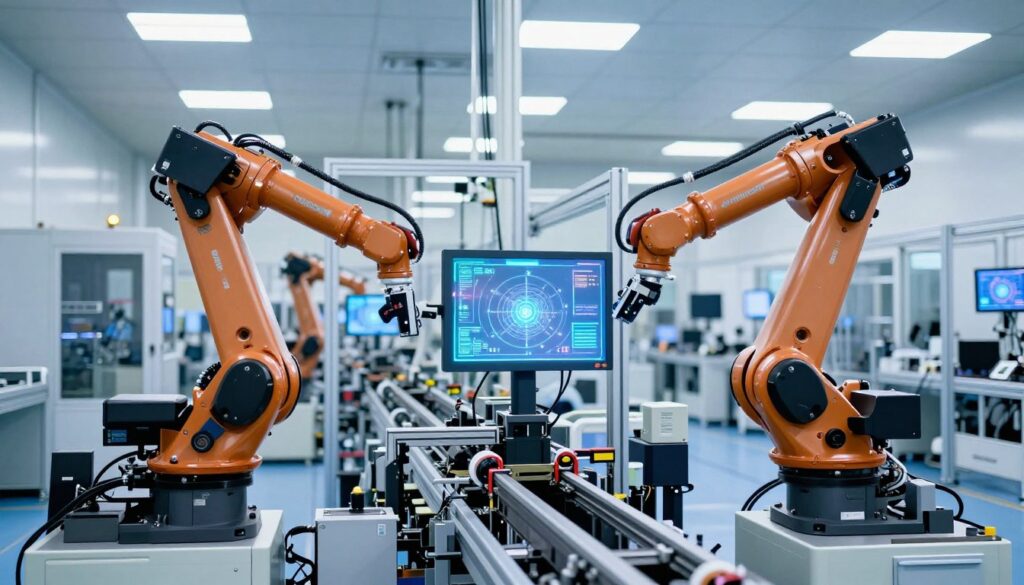
Manufacturing undergoes a fundamental transformation as artificial intelligence enables smarter, more efficient production processes. Factories evolve into intelligent environments that self-optimize, predict problems, and adapt to changing demands.
Predictive Maintenance Programs
Unplanned equipment failures cost manufacturers billions annually in lost production time, emergency repairs, and scrapped products. Traditional maintenance schedules either service equipment too frequently or miss developing problems.
Predictive maintenance uses sensor data and machine learning to forecast equipment failures before they occur. Systems monitor vibration, temperature, pressure, and other indicators to detect early warning signs of impending breakdowns.
These AI-powered systems analyze patterns in sensor data to determine optimal maintenance timing. They schedule service when needed rather than on arbitrary calendars, maximizing equipment uptime while minimizing maintenance costs.
One automotive manufacturer reduced unplanned downtime by 60% after implementing predictive maintenance. The system identified bearing wear, motor degradation, and hydraulic issues days or weeks before failure.
The technology also optimizes maintenance resource allocation. Facilities know in advance which parts to order, which technicians to schedule, and how long repairs will take. This planning reduces both downtime and maintenance expenses.
Quality Control and Defect Detection
Computer vision systems revolutionize quality control on production lines. They inspect products at speeds impossible for human workers while maintaining consistent accuracy without fatigue.
These systems examine every product for defects, comparing visual characteristics against quality standards. They detect surface flaws, dimensional variations, assembly errors, and packaging problems in real time.
Detection accuracy often exceeds 99%, far surpassing human inspection rates. The systems identify subtle defects that human inspectors might miss while eliminating variation from inspector fatigue or distraction.
Automated quality control reduces waste by catching defects earlier in production. Problems get identified and corrected before materials and labor create finished but defective products.
One electronics manufacturer reported that AI-powered inspection reduced defect rates from 3% to 0.3% while eliminating manual inspection labor. The quality improvement enhanced brand reputation while reducing warranty costs.
Production Planning and Optimization
Manufacturing involves complex planning challenges. Facilities must balance production capacity, material availability, labor schedules, and customer demands while minimizing costs and maximizing efficiency.
AI systems optimize these interconnected variables simultaneously. They analyze historical production data, current orders, inventory levels, and resource availability to generate optimal production schedules.
These schedules maximize throughput while minimizing changeover time, inventory carrying costs, and production bottlenecks. The systems continuously adjust plans as conditions change, maintaining optimization despite disruptions.
Machine learning models also forecast demand with greater accuracy than traditional methods. Better predictions enable more efficient inventory management and production planning, reducing both shortages and excess stock.
Supply Chain Management Enhancement
Manufacturing relies on complex supply chain networks that source materials from multiple suppliers, manage logistics, and deliver finished products to customers. AI improves every aspect of this ecosystem.
Predictive analytics forecast supply chain disruptions before they impact production. Systems monitor supplier performance, transportation networks, weather patterns, and geopolitical factors to identify potential problems.
This early warning capability enables proactive responses. Manufacturers can switch suppliers, adjust inventory buffers, or modify production schedules to mitigate disruption impacts.
Route optimization algorithms determine the most efficient logistics paths, reducing transportation costs and delivery times. They consider fuel prices, traffic patterns, delivery windows, and vehicle capacity to minimize overall logistics expenses.
Inventory optimization represents another crucial application. AI systems balance the costs of holding inventory against the risks of stockouts, determining optimal safety stock levels for each component.
Collaborative Robotics and Human-Machine Interaction
Modern manufacturing increasingly features collaborative robots that work alongside human workers rather than replacing them. These systems handle repetitive, dangerous, or physically demanding tasks while human workers focus on complex decision-making and problem-solving.
AI enables these robots to adapt to variations in their environment and tasks. They can handle products with slight dimensional differences, adjust to different production requirements, and safely work in shared spaces with human workers.
Natural language processing allows workers to communicate with automated systems using voice commands. This interface makes it easier for employees without technical training to interact with sophisticated machinery.
The combination of human creativity and machine precision creates highly efficient production environments. Workers provide judgment, problem-solving, and adaptability while automation delivers consistency, speed, and tireless operation.
Predictive Maintenance Solutions
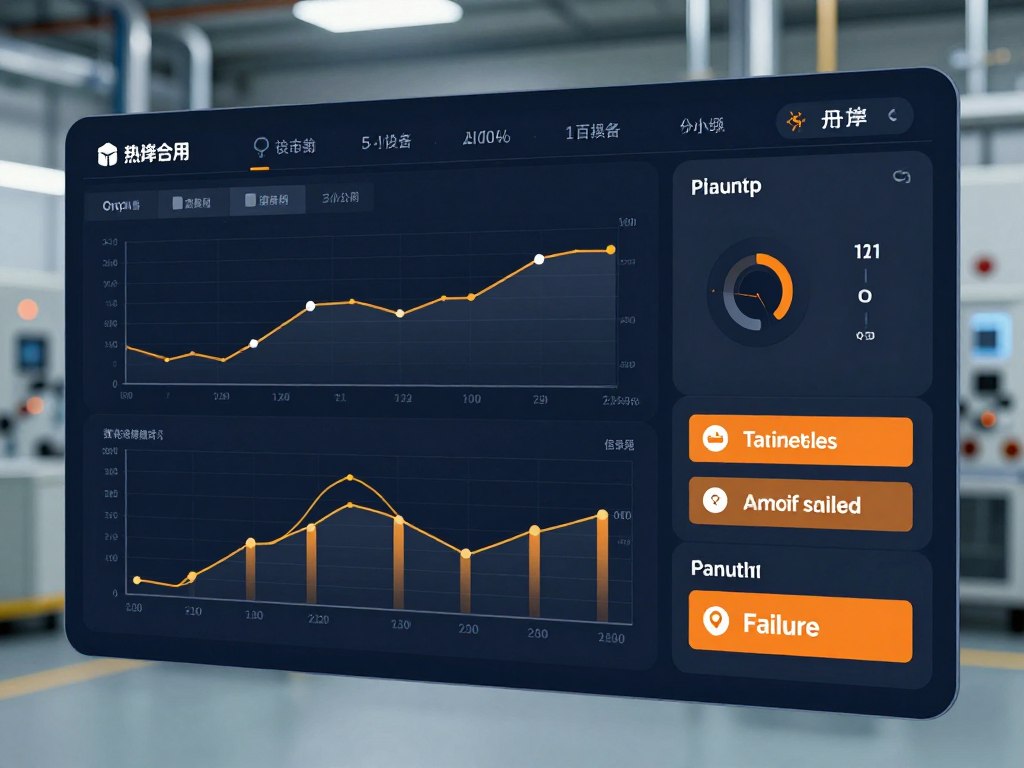
Reduce unplanned downtime by up to 60% with AI-powered predictive maintenance. Our systems analyze sensor data from your equipment to forecast failures before they occur, optimizing maintenance schedules and reducing costs.
- Real-time equipment health monitoring
- Automated failure prediction algorithms
- Integration with existing maintenance management systems
- ROI typically achieved within 8-12 months

AI-Powered Quality Control
Achieve 99%+ inspection accuracy with computer vision quality control systems. Identify defects in real time, reduce waste, and maintain consistent product quality across all production lines.
- Automated visual inspection at production speed
- Surface defect and dimensional variation detection
- Customizable quality criteria and pass/fail parameters
- Detailed quality analytics and reporting
Production Optimization Platform
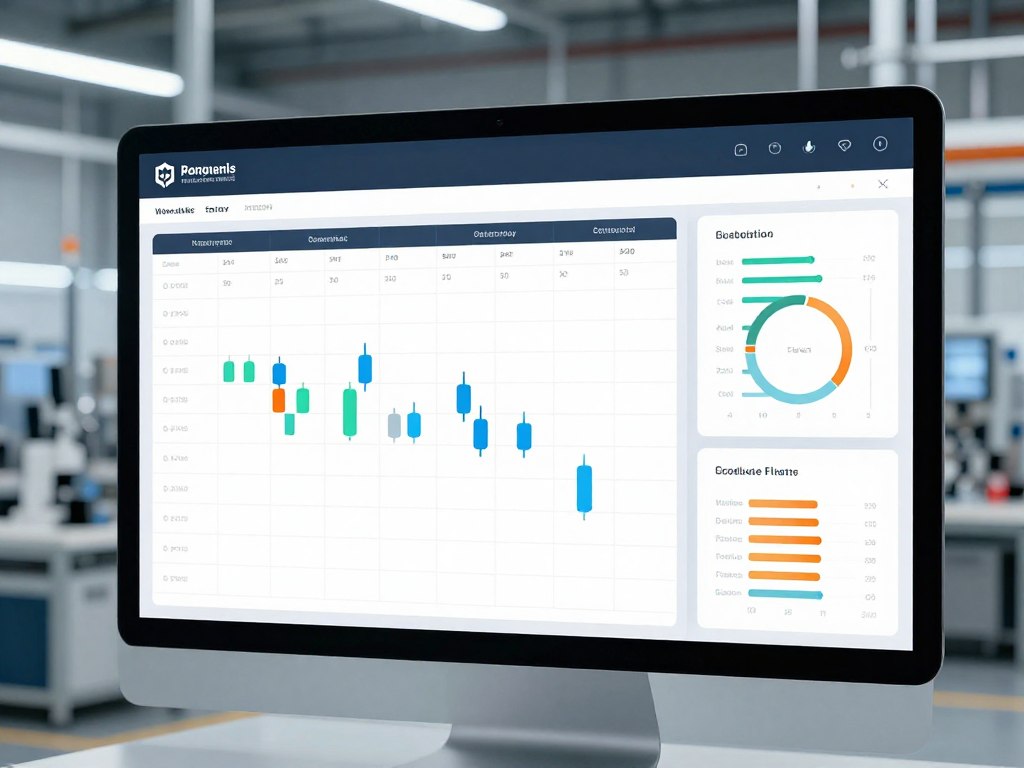
Maximize manufacturing efficiency with AI-driven production planning. Optimize schedules, reduce changeover time, balance resource allocation, and improve overall equipment effectiveness.
- Dynamic production schedule optimization
- Demand forecasting and inventory planning
- Bottleneck identification and resolution
- Integration with ERP and MES systems
Retail Industry: Personalizing Customer Experience and Optimizing Operations
Retail businesses compete in an environment where customer expectations constantly rise. Artificial intelligence enables retailers to deliver personalized experiences, optimize inventory, and improve operational efficiency across physical and digital channels.
Personalized Product Recommendations
Online shoppers expect relevant product suggestions based on their interests and behavior. Recommendation engines analyze browsing history, purchase patterns, and similar customer profiles to suggest products each shopper might want.
These AI-powered systems drive significant revenue increases. Studies show that personalized product recommendations account for 30-35% of revenue for major e-commerce platforms.
The algorithms consider multiple factors simultaneously. They analyze what products customers view, how long they spend on each page, what they add to shopping carts, and what they ultimately purchase. This comprehensive analysis creates increasingly accurate predictions of customer preferences.
Recommendation systems also identify complementary products. When customers add items to their cart, the system suggests related accessories or commonly purchased combinations, increasing average order values.
Real time personalization extends beyond product suggestions. Retailers dynamically adjust homepage layouts, promotional offers, and content based on individual customer profiles and current behavior.
Dynamic Pricing Strategies
Retail pricing traditionally relies on static strategies with periodic manual adjustments. AI enables dynamic pricing that responds to market conditions, competitor actions, and demand patterns in real time.
These systems analyze competitor pricing, inventory levels, seasonal demand, customer behavior, and other factors to determine optimal price points. They dynamically adjust prices to maximize revenue while remaining competitive.
Airlines and hotels have used dynamic pricing for years. Now retailers across industries adopt similar approaches, changing prices multiple times daily based on market conditions.
The algorithms balance multiple objectives. They aim to maximize profit margins while maintaining competitive positioning, clearing excess inventory, and avoiding stockouts of popular items.
One major retailer reported revenue increases of 8-12% after implementing AI-powered dynamic pricing. The system optimized prices across thousands of products, responding faster than competitors to market changes.
Inventory Management and Demand Forecasting
Retailers struggle to balance inventory levels. Too much stock ties up capital and leads to markdowns. Too little results in lost sales and disappointed customers.
Machine learning models forecast demand with greater accuracy than traditional statistical methods. They analyze historical sales, seasonal patterns, promotional impacts, weather data, and economic indicators to predict future demand.
These improved forecasts enable better inventory decisions. Retailers stock the right products in the right quantities at the right locations, minimizing both stockouts and excess inventory.
The systems also optimize inventory allocation across the supply chain. They determine which products to stock in regional distribution centers versus local stores, balancing service levels against inventory carrying costs.
Automated replenishment systems generate purchase orders based on these forecasts and current inventory levels. This automation reduces manual planning work while improving inventory availability.
Customer Service Automation
Retail customer service handles enormous volumes of routine inquiries about order status, product information, return policies, and account questions. Natural language processing enables automated responses to these common requests.
Chatbots and virtual assistants provide 24/7 customer support without human intervention. They answer questions, track orders, process returns, and resolve simple issues instantly.
These automated systems handle 70-80% of routine customer service contacts. Human agents focus on complex issues requiring judgment, empathy, or special handling.
Customer satisfaction often improves with automated service despite the lack of human interaction. Customers receive instant responses rather than waiting in phone queues or for email replies.
The systems continuously learn from customer interactions. They identify new types of questions, recognize when to escalate issues to human agents, and improve response accuracy over time.
Physical Store Optimization
AI transforms physical retail environments alongside digital channels. Computer vision systems track customer movement through stores, identifying popular paths, congestion points, and overlooked areas.
This analysis informs store layout optimization. Retailers position products and promotional displays to maximize visibility and sales based on actual customer behavior patterns.
Automated checkout systems eliminate traditional cashier lines. Customers scan items with mobile apps or walk through sensor-equipped stores where computer vision automatically tracks purchases. This convenience enhances customer experience while reducing labor costs.
Shelf monitoring systems use computer vision to detect out-of-stock conditions, misplaced products, and incorrect pricing. They alert store staff to fix problems before customers encounter them.
Some retailers deploy robots to scan shelves overnight, checking inventory accuracy and product placement. This automation ensures stores maintain proper presentation without dedicating staff to manual inspections.
Key Retail AI Success Metrics
Retailers implementing AI solutions typically track these performance indicators to measure impact and ROI:
- Conversion rate improvement from personalized recommendations
- Average order value increase through cross-selling and upselling
- Inventory turnover acceleration and carrying cost reduction
- Customer service cost per contact reduction
- Stock-out frequency decrease and lost sales prevention
- Customer satisfaction scores and Net Promoter Score changes
- Labor productivity improvement in stores and warehouses
- Marketing campaign effectiveness and customer acquisition costs
Sentiment Analysis and Social Media Monitoring
Retailers need to understand customer opinions about products, services, and brand experiences. Natural language processing analyzes customer reviews, social media posts, and feedback to extract sentiment and identify trends.
These sentiment analysis systems process thousands of customer comments daily, identifying common complaints, popular features, and emerging issues. This feedback helps retailers improve products and services.
Social media monitoring tracks brand mentions, competitor comparisons, and industry trends. Retailers identify influencer partnerships, respond to customer concerns, and detect potential public relations issues early.
The systems categorize feedback by topic, enabling focused analysis. Retailers can examine sentiment specifically related to customer service, product quality, pricing, or delivery experiences.
This comprehensive feedback analysis informs product development, marketing strategies, and operational improvements. Retailers make data-driven decisions based on actual customer opinions rather than assumptions.
Transportation and Logistics: Autonomous Systems and Route Optimization

Transportation and logistics industries leverage artificial intelligence to improve efficiency, reduce costs, and enhance safety. From autonomous vehicles to intelligent route planning, AI reshapes how goods and people move.
Autonomous Vehicle Development
Self-driving vehicles represent one of the most ambitious AI applications. These systems combine computer vision, sensor data processing, and machine learning to navigate complex environments without human intervention.
The technology processes inputs from cameras, radar, lidar, and other sensors to create detailed environmental maps. AI algorithms identify vehicles, pedestrians, traffic signals, road markings, and obstacles in real time.
Decision-making systems determine appropriate responses to detected conditions. They control acceleration, braking, and steering to maintain safe operation while following traffic rules and reaching destinations efficiently.
Autonomous trucks show particular promise for long-haul freight transportation. They can operate continuously without rest breaks, reducing delivery times and transportation costs while potentially improving safety.
Several companies already deploy autonomous vehicles in controlled environments like warehouses, mining operations, and dedicated freight corridors. Full autonomy in complex urban environments remains under development but progresses steadily.
Route Optimization and Fleet Management
Transportation companies manage complex logistics involving multiple vehicles, delivery locations, time windows, and constraints. AI-powered route optimization determines the most efficient paths for each vehicle.
These systems consider traffic conditions, delivery time windows, vehicle capacity, fuel consumption, and driver schedules simultaneously. They generate routes that minimize total distance, time, and cost while meeting all service commitments.
Real time route adjustment represents a crucial capability. As conditions change throughout the day, the system dynamically reroutes vehicles to avoid traffic, accommodate new delivery requests, or respond to vehicle breakdowns.
Fleet management systems track vehicle locations, monitor driver behavior, predict maintenance needs, and optimize fuel consumption. This comprehensive visibility improves operational efficiency across entire transportation networks.
One major delivery company reported fuel cost reductions of 15-20% after implementing AI-powered route optimization. The system also improved on-time delivery rates while reducing total miles driven.
Demand Prediction and Capacity Planning
Transportation services must balance capacity against demand. Too much capacity wastes resources. Too little results in service failures and customer dissatisfaction.
Machine learning models forecast transportation demand based on historical patterns, seasonal trends, economic conditions, and special events. These predictions enable better capacity planning and resource allocation.
Ride-sharing services use demand prediction to position drivers in high-demand areas before requests arrive. This proactive positioning reduces customer wait times while maximizing driver utilization.
Freight companies forecast shipping volumes to optimize terminal staffing, equipment allocation, and carrier contracting. Better predictions reduce both capacity shortages and excess resource costs.
Warehouse Automation and Robotics
Modern warehouses increasingly rely on AI-powered robots for material handling, inventory management, and order fulfillment. These systems work alongside human workers to improve efficiency and accuracy.
Autonomous mobile robots transport goods between storage locations and packing stations. They navigate warehouse floors, avoid obstacles, and optimize their paths to minimize travel time.
Robotic picking systems use computer vision to identify products and grasp them for order fulfillment. While human workers still outperform robots in handling varied items, automation excels at repetitive tasks with consistent products.
Warehouse management systems optimize storage locations based on product demand, order patterns, and space utilization. They direct workers and robots to the most efficient picking paths, reducing order fulfillment time.
These integrated systems process orders faster with fewer errors than manual operations. Some automated warehouses achieve 99.9% picking accuracy while processing thousands of orders daily.
Predictive Maintenance for Transportation Assets
Transportation companies operate expensive vehicle fleets that require careful maintenance management. Predictive maintenance applies to trucks, aircraft, ships, and rail equipment just as it does to manufacturing machinery.
Sensor data from vehicles feeds into machine learning models that predict component failures. These systems identify developing problems with engines, transmissions, brakes, and other critical systems before breakdowns occur.
This predictive capability reduces unplanned downtime that disrupts delivery schedules and frustrates customers. It also optimizes maintenance spending by servicing equipment when needed rather than on fixed schedules.
Airlines use predictive maintenance to improve aircraft availability and safety. The systems analyze engine performance data, identify early warning signs of problems, and schedule maintenance during already-planned ground time.
Transportation AI Investment Priorities
Industry surveys reveal where transportation companies focus their AI investments and the expected benefits from each application area.
| AI Application Area | Investment Priority | Expected Benefit |
| Route Optimization | Very High | 15-20% cost reduction |
| Predictive Maintenance | High | 30-40% downtime reduction |
| Demand Forecasting | High | 10-15% capacity optimization |
| Autonomous Vehicles | Medium to High | 20-30% efficiency gain |
| Warehouse Automation | Medium | 25-35% productivity increase |
Implementation Roadmap Considerations
Successful AI adoption in transportation requires careful planning and phased implementation strategies.
- Start with high-ROI, lower-complexity applications like route optimization
- Build data infrastructure to support advanced analytics and machine learning
- Develop partnerships with technology providers for specialized expertise
- Train workforce on AI tools and new operational processes
- Implement pilot programs before full-scale deployment
- Establish performance metrics to measure AI impact and ROI
- Plan for continuous improvement and system refinement
- Address regulatory compliance for autonomous systems
Education Sector: Personalized Learning and Administrative Efficiency
Educational institutions adopt artificial intelligence to personalize learning experiences, improve student outcomes, and streamline administrative operations. These technologies adapt to individual student needs while helping educators work more effectively.
Adaptive Learning Platforms
Traditional classroom instruction delivers the same content at the same pace to all students regardless of individual learning styles or comprehension levels. Adaptive learning platforms use AI to customize educational content for each student.
These systems assess student knowledge through initial diagnostics and ongoing performance tracking. They identify strengths, weaknesses, and learning preferences to create personalized learning paths.
The platforms adjust content difficulty, presentation style, and pacing based on student responses. Struggling students receive additional practice and alternative explanations. Advanced students move ahead to more challenging material.
Research shows that adaptive learning improves student outcomes. Studies report learning gains of 20-30% compared to traditional instruction, with particularly strong benefits for struggling students who receive targeted support.
These platforms also provide detailed analytics to educators. Teachers see exactly where each student excels or struggles, enabling targeted interventions and personalized assistance.
Automated Grading and Assessment
Grading consumes enormous amounts of educator time, particularly for writing-intensive subjects. Natural language processing enables automated evaluation of essays, short answers, and other written work.
AI systems analyze writing quality, argument structure, factual accuracy, and grammar. They provide detailed feedback to students while generating grades that correlate strongly with human evaluator scores.
This automation frees educators from routine grading tasks. They focus on providing personalized feedback, developing engaging lessons, and working directly with students.
Multiple-choice and quantitative assessments benefit from instant automated grading. Students receive immediate feedback, enabling faster learning cycles compared to waiting days for traditional grading.
The systems also detect patterns in student errors across entire classes. Educators identify common misconceptions and adjust instruction to address widespread comprehension gaps.
Intelligent Tutoring Systems
Personal tutoring dramatically improves student outcomes but remains prohibitively expensive for most students. AI-powered tutoring systems provide personalized instruction at scale.
These virtual tutors engage students in interactive learning experiences. They ask questions, provide explanations, offer hints, and guide students through problem-solving processes.
The systems adapt their teaching strategies based on student responses. They recognize when students struggle and adjust their approach, trying different explanations or breaking complex concepts into smaller steps.
Natural language interfaces enable conversational interaction. Students ask questions in their own words and receive relevant responses, creating a more natural learning experience.
Studies show that intelligent tutoring systems can match human tutor effectiveness for certain subjects, particularly mathematics and science. They provide affordable access to personalized support for students who cannot afford private tutoring.
Student Success Prediction and Intervention
Educational institutions want to identify at-risk students before they fail courses or drop out. Predictive analytics analyze academic performance, attendance, engagement, and demographic factors to forecast student success.
These early warning systems flag students who face higher risks of academic difficulty. Advisors can reach out proactively, offering support services, tutoring, or other interventions before problems escalate.
The models identify which factors most strongly predict student struggles. Institutions use these insights to improve support programs and address systemic challenges affecting student success.
Some universities report retention rate improvements of 5-10% after implementing predictive analytics and proactive intervention programs. These improvements benefit students while reducing institutional costs from student attrition.
Administrative Process Automation
Educational institutions handle enormous administrative workloads including admissions processing, financial aid management, scheduling, and student services. AI automates many of these routine processes.
Chatbots answer student questions about admissions, course registration, financial aid, and campus services. They provide 24/7 support for common inquiries, reducing burden on administrative staff.
Application processing systems review admissions applications, extract relevant information, and flag applications requiring special consideration. This automation accelerates admissions cycles while ensuring consistent evaluation.
Scheduling algorithms optimize course timetables, room assignments, and resource allocation. They balance competing constraints to create schedules that maximize utilization while minimizing student conflicts.
These administrative efficiencies reduce costs while improving service quality. Students receive faster responses and smoother experiences while institutions operate more effectively with existing resources.
Education AI Success Stories
Multiple institutions report significant improvements after implementing AI-powered educational technologies:
- Georgia State University reduced student attrition by 21% using predictive analytics and proactive advising
- Arizona State University improved course completion rates by 18% with adaptive learning platforms
- Deakin University automated 85% of routine student inquiries through AI chatbots
- Knewton adaptive learning platform shows average learning gains of 62% compared to traditional instruction
- Carnegie Learning intelligent tutoring systems match human tutor effectiveness in mathematics instruction
Agriculture: Precision Farming and Crop Optimization
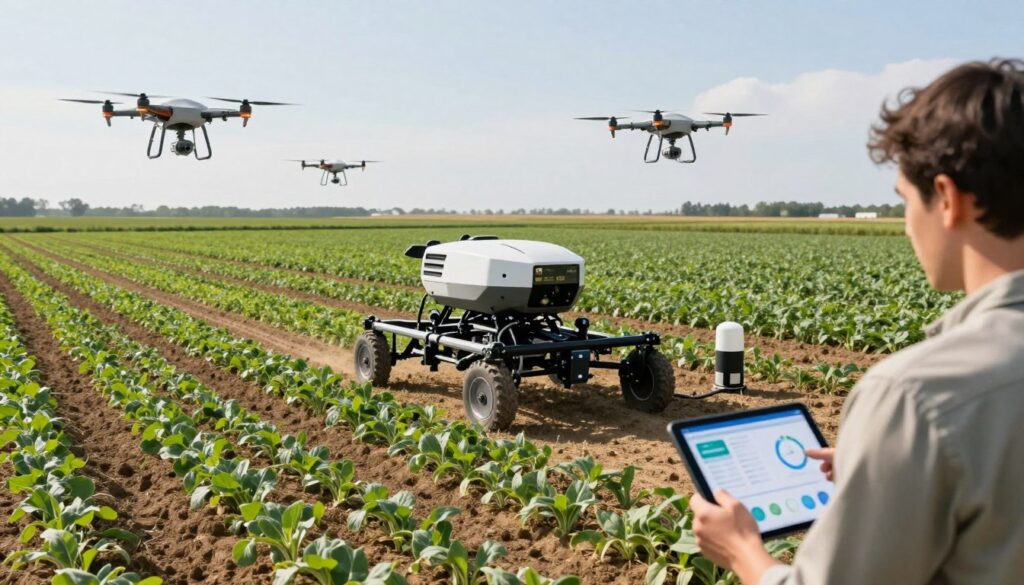
Agriculture embraces artificial intelligence to improve crop yields, reduce resource consumption, and address food security challenges. Precision farming technologies enable data-driven decisions that optimize every aspect of agricultural production.
Crop Monitoring and Health Assessment
Traditional crop monitoring relies on manual field inspections that cover limited areas and miss early signs of problems. Computer vision systems mounted on drones or satellites analyze entire fields to identify crop health issues.
These systems detect plant stress, disease outbreaks, pest infestations, and nutrient deficiencies before they become visible to human observers. Early detection enables targeted interventions that prevent widespread crop damage.
Multispectral imaging reveals information invisible to human eyes. Different wavelengths of light indicate plant health, water stress, and chlorophyll content, providing detailed insights into crop conditions.
Machine learning models analyze this imagery to classify specific diseases, pest types, and deficiency patterns. Farmers receive actionable diagnoses rather than just general health alerts.
One large farming operation reported pest-related crop losses decreased by 40% after implementing AI-powered monitoring. Early detection and targeted treatment prevented infestations from spreading across entire fields.
Precision Agriculture and Resource Optimization
Traditional farming applies water, fertilizer, and pesticides uniformly across entire fields. This approach wastes resources and increases environmental impact in areas that need less input.
Precision agriculture uses AI to optimize resource application at granular levels. Systems analyze soil conditions, crop needs, and weather forecasts to determine exactly where and when to apply inputs.
Variable rate technology adjusts application rates automatically as equipment moves through fields. Seeds, fertilizer, water, and pesticides get applied only where needed, in quantities that optimize crop growth.
This targeted approach reduces input costs while improving yields and environmental sustainability. Farmers use 20-30% less water, fertilizer, and pesticides while maintaining or increasing production.
Sensor data from soil moisture monitors, weather stations, and crop health assessments feeds into these optimization systems. Machine learning models continuously refine recommendations based on actual field conditions and crop responses.
Automated Harvesting and Equipment Operation
Agricultural labor shortages and rising costs drive adoption of automated farming equipment. AI enables tractors, harvesters, and other machinery to operate autonomously with minimal human supervision.
Computer vision guides autonomous equipment through fields, following optimal paths while avoiding obstacles. These systems work day and night, maximizing productivity during critical planting and harvest windows.
Robotic harvesting systems identify ripe crops using visual analysis. They selectively pick ready produce while leaving unripe items to mature, improving harvest quality and reducing waste.
The technology proves particularly valuable for specialty crops requiring careful handling. Robotic strawberry and apple pickers match human harvester quality while working continuously without fatigue.
Yield Prediction and Market Planning
Farmers make critical business decisions based on expected crop yields. Machine learning models forecast yields more accurately than traditional estimation methods.
These systems analyze weather data, soil conditions, crop health imagery, and historical patterns to predict harvests weeks or months in advance. Better predictions enable smarter decisions about forward contracting, storage, and marketing.
Commodity price forecasting helps farmers optimize sales timing. AI models analyze market supply, demand indicators, weather patterns affecting other growing regions, and economic factors to predict price movements.
This market intelligence enables farmers to maximize revenue by selling when prices peak or storing crops during temporary price dips. Small improvements in marketing timing create significant profit impacts on large operations.
Livestock Management and Welfare
AI applications extend beyond crop farming to livestock operations. Computer vision systems monitor animal health, detect injuries or illnesses, and track behavior patterns.
Automated milking systems use machine learning to optimize milking schedules and detect mastitis or other health issues early. This automation improves animal welfare while increasing dairy production efficiency.
Precision feeding systems adjust nutrition delivery based on individual animal needs, growth stages, and production levels. This optimization improves feed conversion efficiency while reducing waste.
Environmental control systems in livestock facilities automatically adjust temperature, ventilation, and humidity to maintain optimal conditions. Sensor data and machine learning ensure animal comfort while minimizing energy consumption.
Energy Sector: Smart Grids and Renewable Integration
The energy industry leverages artificial intelligence to improve grid reliability, integrate renewable sources, and optimize power generation and distribution. These technologies address the complex challenges of modern electrical systems.
Demand Forecasting and Load Balancing
Electricity grids must balance generation and consumption in real time. Excess generation wastes resources while insufficient generation causes blackouts. Accurate demand forecasting enables better operational planning.
Machine learning models forecast electricity demand based on weather patterns, historical usage, economic activity, and time-of-day patterns. These predictions help utilities optimize generation schedules and reduce costs.
Short-term forecasts guide real time operational decisions about which power plants to activate. Long-term predictions inform infrastructure planning and capacity investments.
Renewable energy integration complicates demand forecasting. Solar and wind generation fluctuate based on weather conditions, requiring more sophisticated balancing strategies.
AI systems predict renewable generation output and coordinate it with traditional power sources and energy storage. This optimization maximizes renewable utilization while maintaining grid stability.
Predictive Maintenance for Power Infrastructure
Electrical grid failures cause widespread disruptions and economic losses. Predictive maintenance identifies equipment problems before they cause outages.
Utilities monitor transformers, transmission lines, substations, and other infrastructure using sensors that track temperature, vibration, electrical characteristics, and environmental conditions. Machine learning analyzes this sensor data to predict failures.
Early warning of potential problems enables scheduled maintenance during low-demand periods rather than emergency repairs during outages. This proactive approach improves reliability while reducing maintenance costs.
One major utility reported a 30% reduction in unplanned outages after implementing AI-powered predictive maintenance. The system identified transformer degradation, insulation breakdown, and other issues weeks before failure.
Smart Grid Optimization
Modern electrical grids incorporate distributed generation, energy storage, and bidirectional power flow. Managing these complex systems requires sophisticated optimization algorithms.
AI-powered grid management systems continuously analyze network conditions and adjust operations to maintain optimal performance. They route power through the most efficient paths, minimize transmission losses, and coordinate distributed resources.
Demand response programs use machine learning to predict which customers will reduce consumption in response to price signals or direct load control requests. This capability helps utilities manage peak demand without building additional generation capacity.
Automated fault detection and isolation systems identify grid problems and reroute power to maintain service. These systems respond faster than human operators, minimizing outage duration and affected customer counts.
Energy Trading and Market Operations
Wholesale electricity markets involve complex trading where generators sell power and utilities purchase supply. AI systems optimize trading strategies based on price forecasts, generation costs, and operational constraints.
These systems analyze market data, weather forecasts, and grid conditions to predict price movements. They automate bidding strategies that maximize revenue for generators or minimize costs for purchasers.
The speed and complexity of modern electricity markets favor algorithmic trading. AI systems process information and execute trades far faster than human traders, capturing arbitrage opportunities that exist for only minutes.
Renewable Energy Optimization
Solar and wind farms use AI to maximize energy production from variable weather conditions. Systems adjust panel angles, turbine orientations, and operational parameters based on real time conditions and weather forecasts.
Energy storage optimization determines when to charge batteries from excess generation and when to discharge them to meet demand or capture high prices. These decisions consider electricity prices, weather forecasts, and grid conditions.
Some renewable facilities report 10-15% production increases after implementing AI-powered optimization. Better forecasting and operational adjustments capture more of the available energy resource.
Download: AI Implementation Guide for Energy Sector
Access our comprehensive 45-page guide covering AI applications, implementation strategies, ROI analysis, and case studies specific to energy industry challenges. Used by over 200 utilities and energy companies worldwide.
Telecommunications: Network Optimization and Customer Service
Telecommunications providers manage complex networks serving millions of customers. Artificial intelligence optimizes network performance, predicts equipment failures, and enhances customer experiences across these massive infrastructures.
Network Performance Optimization
Modern telecommunications networks handle enormous data volumes across cellular, fiber, and other technologies. AI systems continuously analyze network performance and adjust configurations to maintain optimal service quality.
These systems monitor traffic patterns, identify congestion points, and dynamically allocate bandwidth to maintain service levels. They automatically adjust network parameters based on real time conditions.
Machine learning models predict network demand based on historical patterns, special events, and usage trends. This forecasting enables proactive capacity planning and resource allocation.
Self-optimizing networks use AI to adjust cell tower configurations, power levels, and frequency allocations. These continuous optimizations improve coverage, capacity, and energy efficiency without manual intervention.
Predictive Maintenance and Fault Detection
Telecommunications infrastructure requires constant maintenance to prevent service disruptions. Predictive maintenance systems analyze equipment performance data to identify developing problems.
Network equipment generates massive amounts of operational data including error rates, temperature, power consumption, and traffic loads. Machine learning models detect patterns indicating impending failures.
Early problem detection enables scheduled maintenance before outages occur. Technicians replace failing components during planned maintenance windows rather than responding to emergency failures.
Automated fault detection systems identify network problems and often resolve them without human intervention. They isolate failures, reroute traffic, and notify technicians only when manual intervention becomes necessary.
Customer Churn Prediction and Retention
Telecommunications companies face high customer acquisition costs and intense competition. Predicting which customers might cancel service enables targeted retention efforts.
Churn prediction models analyze usage patterns, service interactions, billing history, and demographic data to identify at-risk customers. These predictions trigger retention campaigns before customers actually cancel.
The systems identify which retention offers work best for different customer segments. This targeting improves retention rates while controlling discount and incentive costs.
One major carrier reported 25% improvement in customer retention after implementing AI-powered churn prediction. Targeted interventions kept high-value customers who otherwise would have switched providers.
Virtual Assistants and Support Automation
Telecommunications customer service handles millions of inquiries about billing, technical support, plan changes, and service issues. AI-powered virtual assistants automate responses to routine requests.
These systems use natural language processing to understand customer questions and provide relevant answers. They handle account inquiries, troubleshoot common technical problems, and process service changes.
Automated troubleshooting guides customers through problem resolution steps. The systems run network diagnostics, reset equipment remotely, and resolve many issues without human technician involvement.
Call center automation reduces customer wait times and operational costs. Human agents focus on complex problems requiring expertise while AI handles routine interactions.
Network Security and Fraud Detection
Telecommunications networks face constant security threats from hackers, fraudsters, and malicious actors. AI systems detect and respond to these threats more effectively than traditional security approaches.
Anomaly detection algorithms identify unusual network traffic patterns that might indicate cyberattacks. They distinguish malicious activity from legitimate usage spikes, triggering appropriate security responses.
Fraud detection systems identify suspicious calling patterns, unauthorized access attempts, and account takeover attacks. Real time analysis stops fraudulent activity before significant losses occur.
These security systems continuously learn from new threats. They adapt to evolving attack techniques without requiring manual rule updates from security teams.
Media and Entertainment: Content Personalization and Production

Media and entertainment companies use artificial intelligence to personalize content recommendations, automate production tasks, and optimize content delivery. These technologies transform how audiences discover and consume entertainment.
Content Recommendation Engines
Streaming platforms offer thousands of titles, creating a discovery challenge for viewers. Recommendation engines analyze viewing history, ratings, and preferences to suggest content each user might enjoy.
These systems drive significant engagement increases. Studies show personalized recommendations account for 70-80% of content watched on major streaming platforms.
The algorithms consider multiple factors including viewing history, time of day, device type, and similar user preferences. This multi-dimensional analysis creates increasingly accurate predictions of user interests.
Collaborative filtering identifies patterns across millions of users. When users with similar tastes enjoy certain content, the system recommends those titles to other users with matching preferences.
Content features like genre, actors, directors, themes, and mood also inform recommendations. The systems balance exploiting known user preferences with exploring potentially interesting new content categories.
Automated Video Editing and Production
Video production traditionally requires skilled editors working for hours or days. AI-powered editing tools automate many production tasks, reducing time and costs.
These systems identify key moments in raw footage, remove unwanted sections, and assemble edited videos following specified styles. They handle routine editing tasks that follow predictable patterns.
Color correction and visual enhancement algorithms automatically adjust video appearance for optimal quality. They normalize lighting, enhance colors, and stabilize shaky footage.
Speech recognition and natural language processing generate automatic captions, subtitles, and transcripts. This automation improves accessibility while reducing manual transcription costs.
Some news organizations use AI to generate short highlight videos from longer broadcasts. The systems identify important segments, extract them, and create shareable clips for social media distribution.
Content Moderation and Copyright Protection
User-generated content platforms must moderate billions of uploads for inappropriate material, copyright violations, and harmful content. Computer vision and natural language processing enable automated moderation at scale.
These systems scan uploaded videos, images, and text for policy violations. They identify graphic violence, explicit content, hate speech, and other prohibited material before it reaches audiences.
Copyright protection systems compare uploaded content against databases of protected works. They automatically detect and remove unauthorized copyrighted material or flag it for review.
The automation happens in real time, preventing policy violations from appearing publicly. Human reviewers handle edge cases and appeals while AI processes the vast majority of content automatically.
Audience Analytics and Engagement Optimization
Media companies need to understand audience preferences and behavior. AI systems analyze viewing patterns, engagement metrics, and demographic data to extract actionable insights.
These analytics identify which content resonates with different audience segments. Producers use these insights to inform content development decisions and marketing strategies.
A/B testing algorithms optimize thumbnails, titles, descriptions, and promotional materials. They test variations and identify which versions drive higher engagement.
Engagement prediction models forecast which new content will succeed before release. These predictions inform production investments and marketing budget allocations.
Dynamic Ad Insertion and Monetization
Digital media enables targeted advertising that traditional broadcast cannot match. AI systems analyze viewer profiles and content context to select optimal advertisements.
Dynamic ad insertion places different ads into the same content for different viewers. This personalization improves ad relevance while maximizing revenue per viewer.
The systems balance advertiser objectives, viewer experience, and revenue optimization. They select ad combinations that generate maximum revenue without degrading user satisfaction.
Real time bidding algorithms optimize ad prices based on viewer value, inventory availability, and advertiser budgets. This automated trading maximizes advertising revenue across millions of ad impressions.
Real Estate: Property Valuation and Market Analysis
Real estate professionals leverage artificial intelligence for property valuation, market analysis, and customer matching. These technologies improve accuracy and efficiency across residential and commercial real estate transactions.
Automated Property Valuation
Traditional property appraisal requires manual inspection and comparative market analysis. AI-powered valuation models estimate property values using historical sales data, property characteristics, and market conditions.
These automated valuation models analyze thousands of property features including location, size, age, condition, amenities, and neighborhood characteristics. They identify patterns in historical transactions to predict current market values.
The systems provide instant valuations without requiring physical inspections. This speed enables quick pricing decisions for listings, offers, and refinancing applications.
Accuracy continues to improve as models train on larger datasets. Many automated valuation models now predict within 5-10% of final sale prices for typical properties.
Market Trend Analysis and Forecasting
Real estate investors and professionals need to understand market trends. Machine learning models analyze sales data, economic indicators, demographic shifts, and development activity to forecast market movements.
These systems identify emerging hotspots before prices rise significantly. Investors use these insights to target acquisitions in markets positioned for appreciation.
Neighborhood-level analysis reveals micro-trends that broader market statistics miss. This granular insight helps identify specific areas offering the best opportunities.
Rental rate predictions help landlords and property managers optimize pricing. The models consider property features, location attributes, seasonal patterns, and market conditions to recommend optimal rents.
Property Search and Matching
Home buyers face overwhelming options when searching for properties. Recommendation systems learn buyer preferences and suggest properties matching their criteria and tastes.
These systems go beyond simple filters for price, size, and location. They analyze which properties users view, save, and tour to understand subtle preferences that buyers might not explicitly articulate.
Image recognition technology allows visual property search. Buyers can upload photos of homes they like, and the system finds similar properties based on architectural style, interior design, and aesthetic features.
Virtual tour technology uses computer vision to create interactive property experiences. Buyers explore homes remotely, reducing unnecessary physical viewings and accelerating decision processes.
Investment Analysis and Risk Assessment
Real estate investors need sophisticated analysis to evaluate potential acquisitions. AI systems model cash flows, market risks, and return scenarios to support investment decisions.
These tools analyze comparable properties, rental market conditions, operating expenses, and financing options. They generate detailed financial projections showing expected returns under different scenarios.
Risk assessment models evaluate market volatility, tenant default probability, natural disaster exposure, and economic sensitivity. This comprehensive risk analysis informs investment decisions and portfolio allocation.
Some institutional investors use AI to manage large property portfolios. The systems optimize acquisition timing, property mix, geographic diversification, and exit strategies across hundreds of properties.
Property Management Automation
Property managers handle maintenance requests, tenant communications, lease management, and operational tasks. AI-powered systems automate many of these routine processes.
Chatbots respond to tenant inquiries about payments, maintenance, lease terms, and property policies. They handle common questions instantly, reducing management workload.
Predictive maintenance systems analyze building systems data to forecast repair needs. They schedule preventive maintenance before equipment failures occur, reducing emergency repair costs.
Tenant screening algorithms evaluate rental applications using credit history, employment verification, and rental history data. This automation accelerates approval processes while maintaining consistent evaluation standards.
Legal Services: Document Analysis and Case Research
Law firms and legal departments adopt artificial intelligence for document review, legal research, contract analysis, and case outcome prediction. These technologies improve efficiency while reducing costs for legal services.
Document Review and Discovery
Legal cases often involve reviewing thousands or millions of documents to identify relevant information. Natural language processing automates much of this document review process.
AI systems analyze documents to identify those relevant to specific legal issues. They classify documents by topic, extract key information, and flag items requiring attorney review.
This automation dramatically reduces the time and cost of e-discovery. Tasks requiring months of paralegal and junior attorney time now complete in days or weeks.
The systems achieve accuracy comparable to human reviewers while processing documents much faster. They maintain consistent evaluation standards without fatigue or distraction.
Privilege detection algorithms identify attorney-client communications and other protected materials. This automation prevents inadvertent disclosure of privileged information during discovery.
Contract Analysis and Review
Attorneys spend significant time reviewing contracts for standard clauses, potential risks, and compliance issues. AI-powered contract analysis automates these routine review tasks.
These systems extract key terms including parties, dates, payment obligations, termination provisions, and liability limitations. They compare contract language against standard templates and flag unusual provisions.
Risk assessment algorithms identify problematic clauses that could create legal exposure. They alert attorneys to one-sided terms, missing protections, or language inconsistent with company policies.
Contract management platforms track obligations, deadlines, and renewals across entire contract portfolios. This centralized visibility prevents missed deadlines and ensures compliance with contractual requirements.
Legal Research Automation
Legal research traditionally requires hours of manual searching through cases, statutes, and regulations. AI-powered research platforms accelerate this process significantly.
Natural language search enables attorneys to describe legal issues in plain English rather than using complex boolean queries. The systems understand legal concepts and return relevant authorities.
Case law analysis tools identify relevant precedents, extract key holdings, and trace how courts have interpreted specific legal principles. This comprehensive analysis helps attorneys build stronger arguments.
Citation checking algorithms verify that cited authorities remain good law and have not been overruled or distinguished. This validation prevents reliance on outdated precedents.
Case Outcome Prediction
Attorneys advise clients on likely litigation outcomes based on experience and judgment. Machine learning models supplement this expertise with data-driven predictions.
These systems analyze historical case data to identify factors correlating with specific outcomes. They predict success probabilities based on case characteristics, judges, opposing counsel, and jurisdictions.
The predictions inform settlement decisions and litigation strategy. Clients make more informed choices about whether to settle or proceed to trial based on quantitative outcome analysis.
Some law firms report that AI-assisted case evaluation improves settlement outcomes by helping attorneys identify cases to push aggressively versus those better resolved through compromise.
Legal Chatbots and Client Services
Law firms use chatbots to provide basic legal information, qualify potential clients, and handle routine inquiries. These virtual assistants improve client service while reducing intake costs.
The chatbots answer common questions about practice areas, attorney qualifications, fee structures, and case processes. They operate 24/7, capturing potential clients who contact firms outside business hours.
Intake automation collects information from prospective clients, evaluates case types, and routes qualified leads to appropriate attorneys. This screening improves intake efficiency.
Document assembly systems generate routine legal documents based on client inputs. Wills, simple contracts, incorporation documents, and other standard forms can be created automatically with attorney review.
Hospitality and Tourism: Enhancing Guest Experiences
Hotels, restaurants, and travel companies leverage artificial intelligence to personalize guest experiences, optimize pricing, and improve operational efficiency. These technologies help hospitality businesses compete in demanding markets.
Revenue Management and Dynamic Pricing
Hotels and airlines have long used dynamic pricing to maximize revenue. AI makes these systems more sophisticated, considering hundreds of variables to optimize pricing decisions.
Machine learning models forecast demand based on historical patterns, special events, weather, competitor pricing, and booking pace. These predictions inform pricing strategies that maximize revenue per available room.
The systems dynamically adjust prices in real time as market conditions change. They identify optimal price points that balance occupancy and rate to generate maximum total revenue.
Restaurants use similar dynamic pricing for reservations during peak periods. The systems encourage off-peak dining through lower prices while maximizing revenue during high-demand times.
Personalized Guest Experiences
Hotels and resorts use AI to customize experiences for individual guests. Systems analyze preferences, past stays, and demographic data to tailor services and recommendations.
The platforms suggest activities, dining options, and amenities aligned with guest interests. They remember preferences from previous stays, creating more personalized return visits.
Room customization extends this personalization. Smart hotel rooms automatically adjust temperature, lighting, and entertainment options based on guest profiles and preferences.
Concierge chatbots provide 24/7 assistance with recommendations, reservations, and information. They answer questions in multiple languages, improving service for international guests.
Operational Efficiency Improvements
Hospitality operations involve complex staffing, inventory, and resource management challenges. AI systems optimize these operational decisions to reduce costs while maintaining service quality.
Demand forecasting informs staffing levels across different areas and time periods. The systems predict guest counts, restaurant covers, and spa bookings to allocate staff efficiently.
Inventory management algorithms optimize ordering for restaurants, bars, and retail outlets. They minimize waste from perishable goods while ensuring availability of popular items.
Housekeeping optimization routes cleaning staff through hotels efficiently. The systems prioritize rooms based on checkout and check-in schedules, minimizing guest wait times for available rooms.
Review Analysis and Reputation Management
Online reviews significantly impact hospitality business success. Sentiment analysis tools process reviews across multiple platforms to extract actionable insights.
These systems identify common complaints, popular amenities, and service issues from thousands of reviews. Management teams use these insights to prioritize improvement efforts.
Trend detection alerts managers to emerging problems before they become widespread. Early intervention prevents negative review patterns from damaging reputation.
Automated response systems draft replies to reviews, personalizing messages while maintaining brand voice. This automation ensures timely responses that demonstrate guest feedback appreciation.
Predictive Maintenance in Hospitality
Hotel and restaurant equipment requires constant maintenance. Predictive maintenance systems forecast failures in HVAC systems, kitchen equipment, elevators, and other critical assets.
These systems prevent guest-impacting failures like broken air conditioning or non-functioning elevators. They schedule maintenance during low-occupancy periods to minimize disruption.
Equipment optimization extends useful life and reduces energy consumption. AI systems adjust HVAC operations based on occupancy patterns and weather forecasts, cutting utility costs while maintaining comfort.
Revenue Optimization Platform
Maximize revenue per available room with AI-powered dynamic pricing. Our platform analyzes market conditions, competitor rates, and booking patterns to optimize pricing strategies in real time.
- 10-15% revenue increase on average
- Automated price adjustments across all channels
- Demand forecasting and booking pace analysis
- Integration with major property management systems
Guest Experience Personalization
Create memorable stays with AI-driven personalization. Our system learns guest preferences, anticipates needs, and customizes experiences to drive satisfaction and loyalty.
- Guest preference tracking and analysis
- Personalized recommendations and offers
- Smart room customization capabilities
- Multi-language virtual concierge support
Operations Management Suite
Optimize hospitality operations with AI-powered forecasting and scheduling. Reduce labor costs, minimize waste, and improve service quality through data-driven decisions.
- Staff scheduling optimization
- Inventory management and waste reduction
- Predictive maintenance for equipment
- Energy consumption optimization
Cross-Industry Challenges and Implementation Considerations
While the impact of AI on different industries creates tremendous opportunities, organizations face common challenges regardless of sector. Understanding these obstacles helps businesses develop realistic implementation strategies.
Data Quality and Availability Issues
Artificial intelligence systems require large volumes of high-quality data for training and operation. Many organizations struggle to meet these data requirements.
Data quality problems include incomplete records, inconsistent formats, duplicate entries, and outdated information. These issues reduce model accuracy and reliability.
Some industries face data scarcity challenges. Specialized applications may lack sufficient historical examples for effective machine learning. Organizations must invest in data collection before implementing AI solutions.
Data integration presents another obstacle. Information resides in multiple systems with incompatible formats. Consolidating data into usable formats requires significant effort and resources.
Privacy regulations limit data usage in certain contexts. Healthcare, finance, and other regulated industries must navigate complex compliance requirements when collecting and using customer data for AI applications.
Implementation Costs and ROI Concerns
AI implementation requires substantial investments in technology, infrastructure, and talent. Organizations must justify these costs through clear business benefits.
Initial development costs include software licenses, computing infrastructure, and implementation services. Ongoing expenses cover system maintenance, model updates, and technical support.
Calculating ROI proves challenging because benefits often manifest gradually and across multiple areas. Organizations struggle to quantify productivity improvements, quality enhancements, and customer satisfaction gains.
Failed pilots and proof-of-concept projects create skepticism about AI value. Organizations need realistic expectations and carefully selected initial projects that demonstrate clear benefits.
Cloud-based AI services reduce upfront costs and technical barriers. These platforms enable smaller organizations to access sophisticated capabilities without massive infrastructure investments.
Skills Gap and Talent Shortage
Implementing and maintaining AI systems requires specialized expertise that remains in short supply. Organizations compete intensely for limited AI talent.
Data scientists, machine learning engineers, and AI specialists command premium salaries. Small and medium businesses often cannot afford dedicated AI staff.
Existing IT staff need training to work with AI systems. This upskilling requires time and investment but proves more cost-effective than hiring all new talent.
Partnerships with technology vendors, consultants, and academic institutions help organizations access needed expertise. These relationships provide knowledge transfer while building internal capabilities.
Low-code and no-code AI platforms reduce technical skill requirements. These tools enable business analysts and subject matter experts to develop AI applications without extensive programming knowledge.
Change Management and Organizational Culture
Successful AI adoption requires cultural and process changes beyond technology implementation. Resistance from employees and management derails many initiatives.
Workers fear job displacement from automation. Organizations must communicate how AI augments rather than replaces human capabilities for most roles.
Process changes accompanying AI implementation disrupt established workflows. Change management programs help employees adapt to new ways of working.
Trust in AI recommendations develops gradually. Organizations need transparency about how systems make decisions and clear processes for human oversight.
Leadership commitment proves essential. AI initiatives fail without sustained executive support and resource allocation across implementation timelines.
Ethical Considerations and Bias
AI systems can perpetuate or amplify biases present in training data. These algorithmic biases create fairness and ethical concerns across industries.
Lending algorithms may discriminate against protected groups if trained on historical data reflecting past discrimination. Hiring systems might favor certain demographics over equally qualified candidates.
Organizations must audit AI systems for bias and implement safeguards ensuring fair treatment. This requires diverse development teams and careful testing across different populations.
Transparency about AI decision-making helps identify potential bias. Systems should explain their reasoning, enabling humans to detect and correct problematic patterns.
Regulatory frameworks increasingly address AI ethics and fairness. Organizations must stay informed about evolving requirements and proactively implement ethical AI practices.
Critical Implementation Success Factors
Research across industries identifies these factors as essential for successful AI adoption:
- Clear business objectives and use case selection aligned with strategic priorities
- Executive sponsorship and sustained leadership commitment throughout implementation
- High-quality, accessible data foundations supporting AI applications
- Adequate technical infrastructure and computing resources
- Skilled teams combining AI expertise with domain knowledge
- Robust governance frameworks addressing ethics, bias, and transparency
- Change management programs preparing employees for AI-augmented work
- Realistic timelines acknowledging learning curves and iteration requirements
- Continuous monitoring and improvement processes for deployed systems
- Clear metrics linking AI performance to business outcomes
Future Trends and Emerging AI Applications Across Industries

The impact of AI on different industries continues to evolve as technologies mature and new capabilities emerge. Several trends will shape how organizations leverage artificial intelligence in coming years.
Edge AI and Distributed Intelligence
Traditional AI systems process data in centralized cloud infrastructure. Edge AI brings intelligence to devices and local systems, enabling real time processing without cloud connectivity.
This distributed approach reduces latency for time-critical applications. Autonomous vehicles, industrial robots, and medical devices benefit from instantaneous local decision-making.
Privacy and security improve when sensitive data stays on local devices rather than transmitting to cloud servers. This architecture addresses regulatory and customer concerns about data handling.
Edge AI also reduces bandwidth and cloud computing costs by processing data locally. Only summary results or exceptions require transmission to central systems.
Manufacturing, healthcare, retail, and transportation industries increasingly deploy edge AI for applications requiring immediate responses or operating in environments with limited connectivity.
Explainable AI and Transparency
Black-box AI systems that cannot explain their reasoning create problems for regulated industries and high-stakes decisions. Explainable AI addresses this limitation.
These systems provide human-understandable explanations for their predictions and recommendations. Users can trace how specific inputs influenced outputs.
Healthcare, finance, and legal applications particularly benefit from explainable AI. Practitioners need to understand system reasoning to trust and validate AI-assisted decisions.
Regulatory requirements increasingly mandate AI transparency. Explainable systems help organizations demonstrate compliance and algorithmic fairness.
The technology balances accuracy with interpretability. While the most accurate models often prove hardest to explain, explainable AI research develops techniques maintaining both characteristics.
AI and Sustainability Initiatives
Organizations increasingly use AI to advance environmental sustainability goals. These applications span energy efficiency, resource optimization, and environmental monitoring.
Smart building systems optimize heating, cooling, and lighting based on occupancy patterns and weather forecasts. These AI-powered controls reduce energy consumption by 20-30%.
Supply chain optimization minimizes transportation emissions through route planning and consolidation. Precision agriculture reduces water and chemical usage while maintaining crop yields.
Environmental monitoring systems track deforestation, water quality, air pollution, and wildlife populations. Computer vision analyzes satellite imagery to detect environmental changes at global scale.
Sustainability becomes a competitive advantage as consumers and investors prioritize environmentally responsible companies. AI enables organizations to pursue both financial and environmental objectives simultaneously.
Multimodal AI Systems
Current AI systems typically process single data types like text, images, or audio. Multimodal systems integrate information across multiple formats for richer understanding.
These advanced systems analyze text, images, audio, and video simultaneously. They understand context more comprehensively than single-modality approaches.
Healthcare applications combine medical imaging with patient records and sensor data for more accurate diagnoses. Retail systems analyze product images, descriptions, and customer reviews together.
Autonomous vehicles exemplify multimodal AI, integrating camera, radar, lidar, and GPS data. This comprehensive sensing enables robust navigation across varied conditions.
Natural language processing advances enable better multimodal systems. Models understand relationships between visual content and textual descriptions, improving applications from content creation to accessibility.
Federated Learning and Privacy-Preserving AI
Traditional machine learning centralizes data from multiple sources for model training. Federated learning enables collaborative learning while keeping data distributed and private.
This approach trains models across decentralized devices or organizations without sharing raw data. Only model updates transfer between participants.
Healthcare institutions can collaboratively develop diagnostic models while keeping patient data within their own systems. This collaboration improves model quality without violating privacy regulations.
Financial institutions similarly benefit from federated learning for fraud detection. Banks share insights about fraud patterns without exposing customer transaction details.
The technology addresses both privacy concerns and competitive dynamics. Organizations collaborate on AI development while protecting proprietary and sensitive information.
Quantum Computing and AI Integration
Quantum computers leverage quantum mechanics to solve certain problems exponentially faster than classical computers. Integration with AI could enable breakthrough capabilities.
Quantum machine learning algorithms might train complex models orders of magnitude faster. This speed enables applications currently impractical due to computational requirements.
Drug discovery, financial modeling, and optimization problems could benefit tremendously from quantum-enhanced AI. These applications involve massive solution spaces that classical computers struggle to explore.
The technology remains experimental with limited practical applications today. However, major technology companies and research institutions invest heavily in quantum AI development.
Organizations should monitor quantum computing progress to identify when it might impact their industries. Early movers could gain significant competitive advantages from quantum-enhanced capabilities.
- Increased edge AI deployment for real time applications
- Broader adoption of explainable AI in regulated industries
- AI-powered sustainability and ESG initiatives
- Low-code AI platforms democratizing access
- Automated machine learning (AutoML) simplifying development
- AI ethics and governance framework maturation
- Continued advances in natural language processing
Near-Term AI Trends (1-3 Years)
- Widespread multimodal AI system deployment
- Federated learning adoption across industries
- AI-human collaboration tools becoming standard
- Significant progress in general-purpose AI systems
- Neuromorphic computing emerging for specific applications
- Advanced robotics with sophisticated AI integration
- Real-time language translation approaching human quality
Medium-Term Developments (3-7 Years)
- Quantum AI delivering practical business applications
- Artificial general intelligence research breakthroughs
- Brain-computer interfaces augmenting human cognition
- Fully autonomous systems across multiple industries
- AI-designed AI systems surpassing human-created models
- Fundamental shifts in work organization and employment
- Novel AI applications we cannot yet envision
Long-Term Possibilities (7+ Years)
Strategic Recommendations for Organizations Adopting AI
Organizations across industries can maximize AI benefits while minimizing risks by following strategic implementation approaches. These recommendations reflect lessons from successful deployments across sectors.
Start with Clear Business Objectives
Technology-driven AI initiatives often fail to deliver business value. Successful organizations begin with specific business problems and evaluate whether AI provides the best solution.
Identify measurable objectives tied to revenue growth, cost reduction, customer satisfaction, or other business outcomes. These metrics guide solution design and enable ROI demonstration.
Prioritize use cases offering significant value with manageable implementation complexity. Early wins build organizational confidence and support for broader AI adoption.
Avoid AI for its own sake. Some problems are better solved with traditional approaches. AI should address situations where data-driven pattern recognition or prediction creates clear advantages.
Build Strong Data Foundations
AI quality depends directly on data quality. Organizations must invest in data infrastructure, governance, and management before expecting AI success.
Audit existing data assets to identify what information is available, where it resides, and what quality issues exist. This assessment reveals gaps requiring remediation.
Implement data governance frameworks establishing standards for collection, storage, access, and usage. Clear policies prevent data quality degradation over time.
Invest in data integration tools and platforms that consolidate information from disparate sources. Unified data access accelerates AI development and improves model accuracy.
Consider data collection as an ongoing strategic activity. Organizations with comprehensive, high-quality data possess competitive advantages in AI applications.
Develop Internal AI Capabilities
While external partners provide valuable support, organizations need internal expertise to sustain AI initiatives long-term.
Hire or develop data science and machine learning talent aligned with strategic priorities. These specialists guide technology selection, model development, and deployment.
Train business users and existing IT staff on AI concepts and tools. This democratization of AI knowledge enables broader innovation and effective AI utilization.
Create cross-functional teams combining AI expertise with domain knowledge. The best solutions emerge from collaboration between technical specialists and subject matter experts.
Establish centers of excellence that develop best practices, standards, and reusable components. These centralized resources accelerate AI adoption while maintaining quality and consistency.
Implement Robust Governance Frameworks
AI systems require governance addressing ethics, bias, privacy, security, and regulatory compliance. Proactive governance prevents problems that damage trust and reputation.
Establish clear policies for AI development and deployment. These guidelines should address data usage, model validation, human oversight, and accountability.
Implement bias testing and fairness audits for AI systems, particularly those affecting people. Regular evaluation ensures systems treat all groups fairly.
Create explainability requirements appropriate to each application’s risk level. High-stakes decisions need greater transparency than low-impact recommendations.
Assign clear accountability for AI system performance and outcomes. Governance structures should define who monitors systems, responds to problems, and makes decisions about improvements.
Plan for Continuous Improvement
AI systems require ongoing monitoring and refinement. Initial deployment represents the beginning rather than the end of the implementation journey.
Establish performance monitoring that tracks both technical metrics and business outcomes. This dual focus ensures systems achieve intended business objectives.
Implement feedback loops that enable continuous learning. Systems should improve as they process more data and encounter new scenarios.
Plan for model retraining as conditions change. Market shifts, operational changes, and new data require periodic model updates to maintain accuracy.
Create processes for rapid response to system problems. Quick identification and resolution of issues minimizes negative impacts and maintains user trust.
Accelerate Your AI Journey with Expert Guidance
Get personalized assistance developing your AI strategy, selecting use cases, and implementing solutions. Our consultants have helped 500+ organizations successfully deploy AI across industries.
Complimentary 45-minute consultation with AI strategy experts. No obligations.
Measuring AI Impact and Demonstrating ROI
Organizations need clear frameworks for measuring AI performance and business impact. These metrics justify continued investment and guide optimization efforts.
Defining Success Metrics
Appropriate success metrics vary by application and industry. Organizations should establish both technical performance indicators and business outcome measures.
Technical metrics include model accuracy, precision, recall, and processing speed. These measurements assess whether systems function as designed.
Business metrics link AI performance to organizational objectives. Revenue impact, cost savings, customer satisfaction, efficiency gains, and risk reduction quantify business value.
Leading indicators predict long-term success before full results manifest. User adoption rates, data quality improvements, and process cycle time reductions signal future benefits.
Benchmark metrics against pre-AI baselines. This comparison isolates AI contribution from other factors affecting business performance.
Calculating Total Cost of Ownership
Comprehensive ROI calculation requires understanding all costs associated with AI implementation and operation.
Initial costs include software licenses, hardware infrastructure, implementation services, and internal development labor. These upfront investments often receive the most scrutiny.
Ongoing operational expenses cover cloud computing, software maintenance, system monitoring, model updates, and technical support. These recurring costs accumulate significantly over multi-year horizons.
Training costs prepare employees to work with AI systems effectively. Change management programs, user training, and productivity losses during transition periods add to total investment.
Opportunity costs represent alternative uses of capital and resources. Organizations should consider what other initiatives compete for the same budget and talent.
Quantifying Business Benefits
Benefit quantification proves challenging because AI often delivers indirect or dispersed value across organizations.
Direct cost savings from automation and efficiency improvements are most straightforward to measure. Track labor hours saved, material waste reduced, or energy consumption decreased.
Revenue impacts from improved customer satisfaction, better targeting, or new capabilities require more sophisticated analysis. Compare sales, retention, or market share before and after AI implementation.
Risk reduction benefits include fraud prevented, equipment failures avoided, or regulatory violations eliminated. Estimate the financial impact of problems AI systems prevent.
Quality improvements might reduce warranty claims, customer complaints, or rework costs. These benefits compound over time as reputation improves.
Strategic value includes capabilities enabling future initiatives or competitive positioning. These benefits resist precise quantification but may justify AI investment even when direct ROI seems marginal.
Establishing Attribution Models
Isolating AI contributions from other factors affecting business outcomes requires careful analysis. Multiple simultaneous initiatives make attribution challenging.
Controlled experiments where possible provide the cleanest attribution. A/B testing compares outcomes with and without AI, clearly demonstrating impact.
Statistical analysis can isolate AI effects from confounding variables. Regression models, difference-in-differences approaches, and other techniques separate AI contribution from other influences.
Phased rollouts enable before-after comparisons across different groups or time periods. Early adopter results provide benchmarks for expected benefits.
Conservative attribution assumes lower AI contribution when multiple factors affect outcomes. This approach provides credible minimum benefit estimates even when precise attribution proves impossible.
| Measurement Category | Example Metrics | Typical Measurement Period | Attribution Difficulty |
| Operational Efficiency | Processing time, labor hours, throughput | 1-3 months | Low |
| Cost Reduction | Direct cost savings, waste reduction, energy usage | 3-6 months | Low to Medium |
| Quality Improvement | Defect rates, accuracy, error frequency | 3-6 months | Medium |
| Revenue Impact | Sales growth, conversion rates, average order value | 6-12 months | Medium to High |
| Customer Experience | Satisfaction scores, NPS, retention rates | 6-12 months | High |
| Risk Mitigation | Fraud prevented, incidents avoided, compliance violations | 12+ months | Very High |
Conclusion: Embracing the AI Transformation Journey
The impact of AI on different industries represents one of the most significant business transformations in recent decades. Organizations across every sector leverage artificial intelligence to improve efficiency, enhance customer experiences, and create new value.
Healthcare providers use AI for more accurate diagnoses and personalized treatments. Financial institutions deploy sophisticated fraud detection and algorithmic trading systems. Manufacturers implement predictive maintenance and quality control automation. Retailers personalize shopping experiences and optimize operations.
These applications share common themes. Natural language processing enables better communication and information extraction. Computer vision automates visual inspection and analysis. Machine learning uncovers patterns in complex data that inform better decisions.
The technologies continue advancing rapidly. Edge AI brings intelligence to devices. Explainable AI addresses transparency requirements. Federated learning enables collaboration while preserving privacy. Quantum computing promises breakthrough capabilities.
Success requires more than technology adoption. Organizations must address data quality, develop internal capabilities, implement governance frameworks, and manage organizational change. Strategic approaches that align AI with business objectives deliver the greatest value.
Measurement proves essential. Clear metrics linking AI performance to business outcomes justify investment and guide continuous improvement. Both technical performance indicators and business impact measures matter.
Challenges remain significant. Implementation costs, talent shortages, ethical concerns, and organizational resistance create obstacles. However, organizations that overcome these barriers position themselves for substantial competitive advantages.
The AI transformation journey is ongoing rather than complete. New capabilities emerge constantly. Successful organizations maintain flexibility to adopt promising innovations while building on established foundations.
Those who thoughtfully embrace AI while addressing its challenges will thrive in increasingly competitive markets. Those who delay risk falling behind competitors who leverage AI advantages in operational efficiency, customer experience, and innovation capability.
The question is not whether to adopt AI but how to do so effectively. Organizations should start with clear objectives, build strong foundations, develop internal expertise, and plan for continuous evolution. This strategic approach maximizes benefits while minimizing risks across the AI adoption journey.
Next Steps and Additional Resources
Organizations ready to advance their AI capabilities should consider these actionable next steps based on their current maturity level.
For Organizations Beginning Their AI Journey
Start by educating leadership and key stakeholders about AI capabilities and limitations. Understanding realistic expectations prevents disappointment and builds sustained support.
Conduct an AI readiness assessment examining data infrastructure, technical capabilities, and organizational culture. This evaluation identifies gaps requiring attention before major AI investments.
Select a pilot project with clear business value, manageable scope, and visible results. Early success demonstrates AI potential and builds momentum for broader adoption.
Partner with experienced vendors or consultants for initial projects. These relationships provide expertise while building internal knowledge through collaboration.
For Organizations with Initial AI Experience
Expand successful pilots to broader deployment across similar use cases. Scaling proven solutions delivers more value than constantly starting new experiments.
Develop governance frameworks that will support larger-scale AI adoption. Proactive policy development prevents problems as AI usage expands.
Invest in internal AI talent and training programs. Reducing dependence on external resources improves sustainability and lowers long-term costs.
Create reusable AI components and platforms that accelerate new application development. This infrastructure investment pays dividends across multiple projects.
For Organizations with Mature AI Programs
Explore emerging AI technologies that could provide next-generation capabilities. Edge AI, federated learning, and multimodal systems offer new possibilities.
Optimize existing AI systems through continuous improvement processes. Incremental enhancements to established applications often deliver better returns than entirely new projects.
Share AI expertise across the organization through centers of excellence and knowledge-sharing programs. This democratization accelerates innovation and identifies new opportunities.
Consider how AI could enable entirely new business models or revenue streams. Mature AI capabilities support strategic transformation beyond operational improvements.
What industries benefit most from AI adoption?
All industries gain value from AI, but sectors with large data volumes, complex operations, or high-stakes decisions see particularly strong benefits. Healthcare, finance, manufacturing, retail, and transportation lead in AI adoption and demonstrated ROI. However, agriculture, energy, telecommunications, media, real estate, legal services, hospitality, and education also achieve significant improvements through targeted AI applications.
How long does it take to see ROI from AI investments?
ROI timelines vary significantly based on application complexity and organizational readiness. Simple automation projects might show returns within 3-6 months. More complex initiatives involving custom model development, data infrastructure improvements, and organizational change typically require 12-18 months before delivering measurable business benefits. Strategic AI capabilities enabling new business models may take 2-3 years to fully realize their value.
What are the biggest obstacles to successful AI implementation?
Organizations most commonly struggle with data quality and availability, lack of AI expertise, unclear business objectives, inadequate infrastructure, and organizational resistance to change. Addressing these challenges requires comprehensive strategies encompassing data governance, talent development, clear use case selection, appropriate technology investments, and effective change management. Organizations that tackle these obstacles systematically achieve much higher AI success rates than those focusing only on technology.
How can small and medium businesses compete with large enterprises in AI adoption?
Smaller organizations actually possess some AI advantages including greater agility, faster decision-making, and less legacy infrastructure. Cloud-based AI services, low-code platforms, and pre-built industry solutions democratize access to sophisticated capabilities without requiring massive investments. SMBs should focus on high-impact use cases aligned with strategic priorities, leverage external expertise through partnerships, and build capabilities incrementally rather than attempting enterprise-scale implementations.
Will AI replace human workers across industries?
AI reshapes rather than eliminates most jobs. While automation replaces some routine tasks, it creates new roles requiring AI oversight, data analysis, and human judgment. Most successful AI implementations augment human capabilities rather than replacing workers entirely. Organizations benefit most when combining human creativity, empathy, and problem-solving with AI speed, consistency, and pattern recognition. Workers adapting to AI-augmented roles through training and upskilling thrive in the evolving employment landscape.
How do organizations ensure AI systems remain ethical and unbiased?
Ethical AI requires proactive governance including diverse development teams, comprehensive bias testing, transparent decision-making processes, human oversight of high-stakes decisions, and regular fairness audits. Organizations should implement clear AI ethics policies, train staff on responsible AI principles, establish accountability for system outcomes, and create mechanisms for identifying and correcting biased behaviors. Third-party audits and explainable AI technologies help validate that systems treat all groups fairly and operate within ethical guidelines.
AI Strategy Consultation
Work with experienced AI strategists to develop your implementation roadmap. We help identify high-impact use cases, estimate ROI, assess organizational readiness, and create detailed execution plans.
Industry-Specific AI Guides
Access detailed implementation guides for your industry including use case libraries, technology recommendations, vendor comparisons, and lessons learned from successful deployments.
AI Training Programs
Develop internal AI capabilities through customized training programs for technical staff, business users, and executives. Build the expertise needed to sustain AI initiatives long-term.
“The impact of AI on different industries is not a future possibility but a present reality reshaping competitive dynamics across every sector. Organizations that strategically embrace AI while thoughtfully addressing its challenges position themselves for sustained success in increasingly data-driven markets.”







Comments are closed