
In just a few short years, artificial intelligence has transformed from an emerging technology to an essential component of our daily workflows. By 2025, AI tools have become deeply integrated into virtually every industry, revolutionizing how we create content, analyze data, make decisions, and interact with customers. This rapid evolution has led to a proliferation of powerful, accessible AI solutions that are reshaping our professional and creative landscapes.
As organizations and individuals increasingly rely on AI to gain competitive advantages and boost productivity, understanding which tools have gained the most traction can help you make informed decisions about which solutions to adopt. In this comprehensive guide, we’ll explore the most widely used AI tools in 2025, examining their key features, real-world applications, and the factors driving their widespread adoption.
Advanced AI Writing Assistants and Content Generators
AI writing tools have evolved dramatically by 2025, moving beyond simple grammar checking to become sophisticated content partners capable of generating high-quality text across various formats and styles. These advanced assistants now understand context, maintain consistent tone, and can even adapt to specific brand guidelines.
ChatGPT Enterprise
OpenAI’s flagship product has maintained its position as the most widely used AI writing assistant, with its Enterprise version capturing significant market share among Fortune 500 companies. The latest iteration features enhanced reasoning capabilities, specialized knowledge modules for different industries, and seamless integration with most productivity suites.
Key features include advanced context retention that allows for document-length coherence, customizable writing styles that can be trained on your organization’s content, and built-in fact-checking that verifies information against reliable sources in real-time. According to recent adoption statistics, over 78% of marketing departments now use ChatGPT Enterprise for content creation, with the average user reporting a 65% reduction in content production time.
Jasper AI
Jasper has evolved from a simple copywriting tool to a comprehensive content platform used by over 3 million marketing professionals worldwide. Its strength lies in its specialized templates for different content formats and its ability to maintain brand voice consistency across all outputs.
The platform now includes AI-powered content strategy recommendations, SEO optimization that adapts to the latest search engine algorithms, and collaborative features that allow multiple team members to work with the AI simultaneously. Jasper’s adoption has grown particularly in the e-commerce sector, where it’s used by 62% of online retailers for product descriptions and marketing copy.
Claude Opus
Anthropic’s Claude Opus has carved out a significant niche in the AI writing space, particularly among academic institutions, research organizations, and legal firms. Its exceptional reasoning capabilities and nuanced understanding of complex topics have made it the preferred choice for technical and specialized content.
Claude Opus excels at synthesizing research papers, creating detailed technical documentation, and drafting policy documents that require careful consideration of multiple perspectives. According to industry surveys, 84% of users cite its ability to handle nuanced ethical considerations as a key differentiator from other AI writing tools.
Enhance Your Content Creation Today
Join millions of professionals who have transformed their writing process with AI. Try these leading writing assistants with no commitment.
Next-Generation AI Image and Video Creation Platforms

Visual content creation has been revolutionized by AI tools that can generate stunning images and videos from simple text prompts or rough sketches. By 2025, these tools have become sophisticated enough to produce professional-quality visuals that are virtually indistinguishable from human-created content.
Midjourney V8
Midjourney has maintained its position as the leading AI image generation platform, with its V8 model setting new standards for photorealistic quality and creative flexibility. Used by over 40 million designers, marketers, and artists worldwide, Midjourney has become an essential tool in creative workflows.
The latest version offers unprecedented control over image composition, lighting, and style, with specialized modes for product photography, architectural visualization, and character design. According to industry data, 72% of digital marketing agencies now use Midjourney for at least some of their client work, with the average user generating 200+ images monthly.
Synthesia Studio
Synthesia has emerged as the dominant player in AI video generation, used by 65% of Fortune 1000 companies for training, marketing, and communication content. Its Studio platform allows users to create professional videos featuring realistic AI avatars speaking in over 120 languages.
Key features include customizable virtual presenters, seamless integration with existing video footage, and the ability to generate entire video presentations from text scripts. The platform has seen particular adoption in corporate training (reducing video production costs by 85%) and multilingual marketing (enabling simultaneous launch in multiple regions without traditional dubbing).
Runway Gen-3
Runway’s Gen-3 has become the tool of choice for professional video editors and filmmakers, offering sophisticated motion generation capabilities that integrate with traditional video workflows. Its ability to extend footage, generate complex visual effects, and create realistic animations from simple prompts has made it indispensable in the film and television industry.
The platform is now used in over 60% of major studio productions, with directors and editors citing its ability to realize creative visions that would be prohibitively expensive or impossible with traditional techniques. Gen-3’s adoption has grown 300% year-over-year, with particularly strong growth in independent filmmaking and streaming content production.
Transform Your Visual Content Creation
Join millions of creators who have revolutionized their visual workflows with AI. Start creating professional-quality images and videos today.
Sophisticated AI-Powered Data Analysis and Business Intelligence Tools

Data analysis has been transformed by AI tools that can automatically process vast datasets, identify patterns, and generate actionable insights without requiring deep technical expertise. These platforms have democratized advanced analytics, making sophisticated business intelligence accessible to organizations of all sizes.
Tableau AI Insights
Tableau’s AI-powered analytics platform has become the industry standard for business intelligence, used by over 70% of Fortune 500 companies. Its natural language interface allows users to ask complex questions about their data and receive instant visualizations and insights.
The platform’s predictive analytics capabilities can forecast trends, identify anomalies, and recommend actions based on historical data patterns. According to user surveys, organizations using Tableau AI Insights report 43% faster decision-making and a 38% improvement in the accuracy of business forecasts.
DataRobot Enterprise AI
DataRobot has established itself as the leading automated machine learning platform, enabling organizations to build and deploy predictive models without requiring specialized data science expertise. Its enterprise solution is now used across industries from healthcare to finance, retail to manufacturing.
Key features include automated feature engineering, model selection and optimization, and deployment monitoring that ensures models remain accurate over time. The platform has seen particularly strong adoption in the financial services sector, where it’s used by 68% of major banks for risk assessment, fraud detection, and customer segmentation.
Snowflake Data Intelligence
Snowflake’s Data Intelligence platform combines cloud data warehousing with advanced AI analytics capabilities, creating an end-to-end solution for data management and analysis. Its ability to process structured and unstructured data at scale has made it essential infrastructure for data-driven organizations.
The platform now includes automated data governance, AI-powered data quality monitoring, and natural language querying that allows business users to access insights without SQL knowledge. Adoption has grown particularly in retail and e-commerce, where it’s used to analyze customer behavior, optimize inventory, and personalize marketing campaigns.
Unlock the Power of Your Data
Join thousands of organizations that have transformed their decision-making with AI-powered analytics. Start turning your data into actionable insights today.
Cutting-Edge AI Coding Assistants and Development Platforms

Software development has been revolutionized by AI coding assistants that can understand intent, suggest solutions, and even generate entire functions or applications from natural language descriptions. These tools have dramatically increased developer productivity and made coding more accessible to non-specialists.
GitHub Copilot Enterprise
GitHub Copilot has evolved from a simple code suggestion tool to a comprehensive AI pair programmer used by over 80% of professional developers. The Enterprise version offers organization-specific training on proprietary codebases, security-focused suggestions, and integration with the entire development lifecycle.
Key features include whole-function synthesis from comments, automated test generation, and context-aware refactoring suggestions. According to GitHub’s data, teams using Copilot Enterprise report a 55% increase in development velocity and a 30% reduction in bugs introduced during coding.
Replit Ghostwriter
Replit’s Ghostwriter has become the preferred AI coding assistant for educational institutions and new developers, with its intuitive interface and exceptional ability to explain code concepts. The platform combines a full development environment with AI assistance that helps users learn as they build.
Ghostwriter can generate entire applications from descriptions, explain complex code in simple terms, and suggest improvements based on best practices. Its adoption has grown particularly in computer science education, where it’s used by 65% of universities to support programming courses.
Cursor IDE
Cursor has established itself as the premier AI-enhanced integrated development environment, combining the familiar interface of VS Code with powerful AI capabilities that streamline the entire development process. Its ability to understand project context and suggest relevant solutions has made it popular among professional development teams.
The platform offers features like natural language code search, automated documentation generation, and intelligent debugging assistance that can identify the root causes of errors. According to user surveys, developers using Cursor report spending 40% less time on routine coding tasks and 60% less time debugging.
Supercharge Your Development Workflow
Join millions of developers who have transformed their coding process with AI assistance. Start building faster and smarter today.
Revolutionary AI-Powered Customer Service and Chatbot Solutions
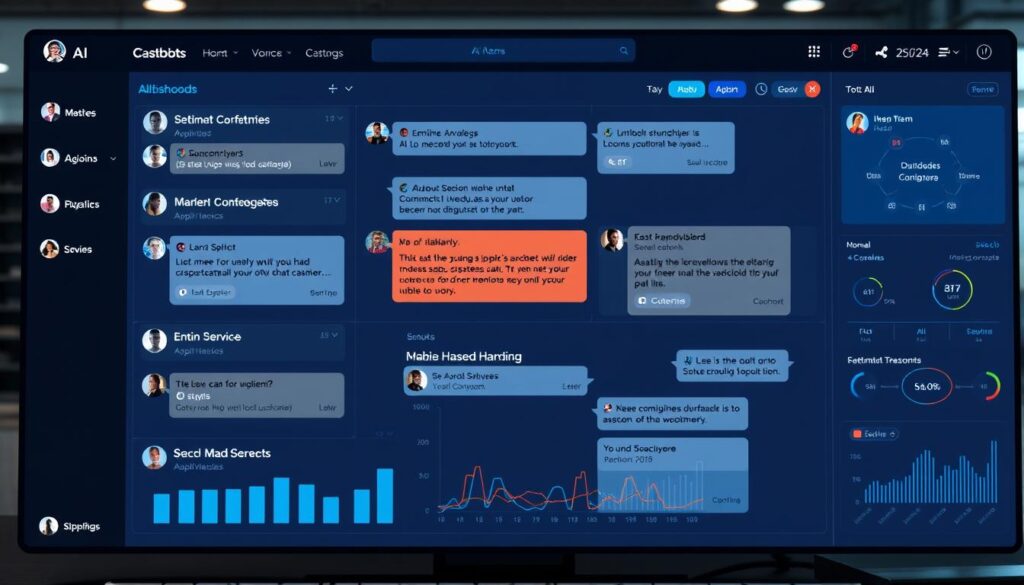
Customer service has been transformed by AI solutions that can handle inquiries across multiple channels, understand customer intent, and provide personalized assistance at scale. These platforms have enabled organizations to deliver consistent, high-quality support while reducing operational costs.
Intercom Resolution Bot
Intercom’s Resolution Bot has become the industry standard for AI customer support, used by over 50,000 businesses worldwide. Its ability to understand complex queries, access knowledge bases, and resolve issues without human intervention has made it essential for scaling support operations.
The platform now features intent recognition that understands what customers are trying to accomplish, personalization that tailors responses based on customer history, and seamless handoff to human agents when needed. According to Intercom’s data, businesses using Resolution Bot resolve 70% of routine inquiries automatically and reduce response times by 78%.
Zendesk AI
Zendesk’s AI platform has established itself as a comprehensive solution for customer experience management, combining automated support with intelligent routing and agent assistance. Its ability to work across channels from email to social media has made it popular among enterprise organizations.
Key features include predictive ticket routing that directs inquiries to the most qualified agents, automated response suggestions that help human agents work more efficiently, and sentiment analysis that identifies at-risk customers. The platform has seen particularly strong adoption in retail and telecommunications, where it’s used to manage high volumes of support inquiries.
Ada Support
Ada has emerged as the leading no-code AI customer service platform, enabling non-technical teams to build sophisticated support automation without requiring developer resources. Its intuitive interface and powerful personalization capabilities have made it popular among mid-sized businesses.
The platform offers features like multilingual support that can engage with customers in over 100 languages, proactive outreach that addresses issues before customers report them, and detailed analytics that help optimize the customer experience. According to industry surveys, businesses using Ada report a 30% increase in customer satisfaction and a 40% reduction in support costs.
Transform Your Customer Experience
Join thousands of businesses that have revolutionized their customer support with AI. Start delivering exceptional service at scale today.
Emerging AI Tools for Education, Healthcare, and Specialized Industries

Beyond general-purpose AI solutions, specialized tools have emerged to address the unique challenges and opportunities in specific industries. These purpose-built platforms combine domain expertise with artificial intelligence to deliver transformative capabilities in education, healthcare, and other specialized fields.
Education: Duolingo Max
Duolingo Max has revolutionized language learning by combining gamification with sophisticated AI that adapts to each learner’s strengths and weaknesses. Used by over 200 million people worldwide, it has become the most widely adopted educational AI platform.
The system features personalized learning paths that adjust difficulty based on performance, conversation practice with AI tutors that provide immediate feedback, and cultural context that helps learners understand nuances beyond vocabulary and grammar. According to research studies, students using Duolingo Max achieve proficiency 40% faster than with traditional methods.
Healthcare: Tempus AI
Tempus has established itself as the leading AI platform for precision medicine, analyzing clinical and molecular data to personalize patient care. Used by over 8,000 oncologists and 70% of academic medical centers in the United States, it has transformed how complex diseases are diagnosed and treated.
The platform combines electronic health record analysis, genomic sequencing, and medical imaging to identify patterns that can inform treatment decisions. Its clinical trial matching feature connects patients with appropriate research studies, while its predictive models help physicians anticipate disease progression and treatment response.
Legal: Harvey AI
Harvey has become the dominant AI platform in the legal industry, used by 65% of AmLaw 100 firms to streamline research, document review, and contract analysis. Its deep understanding of legal language and concepts has made it an essential tool for modern legal practice.
Key features include precedent analysis that identifies relevant case law, contract review that flags potential issues and suggests improvements, and automated document generation that creates high-quality legal documents from simple instructions. According to industry surveys, law firms using Harvey report a 70% reduction in time spent on routine legal research and document preparation.
Manufacturing: Augury
Augury’s predictive maintenance platform has transformed industrial operations by using AI to detect equipment failures before they occur. Deployed across thousands of manufacturing facilities worldwide, it combines IoT sensors with sophisticated machine learning to monitor machinery health.
The system analyzes acoustic and vibration data to identify subtle changes that indicate potential problems, allowing maintenance teams to address issues before they cause downtime. According to user data, facilities using Augury have reduced unplanned downtime by 75% and extended equipment lifespan by 20%.
Discover Industry-Specific AI Solutions
Explore how AI is transforming specialized fields and discover tools tailored to your industry’s unique challenges.
Factors Driving AI Tool Adoption in 2025
The widespread adoption of AI tools across industries has been driven by several key factors that have overcome traditional barriers to implementation. Understanding these drivers can help organizations make strategic decisions about which AI solutions to prioritize.
Improved Efficiency and Productivity
The most compelling driver of AI adoption has been the dramatic productivity improvements these tools deliver. Organizations report average time savings of 30-50% for tasks that have been enhanced or automated with AI, allowing teams to focus on higher-value activities that require human creativity and judgment.
This efficiency gain has been particularly significant in content creation, where AI writing and design tools have reduced production time by up to 70%, and in customer service, where AI chatbots now handle 65% of routine inquiries without human intervention.
Cost Reduction and Automation Benefits
Economic considerations have accelerated AI adoption, with organizations reporting average cost reductions of 25-40% in departments where AI has been successfully implemented. These savings come from both direct labor cost reduction and the elimination of costly errors and rework.
In software development, AI coding assistants have reduced development cycles by an average of 35%, while in healthcare, AI diagnostic tools have decreased the cost of routine screenings by 50% while improving accuracy. These compelling economics have made AI implementation a strategic priority for organizations focused on operational efficiency.
Enhanced Creativity and Innovation
Beyond efficiency, AI tools have become essential creative partners that expand what’s possible and inspire new approaches. In design and media production, AI image and video generators have enabled teams to explore more concepts in less time, leading to more innovative final products.
According to creative industry surveys, 78% of professionals report that AI tools have helped them break through creative blocks, while 65% say these tools have enabled them to take on more ambitious projects that would have been impractical with traditional methods.
Accessibility and User-Friendly Interfaces
The democratization of AI has been driven by increasingly intuitive interfaces that make powerful capabilities accessible to non-technical users. Natural language interfaces, visual programming, and thoughtful UX design have removed barriers to adoption across organizations.
This accessibility has expanded the impact of AI beyond traditional technical roles, with marketing teams now independently using AI for content creation, sales teams leveraging AI for prospect research, and operations staff implementing AI-powered process automation without requiring developer resources.
Accelerate Your AI Transformation
Join our community of forward-thinking professionals and get expert guidance on implementing AI tools in your organization.
Emerging Trends in AI Tool Usage for 2025 and Beyond
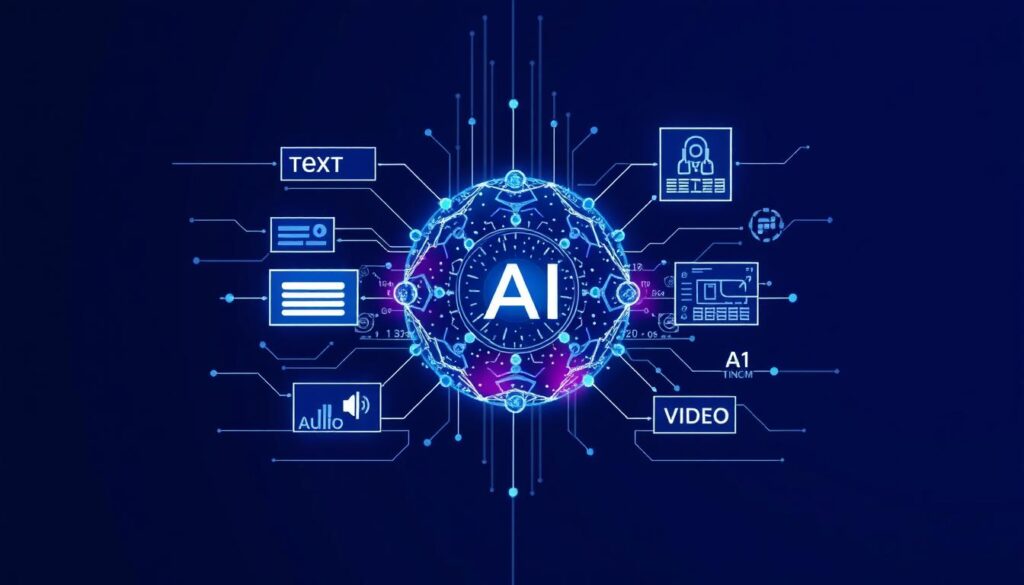
As AI tools continue to evolve and mature, several key trends are shaping how these technologies are being implemented and what capabilities will define the next generation of solutions. Understanding these trends can help organizations prepare for the future of AI-enhanced work.
Integration of Multimodal AI Capabilities
The most significant trend in AI tool development has been the integration of multimodal capabilities that allow systems to process and generate different types of content—text, images, audio, and video—within a unified interface. This convergence has eliminated the need to switch between specialized tools, creating more fluid and productive workflows.
Leading platforms now offer seamless transitions between modalities, allowing users to, for example, generate a text description, visualize it as an image, animate that image into a video, and add a voiceover—all within a single environment. According to industry analysts, 85% of enterprise AI implementations now include at least two modalities, with fully multimodal systems expected to become the standard by 2026.
Personalization and Adaptive Learning
AI tools have become increasingly personalized, adapting to individual users’ preferences, work patterns, and skill levels. This adaptive learning capability allows the same tool to serve different users in different ways, maximizing relevance and productivity for each person.
Advanced systems now maintain detailed user profiles that evolve over time, learning from interactions to provide more relevant suggestions, automate repetitive tasks specific to each user, and adjust interfaces to match working styles. Research indicates that personalized AI tools increase user satisfaction by 45% and improve productivity by 30% compared to one-size-fits-all solutions.
Ethical Considerations and Responsible AI
As AI has become more deeply integrated into critical workflows, ethical considerations and responsible implementation have moved from theoretical concerns to practical priorities. Organizations are increasingly demanding transparency, fairness, and accountability from their AI tools.
Leading platforms now include features like bias detection that identifies potential unfairness in AI outputs, explainability tools that help users understand how decisions are made, and governance frameworks that ensure appropriate oversight. According to enterprise surveys, 72% of organizations now consider ethical AI capabilities a requirement when selecting tools, up from just 35% in 2023.
Industry-Specific Customization
While general-purpose AI tools remain popular, there has been significant growth in industry-specific solutions that combine domain expertise with artificial intelligence to address specialized challenges. These vertical AI platforms offer deeper integration with industry workflows and terminology.
From healthcare-specific language models trained on medical literature to financial AI systems that understand regulatory requirements, these specialized tools deliver higher accuracy and relevance for their target industries. Market analysis indicates that industry-specific AI solutions are growing at 1.8x the rate of general-purpose tools, reflecting the value of domain adaptation.
Stay Ahead of AI Trends
Get expert insights and analysis on the future of AI tools and how they’ll transform your industry.
Future Developments in AI Tools Beyond 2025

Looking beyond 2025, several emerging technologies and approaches are poised to define the next generation of AI tools. These developments will further expand capabilities, improve user experiences, and create new possibilities for how we work with artificial intelligence.
Ambient Intelligence
The future of AI tools lies in ambient intelligence—systems that fade into the background of our physical environments while continuously providing support. Rather than requiring explicit interaction through screens and keyboards, these ambient AI systems will understand context, anticipate needs, and provide assistance through natural interfaces like voice, gesture, and augmented reality.
Early implementations are already appearing in smart office environments, where AI systems manage meeting scheduling, automatically generate notes, and proactively prepare relevant information based on calendar events and team activities. Industry forecasts suggest that by 2027, 40% of knowledge workers will interact with ambient AI systems as part of their daily workflows.
Collaborative Intelligence
While current AI tools primarily serve individual users, the next generation will focus on enhancing collaboration between teams of humans and AI systems. These collaborative intelligence platforms will facilitate group creativity, decision-making, and problem-solving by connecting multiple people with multiple AI agents.
Emerging systems allow teams to work together in shared spaces where AI participants can generate ideas, synthesize discussions, visualize concepts, and manage project workflows. Research indicates that teams augmented with collaborative AI show 50% higher innovation rates and 35% faster problem resolution compared to traditional collaboration methods.
Autonomous Agents
The evolution from assistive AI to autonomous agents represents one of the most significant shifts on the horizon. While current tools require human direction and oversight, autonomous agents will be able to take on complete workflows with minimal supervision, operating continuously to accomplish complex goals.
Early examples include AI research agents that can design experiments, gather data, and synthesize findings; marketing agents that plan, create, and optimize campaigns; and development agents that build and maintain software systems. Analysts predict that by 2028, autonomous agents will handle 30% of routine knowledge work in leading organizations.
Neuromorphic Computing
The hardware underlying AI tools is poised for transformation with the emergence of neuromorphic computing—chips designed to mimic the structure and function of the human brain. These specialized processors will enable more efficient, powerful AI capabilities while dramatically reducing energy consumption.
Neuromorphic systems excel at processing sensory data, learning continuously, and operating with minimal power, making them ideal for embedding AI capabilities in a wider range of devices. Industry projections suggest that by 2027, neuromorphic chips will power 25% of edge AI applications, enabling sophisticated capabilities in devices from smartphones to industrial sensors.
Prepare for the Future of AI
Get expert guidance on how to position your organization for success in the evolving AI landscape.
Practical Advice for Selecting and Implementing AI Tools

With the proliferation of AI tools across categories, selecting and implementing the right solutions for your specific needs can be challenging. The following practical advice can help organizations make informed decisions and maximize the value of their AI investments.
Start with Clear Use Cases
The most successful AI implementations begin with well-defined use cases that address specific business challenges or opportunities. Rather than adopting AI for its own sake, identify concrete problems where AI can deliver measurable value, whether that’s accelerating content production, improving customer service response times, or enhancing data analysis capabilities.
For each potential use case, define success metrics that will allow you to evaluate the impact of AI implementation. These might include time savings, cost reduction, quality improvements, or new capabilities that weren’t previously possible. This clarity will guide both tool selection and implementation strategy.
Consider Integration Requirements
AI tools deliver the greatest value when they integrate seamlessly with existing systems and workflows. Before selecting a solution, carefully evaluate how it will connect with your current technology stack, including data sources, communication platforms, and productivity tools.
Look for platforms with robust API capabilities, pre-built integrations with common business applications, and flexible authentication options. The most effective AI implementations enhance existing workflows rather than requiring teams to adopt entirely new systems and processes.
Prioritize User Experience and Adoption
Even the most powerful AI capabilities will deliver limited value if they’re not embraced by users. When evaluating tools, consider the learning curve, interface design, and overall user experience alongside technical capabilities.
Involve potential users in the selection process, conduct pilot programs before full deployment, and invest in training and change management to ensure successful adoption. According to implementation studies, organizations that prioritize user experience see 3x higher adoption rates and 2.5x greater ROI from their AI investments.
Establish Governance and Ethical Guidelines
As AI becomes more deeply integrated into business operations, establishing clear governance and ethical guidelines is essential. Define policies for data usage, output review, and appropriate use cases before widespread implementation.
Consider forming an AI governance committee with representatives from different departments to oversee implementation, address concerns, and ensure alignment with organizational values and compliance requirements. This proactive approach can prevent issues related to bias, privacy, and security while building trust in AI systems.
How do I determine which AI tools are right for my organization?
Start by identifying specific challenges or opportunities where AI could add value. Then, evaluate tools based on their ability to address those needs, compatibility with your existing systems, ease of use, and total cost of ownership. Consider running small pilot projects with 2-3 promising tools before making a larger commitment.
What’s the typical ROI timeline for AI tool implementation?
ROI timelines vary by tool category and use case, but most organizations see initial returns within 3-6 months for productivity-focused tools like AI writing assistants and coding platforms. More complex implementations like predictive analytics or autonomous agents typically require 6-12 months to deliver measurable ROI. The key is starting with well-defined use cases and success metrics.
How can we ensure responsible use of AI tools across our organization?
Develop clear guidelines for appropriate AI use, including what types of content can be generated, how outputs should be reviewed, and what data can be processed. Provide training on both the technical aspects of the tools and the ethical considerations. Consider implementing review workflows for sensitive applications, and regularly audit AI usage to identify and address potential issues.
Get Expert Implementation Guidance
Access our comprehensive AI implementation framework and expert consultation to ensure successful adoption in your organization.
Conclusion: Embracing the AI-Enhanced Future
The most used AI tools in 2025 represent a fundamental shift in how we work, create, and solve problems. From sophisticated writing assistants and image generators to powerful data analysis platforms and specialized industry solutions, these tools have moved beyond novelty to become essential components of productive workflows across organizations of all sizes.
The rapid evolution of these technologies reflects both technical advancement and growing user sophistication. As AI capabilities have expanded, so too has our understanding of how to effectively integrate these tools into our work. The most successful implementations combine powerful AI with thoughtful human oversight, creating partnerships that leverage the strengths of both.
Looking ahead, the continued development of multimodal systems, personalized experiences, and autonomous capabilities promises to further transform how we work with AI. Organizations that thoughtfully adopt these tools today while preparing for tomorrow’s innovations will be well-positioned to thrive in an increasingly AI-enhanced future.
By focusing on clear use cases, seamless integration, user experience, and responsible governance, you can harness the power of these transformative tools to enhance productivity, spark creativity, and unlock new possibilities for your organization.
Start Your AI Journey Today
Explore the most used AI tools of 2025 with our curated resource guide and implementation roadmap.






Comments are closed