
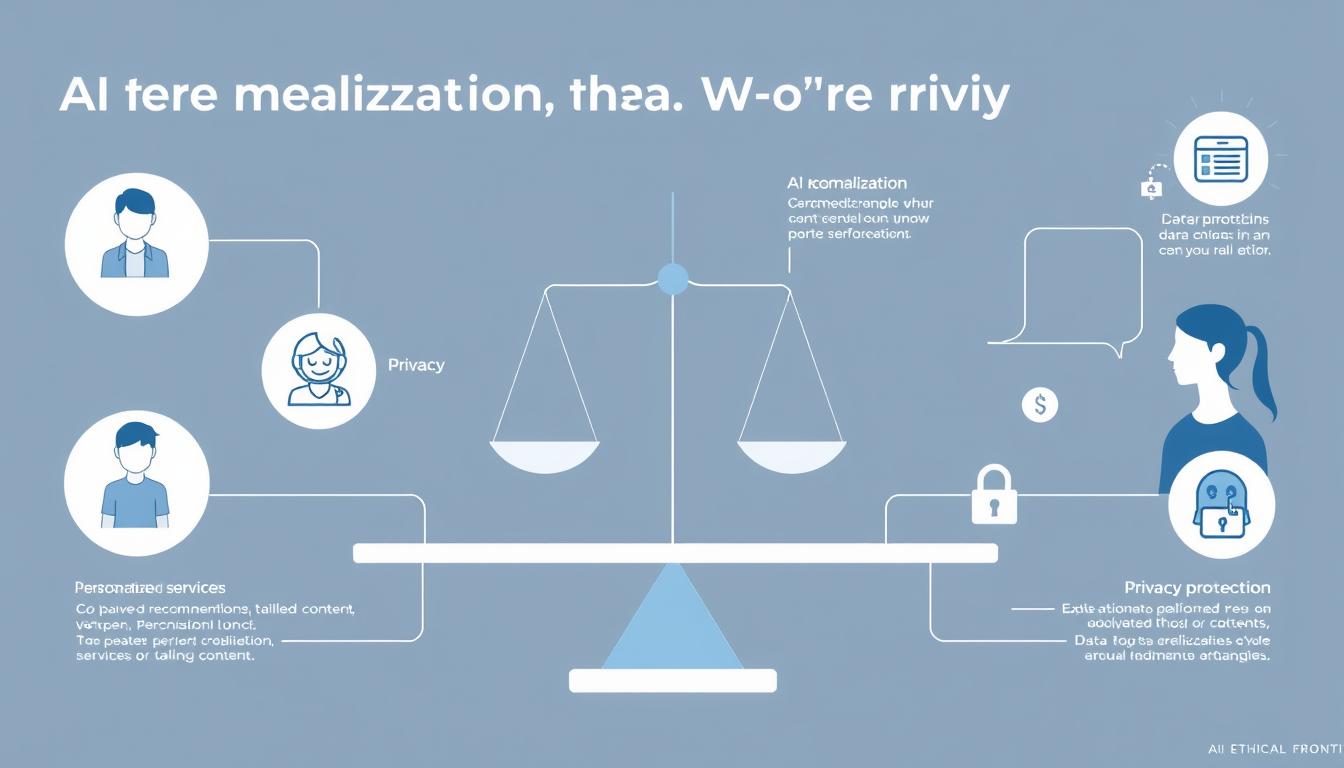
As artificial intelligence transforms our digital landscape, organizations face a critical challenge: delivering personalized experiences while respecting privacy and navigating complex regulations. Ethical AI isn’t just a buzzword—it’s the foundation for building systems that earn user trust, comply with emerging laws, and deliver business value without compromising human values.
This balance represents the new frontier for responsible technology development. Let’s explore how organizations can implement AI systems that respect individual rights while still harnessing data’s transformative potential.
The Tension Between Personalization and Privacy
AI systems thrive on data. The more they know about users, the better they can tailor experiences, predict needs, and deliver value. Yet this same capability creates fundamental tension with privacy rights and user expectations.
The fundamental tension: More data enables better personalization but raises privacy concerns
Organizations deploying AI face three key challenges in this space:
Data Collection Boundaries
Determining what data is appropriate to collect and process, especially when more data typically means better AI performance.
Transparency Requirements
Explaining complex AI systems to users in understandable terms while maintaining technical accuracy about data usage.
User Control Mechanisms
Providing meaningful control over personal data without degrading the personalized experience users have come to expect.
The challenge isn’t simply technical—it’s fundamentally ethical. As one AI ethics manager described in research conducted by Ohio State University: “We stopped after 34 pages of questions” when trying to translate human rights principles into developer guidelines1.
Navigating the Regulatory Landscape
The regulatory environment for AI is evolving rapidly, with frameworks emerging globally that directly impact how organizations can collect, process, and utilize data for personalization.
| Regulation | Key Requirements | Impact on AI Personalization |
| GDPR (EU) | Explicit consent, right to explanation, data minimization | Requires transparency in algorithmic decision-making and limits on data collection |
| CCPA/CPRA (California) | Opt-out rights, data access, non-discrimination | Users can opt out of data sharing, potentially limiting personalization capabilities |
| EU AI Act (Proposed) | Risk-based approach, prohibited AI practices, transparency | High-risk AI systems face strict requirements; manipulative AI prohibited |
| NYC Algorithmic Hiring Law | Bias audits for automated employment tools | Requires verification that personalization doesn’t create discriminatory outcomes |
“The EU AI Act is set to be the ‘GDPR for AI,’ with hefty penalties for non-compliance, extra-territorial scope, and a broad set of mandatory requirements for organisations which develop and deploy AI.”
These regulations aren’t merely compliance hurdles—they reflect societal values about how AI should operate. Organizations that view them as guideposts rather than obstacles can build more sustainable, trusted AI systems.
Ethical Frameworks for Maintaining Trust
Implementing ethical AI requires more than technical solutions—it demands organizational frameworks that guide decision-making and development processes.
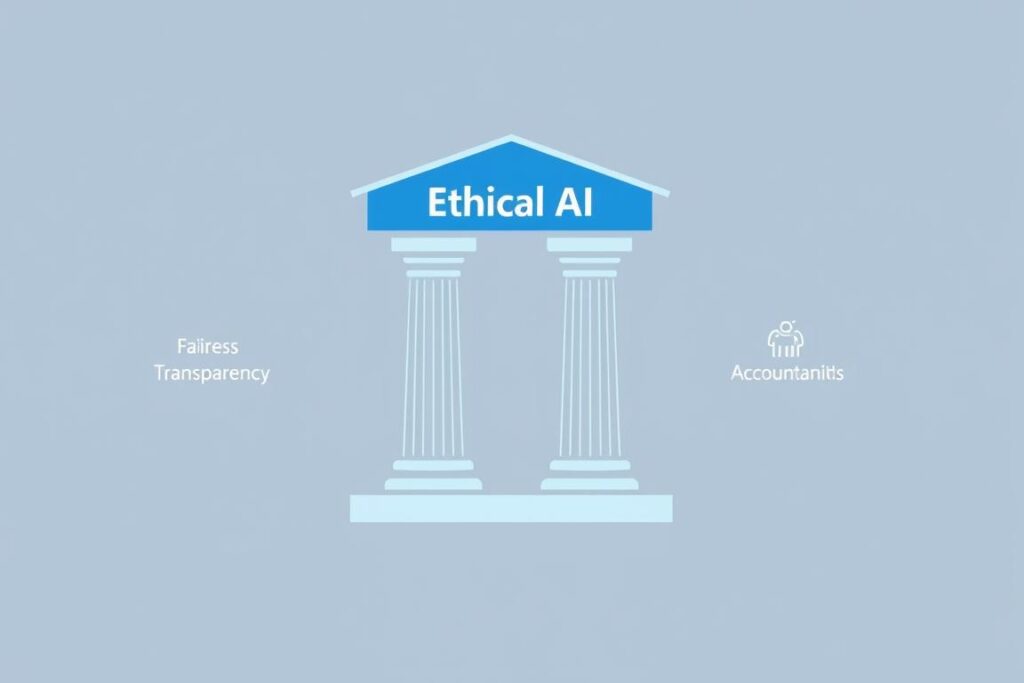
The four pillars of Ethical AI that build user trust while enabling personalization
Research shows that companies pursuing ethical AI typically implement three approaches:
- Principles: Guidelines and values that inform AI design, development and deployment
- Processes: Incorporation of principles into both technical and non-technical aspects of AI systems
- Responsible AI consciousness: Actions motivated by moral awareness when designing, developing, or deploying AI
However, principles alone are insufficient. As Dennis Hirsch and Piers Turner found in their research: “Managers needed more than high-level AI principles to decide what to do in specific situations.”2
Ready to implement ethical AI in your organization?
Download our comprehensive guide to ethical AI implementation, featuring practical frameworks, assessment tools, and step-by-step processes for balancing personalization with privacy.
What is Differential Privacy?
Differential privacy is a mathematical framework that allows organizations to collect and share aggregate information about users while withholding information about individuals. It works by adding carefully calibrated “noise” to data, making it impossible to determine whether any individual’s information was included in the dataset while maintaining statistical accuracy for analysis.
This technique enables personalization while mathematically guaranteeing privacy protection—a powerful tool for ethical AI implementation.
Real-World Ethical Dilemmas in AI Personalization

Healthcare AI systems must balance personalized diagnostics with strict privacy protections
Case 1: Healthcare Diagnostic AI
A major hospital system implemented an AI diagnostic tool that analyzed patient records to predict disease risk and recommend preventive measures. The system significantly improved early detection rates but raised several ethical concerns:
Benefits
- 30% improvement in early disease detection
- Personalized prevention recommendations
- Reduced healthcare costs through prevention
Ethical Concerns
- Access to sensitive health data without explicit consent
- Potential for insurance discrimination based on predictions
- Lack of transparency in how recommendations were generated
The solution involved implementing explicit consent processes, differential privacy techniques to protect individual data, and an explainable AI approach that allowed patients to understand recommendation factors.
Case 2: Targeted Advertising Algorithms
A social media platform’s advertising algorithm was found to show different job opportunities based on user demographics, effectively creating discriminatory outcomes despite no explicit instruction to discriminate:
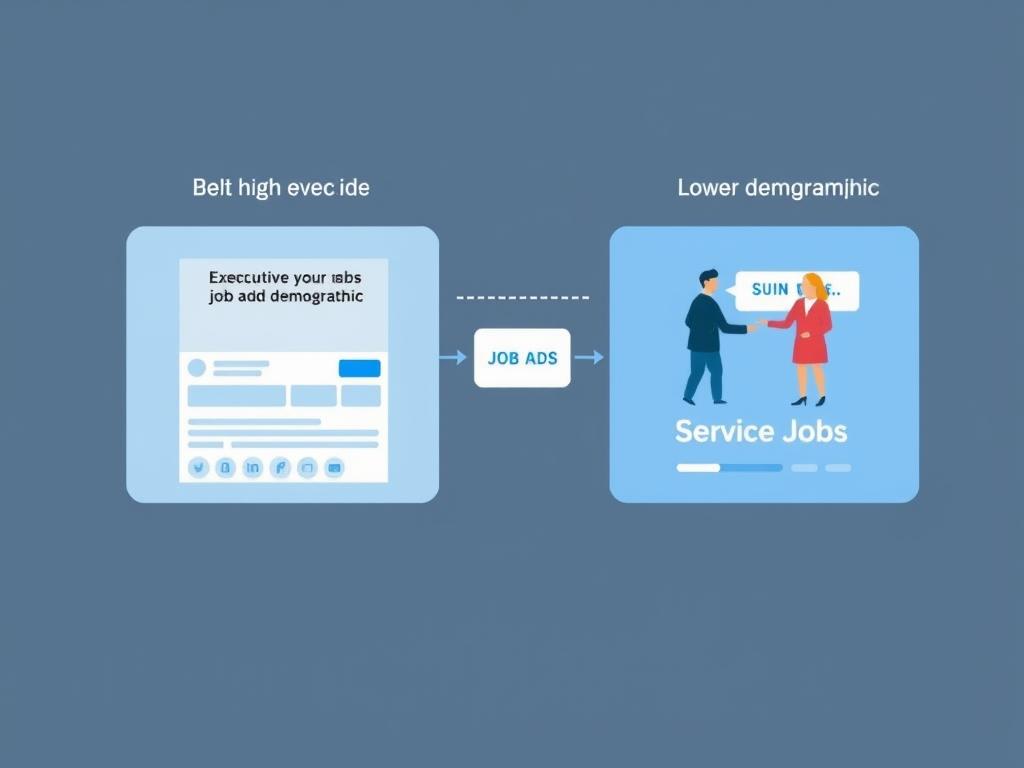
Advertising algorithms can create discriminatory outcomes without explicit instructions to discriminate
The company addressed this by implementing fairness metrics, regular bias audits, and allowing users to view and adjust their ad preference profiles. They also created an independent ethics committee to review algorithm updates.
Case 3: Customer Service Chatbots
A financial services company deployed an AI chatbot that accessed customer account information to provide personalized support. While effective, it raised concerns about data access and transparency:
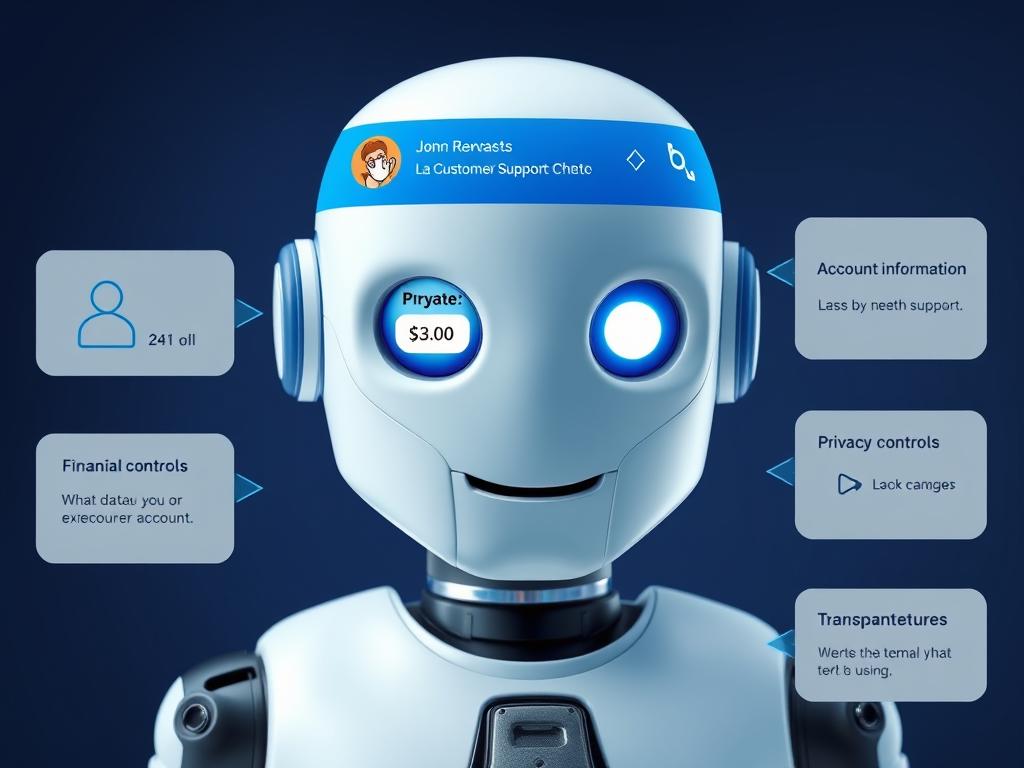
Personalized chatbots must balance service quality with transparency about data usage
The solution included clear disclosures about AI usage, explicit permission requests before accessing account data, and options to interact with human representatives instead. The company also implemented regular privacy audits and limited data retention.
“Companies seeking to use AI ethically should not expect to discover a simple set of principles that delivers correct answers from an all-knowing perspective. Instead, they should focus on the very human task of trying to make responsible decisions in a world of finite understanding.”
Comparing Privacy-First vs. Personalization-Focused Approaches
| Aspect | Privacy-First Approach | Personalization-Focused Approach | Balanced Ethical Approach |
| Data Collection | Minimal, explicit consent for each use | Extensive, broad consent at signup | Tiered consent with clear value exchange |
| Algorithm Design | Local processing, federated learning | Centralized data processing | Hybrid approach with differential privacy |
| User Control | Granular opt-in for each feature | Limited opt-out options | Transparent controls with personalization levels |
| Transparency | Detailed explanations of all data usage | Minimal disclosures in terms of service | Layered explanations with increasing detail |
| Business Impact | Limited personalization capabilities | Maximum conversion optimization | Sustainable growth with user trust |
5 Actionable Strategies for Privacy-Preserving AI

Implementing privacy-preserving AI requires both technical and organizational approaches
-
Implement Federated Learning
Rather than centralizing sensitive data, train algorithms on users’ devices and only share model updates. This keeps personal data local while still improving the AI system.
Implementation tip: Google’s TensorFlow Federated and OpenMined provide open-source tools to implement federated learning in production environments.
-
Adopt Differential Privacy
Add carefully calibrated noise to datasets that mathematically guarantees individual privacy while maintaining statistical accuracy for analysis and personalization.
Implementation tip: Libraries like Google’s Differential Privacy and Microsoft’s SmartNoise simplify implementation in existing systems.
-
Establish Algorithmic Impact Assessments
Before deploying AI systems, conduct thorough assessments of potential impacts on privacy, fairness, and user autonomy, similar to environmental impact studies.
Implementation tip: The Canadian government’s Algorithmic Impact Assessment tool provides a free framework that organizations can adapt.
-
Create Tiered Consent Models
Develop layered consent approaches that allow users to opt into different levels of personalization based on their comfort with data sharing.
Implementation tip: Design interfaces that clearly communicate the value exchange at each tier of data sharing.
-
Establish an AI Ethics Committee
Form a cross-functional team with diverse perspectives to review AI systems and establish governance processes for ethical decision-making.
Implementation tip: Include external stakeholders and ensure the committee has real authority to influence product decisions.
Case Study: Apple’s Privacy-Preserving AI Approach
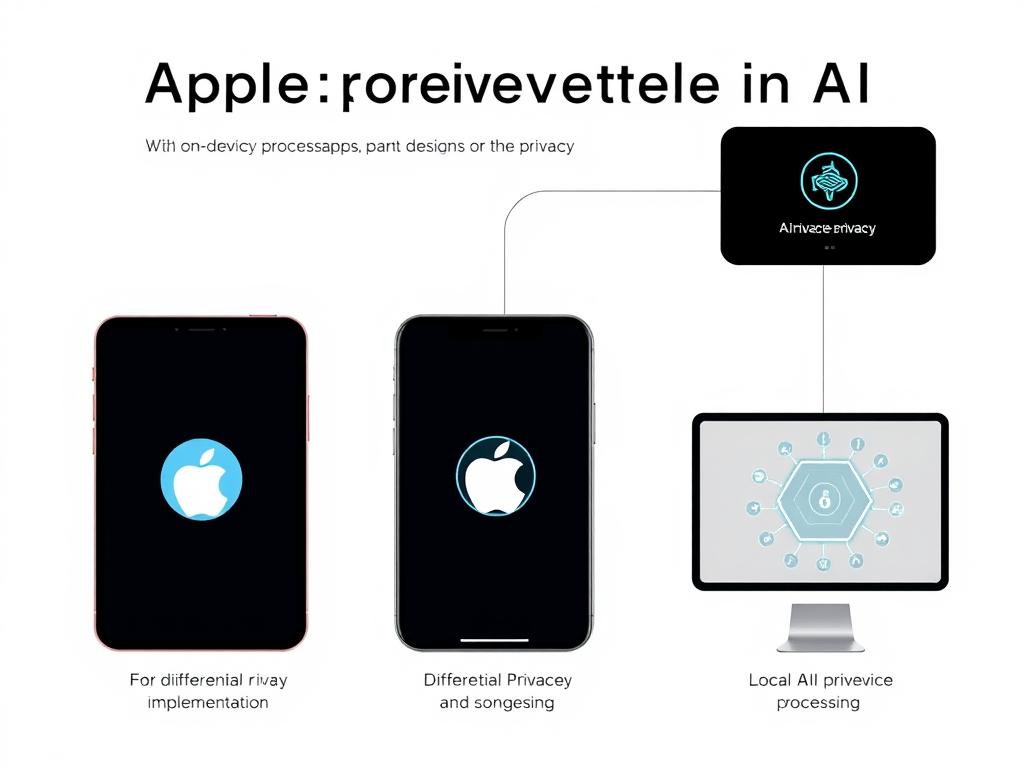
Apple has successfully balanced AI personalization with privacy through several key approaches:
- On-device processing: Most AI functions run locally rather than in the cloud
- Differential privacy: Implemented at scale for collecting usage patterns
- Transparency controls: Clear privacy labels and permissions
- Privacy as differentiation: Marketing privacy protection as a core value proposition
This approach has allowed Apple to deliver personalized features like predictive text, photo organization, and health insights while maintaining strong privacy protections—demonstrating that ethical AI can be a competitive advantage rather than a limitation.
Roadmap for Ethical AI Adoption
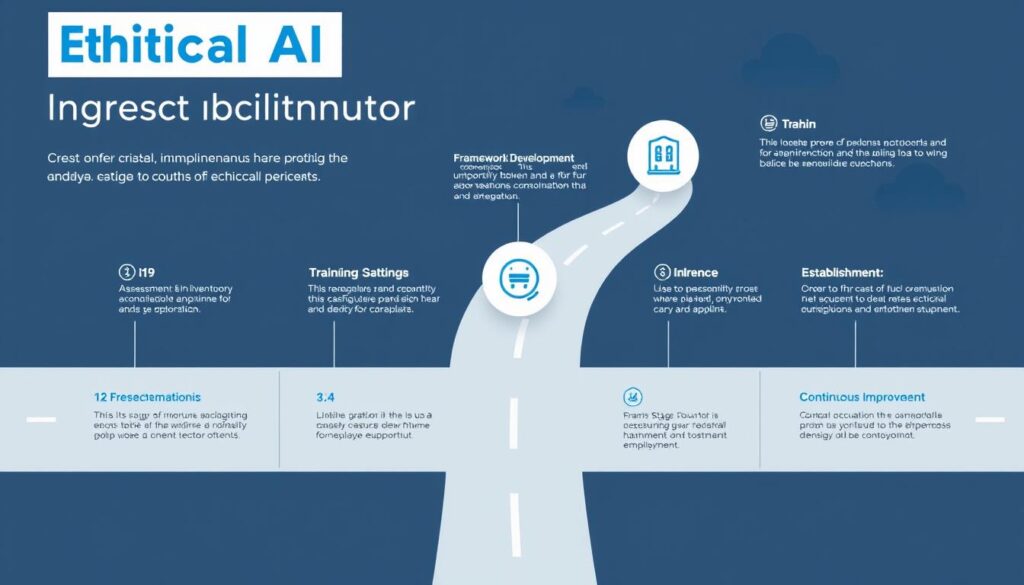
A structured approach to implementing ethical AI across an organization
Phase 1: Assessment
- Inventory existing AI systems
- Identify privacy and ethical risks
- Map regulatory requirements
- Establish baseline metrics
Phase 2: Implementation
- Develop ethical guidelines
- Implement technical safeguards
- Create governance structures
- Train development teams
Phase 3: Continuous Improvement
- Monitor system performance
- Conduct regular audits
- Gather stakeholder feedback
- Adapt to regulatory changes
This roadmap provides a structured approach that satisfies the needs of all stakeholders: users gain privacy protections and transparency, businesses maintain personalization capabilities, and regulators see good-faith compliance efforts.

Successful ethical AI implementation requires collaboration across diverse stakeholders
Conclusion: The Competitive Advantage of Ethical AI
The tension between personalization and privacy in AI systems isn’t going away—but organizations that proactively address it gain significant advantages. By implementing ethical frameworks, privacy-preserving technologies, and transparent governance, companies can build AI systems that earn user trust while delivering business value.
As regulations continue to evolve globally, those with established ethical AI practices will face fewer disruptions and compliance challenges. More importantly, they’ll build sustainable relationships with users based on respect and transparency rather than data exploitation.
The future belongs to organizations that view ethical AI not as a constraint but as an opportunity to differentiate and build lasting trust in an increasingly AI-driven world.
1 Dennis Hirsch & Piers Turner, “What is ethical AI and how can companies achieve it,” The Conversation, 2023.
2 Holistic AI, “What is Ethical AI?”, 2023.








Comments are closed