
The artificial intelligence revolution sparks both excitement and anxiety across the workforce. Many professionals worry about automation eliminating their careers. However, data reveals a different story unfolding in 2026.
The job market transforms rather than shrinks. New roles emerge faster than old ones disappear. Professionals with the right skills find themselves in high demand.
This comprehensive guide examines AI positions experiencing significant growth. You will discover specific roles, required qualifications, salary expectations, and career paths that remain secure despite automation concerns.
Get Your Free 2026 AI Career Roadmap
Download our comprehensive guide featuring career paths, skill requirements, salary benchmarks, and actionable steps to launch your AI career. Join over 50,000 professionals who have secured their future in artificial intelligence.
Understanding the AI Job Market Transformation
The landscape of AI jobs shifts dramatically as technology matures. Organizations across industries integrate machine learning and automation into their operations. This creates unprecedented demand for specialized talent.
Research indicates AI-related positions grew by 74% between 2024 and 2026. The Bureau of Labor Statistics projects continued expansion through 2030. Companies struggle to fill open positions as qualified candidates remain scarce.
Key Market Drivers in 2026
Several factors fuel the explosive growth in AI employment. Cloud computing infrastructure becomes more accessible and affordable. Organizations recognize competitive advantages from data-driven decision making. Regulatory frameworks mature, creating new compliance roles.

Investment Trends
Global investment in artificial intelligence reached $500 billion in 2025. This capital flows directly into hiring initiatives. Startups and established corporations compete aggressively for talent.
The shortage of qualified professionals drives salary increases. Entry-level positions now offer competitive compensation. Experienced practitioners command premium rates in the market.
Geographic Distribution of Opportunities
AI jobs concentrate in major technology hubs but spread to secondary markets. San Francisco remains the epicenter, followed by New York, Seattle, and Boston. Remote work arrangements expand access to opportunities nationwide.
- San Francisco Bay Area leads with over 45,000 open AI positions
- Remote opportunities increased by 230% since 2024
- Secondary markets like Austin and Denver show rapid growth
- International locations compete for American AI talent

Machine Learning Engineer: The Foundation Role
Machine learning engineer positions represent the core of AI job growth. These professionals design, build, and deploy models that power intelligent systems. Demand exceeds supply by significant margins in 2026.

Core Responsibilities and Daily Work
A machine learning engineer transforms data into intelligent systems. The role requires both theoretical knowledge and practical implementation skills. Daily tasks vary but center on model development and deployment.
Engineers spend significant time preparing and cleaning data. This foundational work determines model accuracy. They select appropriate algorithms based on problem requirements. Model training consumes substantial computational resources and time.
Data Pipeline Development
Engineers build infrastructure to process massive datasets. This includes ETL processes, data validation, and storage optimization. Cloud platforms provide the backbone for these systems.
Model Training and Optimization
The core technical work involves experimenting with architectures. Engineers tune hyperparameters to improve performance. They balance accuracy with computational efficiency.
Production Deployment
Moving models from development to production requires careful engineering. Engineers ensure reliability, scalability, and monitoring. They implement CI/CD pipelines for continuous improvement.
Required Skills and Qualifications
Success as a machine learning engineer demands diverse technical expertise. Educational backgrounds typically include computer science or mathematics degrees. However, practical experience often outweighs formal credentials.
- Programming proficiency in Python and related frameworks like TensorFlow or PyTorch
- Strong foundation in statistics, linear algebra, and calculus
- Experience with cloud platforms including AWS, Azure, or Google Cloud
- Understanding of software engineering principles and version control
- Knowledge of data structures and algorithm optimization
- Familiarity with distributed computing and parallel processing
Salary Ranges and Compensation
Machine learning engineer compensation reflects high demand and limited supply. Entry-level positions start competitively while experienced professionals earn substantial salaries. Location and company size significantly impact total compensation.
| Experience Level | Base Salary Range | Total Compensation | San Francisco Premium |
| Entry Level (0-2 years) | $95,000 – $135,000 | $110,000 – $160,000 | +25% |
| Mid-Level (3-5 years) | $140,000 – $190,000 | $170,000 – $240,000 | +30% |
| Senior (6-10 years) | $185,000 – $260,000 | $240,000 – $380,000 | +35% |
| Staff/Principal (10+ years) | $245,000 – $350,000 | $350,000 – $600,000+ | +40% |
These figures include base salary, bonuses, and equity compensation. Major technology companies often provide additional benefits. Remote positions typically offer geographic salary adjustments.
Career Path and Advancement
Machine learning engineers follow clear progression paths. Junior engineers focus on implementation under guidance. Mid-level professionals lead projects and mentor others. Senior engineers architect systems and make strategic technical decisions.
Many professionals transition into specialized roles. Some become data scientists focusing on research and analysis. Others move into engineering manager positions leading teams. The skills transfer well across various AI disciplines.
Stay Updated on AI Job Opportunities
Get weekly alerts about new AI jobs matching your skills and experience. Our curated job feed includes positions from leading tech companies, innovative startups, and remote opportunities nationwide. Never miss your next career move.
Data Scientist: Extracting Intelligence from Information
Data scientist roles continue expanding as organizations recognize the value locked within their data. These professionals bridge business needs with technical implementation. The position requires both analytical rigor and communication skills.

Distinguishing Data Science from Machine Learning Engineering
Many professionals confuse these related but distinct roles. Data scientists focus on extracting insights and answering business questions. Machine learning engineers build production systems that scale.
A data scientist spends more time on exploratory analysis and experimentation. They communicate findings to non-technical stakeholders. Their work often informs strategic decisions rather than automated processes.
Data Scientist Focus Areas
- Exploratory data analysis and pattern discovery
- Statistical modeling and hypothesis testing
- Business metric development and tracking
- Visualization and storytelling with data
- A/B testing and experimentation design
Essential Technical and Soft Skills
Data science demands a unique combination of technical prowess and business acumen. Technical skills form the foundation while communication abilities determine career success. The best data scientists translate complex findings into actionable recommendations.
Programming skills center on Python and R for statistical analysis. SQL remains essential for data extraction and manipulation. Familiarity with big data tools like Spark helps when working with massive datasets.

- Advanced statistics and probability theory knowledge
- Machine learning fundamentals and model evaluation
- Data visualization using tools like Tableau or matplotlib
- Business intelligence and domain expertise in relevant industry
- Strong written and verbal communication abilities
- Project management and stakeholder collaboration experience
Compensation and Market Demand
Data scientist salaries remain competitive though slightly lower than machine learning engineer roles. The position offers excellent work-life balance in many organizations. Remote opportunities abound as the work requires less infrastructure access.
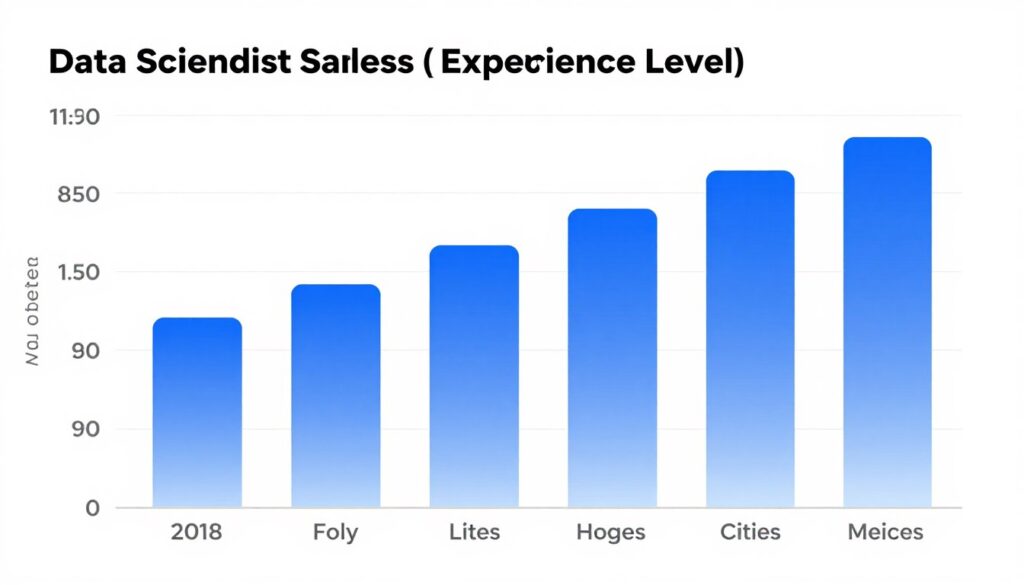
Entry-level data scientists typically earn between $85,000 and $120,000 annually. Mid-level professionals with three to five years experience command $125,000 to $175,000. Senior data scientists earn $170,000 to $250,000 at major companies.
Total compensation packages include bonuses and equity. Data science managers earn significantly more while leading teams. The career path often progresses toward director or VP of data science roles.
Full Stack AI Developer: Building End-to-End Solutions
Full stack developers with AI specialization represent a growing niche in 2026. These professionals combine traditional web development skills with machine learning implementation. They build complete applications that incorporate intelligent features.

Role Definition and Responsibilities
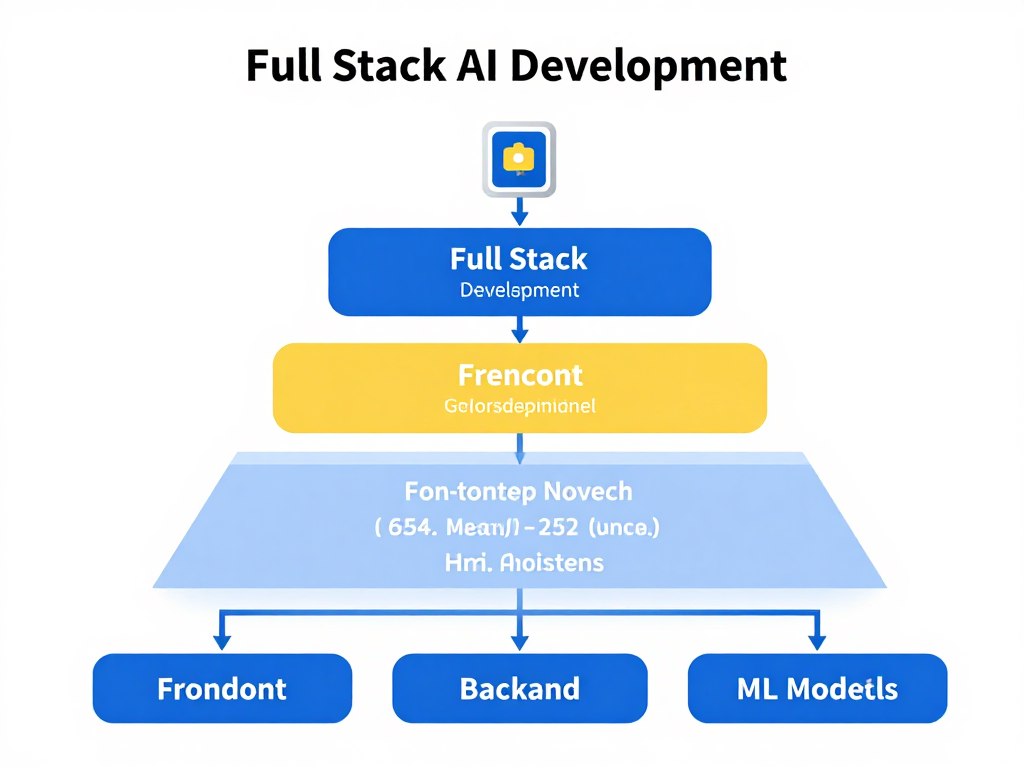
A full stack AI developer handles both user-facing interfaces and backend intelligence. They integrate machine learning models into web and mobile applications. This requires understanding the entire technology stack from database to deployment.
These developers work across the full application lifecycle. They design user experiences that incorporate AI features naturally. Backend work includes API development and model serving infrastructure. They ensure seamless integration between traditional software and intelligent components.
Frontend AI Integration
Creating interfaces for AI-powered features requires special consideration. Users need to understand model confidence and limitations. Full stack developers design experiences that make AI accessible and trustworthy.
Modern frameworks like React and Vue facilitate rich interactive experiences. Developers implement real-time model inference in browsers when appropriate. They balance user experience with computational constraints and latency requirements.
Backend Systems and Model Serving
The backend infrastructure supports AI model deployment and scaling. Developers build APIs that serve predictions with low latency. They implement caching strategies and load balancing for performance.
Model versioning and A/B testing require careful architecture. Full stack developers ensure smooth transitions between model updates. They monitor performance and implement fallback mechanisms for reliability.
Technical Skill Requirements
Success requires mastery of traditional web development plus AI implementation. The role demands broader but potentially less deep expertise than pure machine learning engineering. Adaptability and quick learning prove essential as technologies evolve rapidly.
Frontend Technologies
- JavaScript frameworks (React, Angular, or Vue)
- HTML5 and CSS3 with responsive design
- State management and frontend architecture
- Browser-based ML libraries like TensorFlow.js
Backend and AI Stack
- Server frameworks (Node.js, Django, or Flask)
- RESTful API design and GraphQL
- Model serving frameworks (TensorFlow Serving, TorchServe)
- Cloud deployment and containerization (Docker, Kubernetes)
Career Opportunities and Growth
Full stack AI developers find opportunities across company types and sizes. Startups particularly value the versatility of handling multiple responsibilities. Established companies seek these professionals to modernize existing applications with AI capabilities.
Compensation ranges from $100,000 to $180,000 for experienced full stack developers with AI skills. San Francisco and other major tech hubs offer higher salaries. Remote positions provide geographic flexibility while maintaining competitive pay.
Career advancement often leads to technical leadership roles. Some professionals specialize further in AI engineering. Others transition into product management leveraging their broad technical understanding.
AI Product Manager: Bridging Technology and Business
Product managers specializing in AI guide intelligent product development from concept to market. These professionals combine technical understanding with business strategy and user empathy. The role proves critical as more products incorporate machine learning features.

Core Responsibilities in AI Product Development
An AI product manager defines what gets built and why. They identify opportunities where machine learning creates user value. This requires understanding both technical possibilities and market needs.
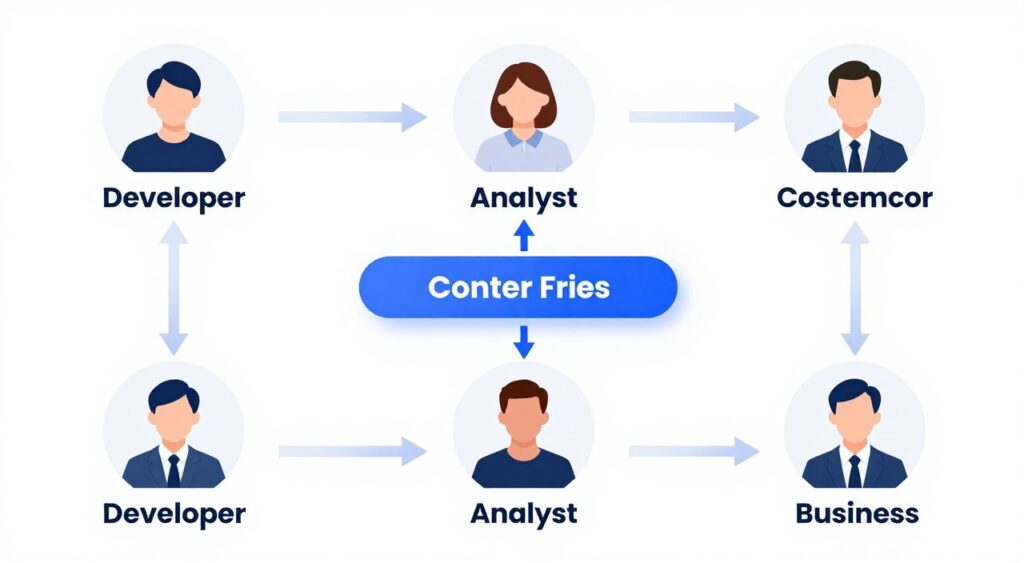
The role involves extensive stakeholder management. Product managers work with engineers to scope feasible solutions. They collaborate with designers on user experiences. Business partners provide market context and success metrics.
Strategy and Vision
Defining product direction based on market research and technical capabilities. Creating roadmaps that balance innovation with practical delivery timelines and resource constraints.
Feature Prioritization
Deciding which AI capabilities to build first. Evaluating trade-offs between model accuracy, development time, and business impact on key metrics.
Cross-Functional Leadership
Coordinating engineering, design, and business teams. Ensuring alignment on goals while respecting each discipline’s expertise and constraints.
Required Skills and Background
Successful AI product managers combine technical literacy with strong business acumen. They need not be expert engineers but must understand machine learning fundamentals. Communication skills prove equally important as technical knowledge.
Most professionals enter from either technical or business backgrounds. Software engineers transition by developing business skills and user focus. MBAs with technical interest build up machine learning literacy through courses and experience.

- Understanding of machine learning concepts and limitations
- Strong analytical skills and data-driven decision making
- User research and experience design principles
- Business strategy and competitive analysis abilities
- Excellent communication and presentation skills
- Project management and agile development experience
- Ability to translate between technical and business languages
Compensation and Career Path
AI product manager salaries reflect the specialized nature of the role. Entry-level positions offer $110,000 to $145,000 in major markets. Senior product managers earn $160,000 to $230,000. Directors and VPs command significantly higher compensation.
The career progression typically moves from associate product manager to senior product manager within five years. Successful professionals advance to director or VP positions leading product organizations. Some transition into executive roles as Chief Product Officer.
Stock options and performance bonuses substantially increase total compensation at many companies. Product managers at successful startups benefit from equity upside. The role offers strong career security as AI adoption accelerates.
Accelerate Your AI Career with Expert Training
Access curated learning resources from top universities and industry leaders. Our career development platform offers personalized learning paths, mentorship connections, and certification programs designed specifically for AI professionals at every level.
Engineering Manager: Leading AI Development Teams
Engineering managers in AI organizations combine technical leadership with people management. These professionals guide teams building intelligent systems while supporting individual career growth. The role grows increasingly important as AI teams expand.

Managerial Responsibilities and Challenges
An engineering manager balances technical decisions with team dynamics. They ensure projects stay on track while maintaining code quality. People management includes hiring, performance reviews, and career development.
Technical leadership remains important even as management duties increase. Managers make architectural decisions and provide technical guidance. They remove blockers that slow team progress. Code reviews and technical design discussions occupy significant time.
Team Building and Talent Development
Recruiting top AI talent proves challenging in the competitive market. Engineering managers develop interview processes that assess both technical skills and team fit. They build diverse teams with complementary strengths.
Career development for team members requires personalized approaches. Some engineers prefer deep technical specialization. Others pursue management tracks. Effective managers support both paths and create growth opportunities.

Technical and Leadership Skills
Success requires strong technical foundations plus management capabilities. Most engineering managers spent years as individual contributors before transitioning. They maintain technical skills while developing leadership abilities.
- Deep software engineering and AI expertise
- System design and architectural decision making
- Project planning and resource allocation
- People management and emotional intelligence
- Communication across technical and business stakeholders
- Conflict resolution and team building

Compensation and Career Trajectory
Engineering manager compensation exceeds individual contributor salaries at most organizations. Base salaries range from $165,000 to $250,000 depending on experience and location. Total compensation including bonuses and equity reaches $220,000 to $400,000.
Career progression continues up the management chain. Senior engineering managers lead multiple teams. Directors oversee entire engineering organizations. VPs of Engineering report directly to executives and shape company technical direction.
The management track offers strong career security and increasing compensation. However, some professionals find individual contributor roles more satisfying. Many organizations now offer parallel IC and management tracks with equivalent compensation at senior levels.
Emerging Specialized AI Positions
Beyond core roles, numerous specialized positions emerge as AI matures. These niche jobs address specific challenges in deployment, ethics, infrastructure, and research. Professionals with deep expertise in these areas find strong demand.

AI Ethics and Fairness Specialist
As AI systems impact more lives, ethics specialists ensure responsible development. These professionals identify potential biases in training data and model outputs. They develop frameworks for fair and transparent AI systems.
The role requires both technical understanding and ethical reasoning. Specialists work closely with engineering teams throughout development. They conduct bias audits and recommend mitigation strategies. Communication with stakeholders about ethical considerations proves crucial.

Required Background and Skills
- Understanding of machine learning and statistical bias
- Knowledge of ethics frameworks and philosophical approaches
- Experience with fairness metrics and evaluation methods
- Policy and regulatory compliance expertise
- Strong communication and advocacy abilities
Compensation for AI ethics specialists ranges from $120,000 to $200,000. The field grows rapidly as regulations increase. Companies recognize reputation risks from biased AI systems.
MLOps Engineer
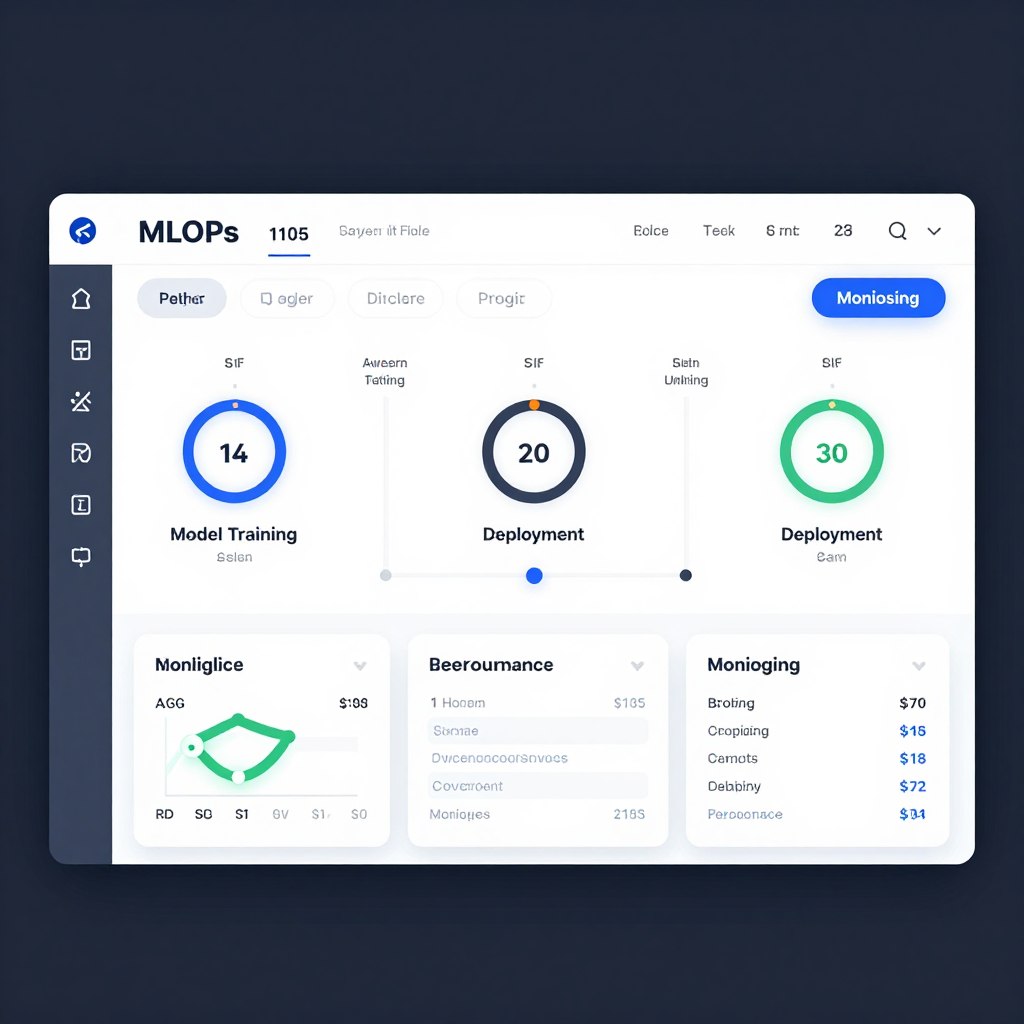
MLOps engineers build infrastructure for machine learning model deployment and monitoring. They create pipelines that automate training, testing, and deployment. This role combines software engineering with AI operations expertise.
The position addresses a critical gap in many organizations. Data scientists build models but lack deployment expertise. MLOps engineers bridge this gap, ensuring models reach production reliably. They implement monitoring systems that detect model degradation over time.
Core Responsibilities
MLOps engineers design CI/CD pipelines for machine learning. They automate model training on new data. Deployment infrastructure must scale with demand. Monitoring systems track model performance and data drift.
Salaries range from $130,000 to $210,000 based on experience. The role commands premium compensation due to specialized expertise. Demand significantly outpaces supply as more companies deploy AI at scale.
AI Research Scientist
Research scientists push the boundaries of what AI systems can achieve. They work at the intersection of academia and industry. These professionals publish papers, develop novel algorithms, and explore new applications.
Most research scientists hold PhDs in computer science, mathematics, or related fields. They combine theoretical knowledge with implementation skills. The role offers intellectual freedom while solving challenging problems.

Research positions at major tech companies offer $150,000 to $300,000 compensation. Top researchers earn significantly more. The role provides opportunity to shape the future direction of artificial intelligence.
AI Marketing Manager
Marketing managers with AI expertise help companies position and sell intelligent products. They translate technical capabilities into customer benefits. The role requires understanding both marketing principles and AI fundamentals.
These professionals develop go-to-market strategies for AI products. They create messaging that resonates with target audiences. Customer education proves particularly important as many buyers lack AI knowledge.
- Marketing strategy and campaign development
- Technical product knowledge and AI literacy
- Content creation and storytelling abilities
- Customer research and market analysis
- Digital marketing and growth tactics
Marketing manager salaries range from $95,000 to $165,000. Senior positions and director roles earn substantially more. The career path leads to VP of Marketing or Chief Marketing Officer positions.
Building Your Path to an AI Career
Transitioning into AI roles requires strategic planning and consistent effort. The good news is multiple entry points exist regardless of current background. Success depends on identifying the right path and executing systematically.
Educational Pathways and Credentials
Traditional computer science degrees provide strong foundations but are not strictly necessary. Many successful AI professionals come from mathematics, physics, engineering, or even liberal arts backgrounds. Self-taught programmers increasingly break into the field through bootcamps and online courses.
Graduate degrees offer advantages for research positions and some specialized roles. A master’s degree in computer science or data science accelerates career progression. PhDs remain important for research scientist positions but prove unnecessary for most applied roles.
Online Learning Resources
Numerous high-quality educational resources exist for self-directed learning. Coursera, edX, and Udacity offer structured programs from top universities. Fast.ai provides practical deep learning courses. YouTube channels and blog posts supplement formal coursework.

- Start with Python programming fundamentals if needed
- Learn statistics and linear algebra through Khan Academy or similar platforms
- Take Andrew Ng’s Machine Learning course on Coursera
- Complete hands-on projects using real datasets from Kaggle
- Build a portfolio showcasing your work on GitHub
- Consider specialized courses in your target area (NLP, computer vision, etc.)
Gaining Practical Experience
Theoretical knowledge alone proves insufficient for securing AI jobs. Employers prioritize candidates who demonstrate practical skills through projects and experience. Building a portfolio of work separates competitive candidates from others.
Personal projects provide opportunities to apply learning. Kaggle competitions offer structured challenges with real datasets. Contributing to open source projects demonstrates collaboration abilities. These experiences prove especially valuable for candidates without formal work experience.
Project Ideas for Portfolio Development
Choose projects that align with your target role. Machine learning engineers should focus on model implementation and deployment. Data scientists emphasize analysis and insights. Full stack developers build complete applications with AI features.
Document projects thoroughly with clear README files. Explain your approach, challenges encountered, and results achieved. Include visualizations and performance metrics. Deploy models when possible to demonstrate end-to-end skills.

Networking and Community Engagement
Building professional connections accelerates career development. The AI community actively shares knowledge through conferences, meetups, and online forums. Engaging with these communities provides learning opportunities and potential job leads.
Attend local AI and machine learning meetups in your area. Participate in online communities like Reddit’s r/MachineLearning or specific Discord servers. Twitter remains surprisingly valuable for following AI researchers and practitioners. LinkedIn helps connect with professionals and recruiters.

Internships and Entry-Level Positions
Summer internships provide critical experience for students and recent graduates. Many programs specifically target Summer 2026 candidates. These positions often lead to full-time offers upon graduation.
Entry-level positions exist despite the seemingly high bar for AI roles. Companies hire junior machine learning engineers and data analysts willing to learn. Smaller companies and startups often provide more opportunities than major tech firms for newcomers.
Consider adjacent roles as stepping stones. Software engineer positions at AI companies enable internal transitions. Data analyst roles build foundations for data science careers. Customer support at AI startups teaches product knowledge valuable for product management.
The Future Landscape of AI Employment
The trajectory for AI jobs extends well beyond 2026. Multiple factors suggest continued strong growth for the foreseeable future. Understanding these trends helps professionals make informed career decisions.

Technological Drivers of Continued Growth
AI capabilities expand rapidly as research breakthroughs become practical applications. Large language models demonstrate surprising versatility. Computer vision systems achieve human-level performance on many tasks. These advances create new use cases and market opportunities.
Cloud infrastructure improvements lower barriers to AI deployment. Small and medium businesses now access capabilities previously limited to tech giants. This democratization expands the market for AI talent beyond Silicon Valley and major tech companies.
Industry Adoption Patterns
Healthcare, finance, manufacturing, and retail lead in AI implementation. These sectors recognize competitive advantages from automation and intelligent decision support. Each industry requires domain expertise combined with technical AI skills.
Healthcare AI
Medical imaging analysis, drug discovery, and patient outcome prediction drive demand. Regulatory considerations require specialized knowledge. Roles combine medical understanding with technical implementation.
Financial Services
Fraud detection, algorithmic trading, and risk assessment utilize machine learning extensively. Compliance and interpretability requirements create unique challenges. Compensation proves particularly strong in this sector.
Manufacturing and Logistics
Predictive maintenance, quality control, and supply chain optimization benefit from AI. Integration with existing systems requires engineering expertise. Physical-world applications demand robustness and reliability.

Geographic Expansion of Opportunities
AI jobs spread beyond traditional tech hubs as remote work normalizes. Secondary cities develop their own AI ecosystems. International opportunities increase as global companies compete for talent.
Remote work arrangements provide unprecedented flexibility. Many professionals now choose lifestyle considerations over proximity to major tech centers. Companies adapt compensation models to reflect geographic cost of living differences.
Addressing the Skills Gap
Demand for AI talent significantly exceeds supply. Universities increase AI program enrollment but cannot fill the gap alone. Alternative education pathways including bootcamps and online programs expand access.
Companies invest in internal training programs to develop AI capabilities. They hire adjacent talent and provide upskilling opportunities. This creates pathways for professionals without traditional AI backgrounds.
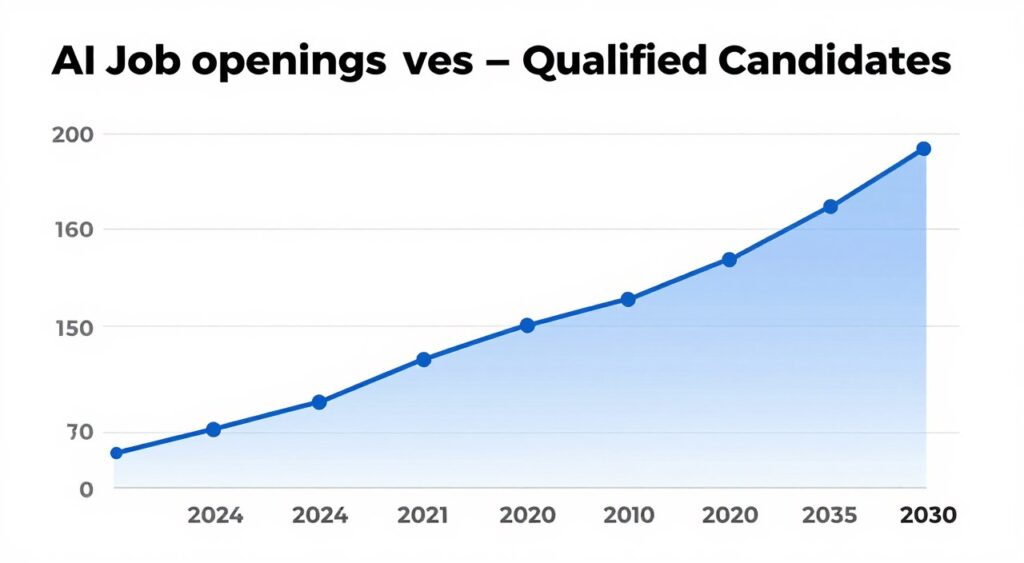
The skills gap ensures strong job security for qualified professionals. Compensation continues rising as companies compete for limited talent. Those who invest in building AI skills position themselves advantageously for long-term career success.
Take Control of Your AI Career Journey Today
Join thousands of professionals who have successfully transitioned into high-growth AI roles. Get personalized guidance, exclusive job opportunities, mentorship connections, and comprehensive career resources designed to accelerate your path to success in artificial intelligence.
Securing Your Future in the AI Job Market
The artificial intelligence revolution creates more opportunities than it eliminates. Professionals who proactively build relevant skills position themselves for rewarding careers. The jobs profiled in this guide represent just a fraction of emerging roles.

Machine learning engineers, data scientists, and full stack developers remain in highest demand. Product managers and engineering leaders guide AI product development. Specialized roles in ethics, operations, and research address specific organizational needs.
Entry into AI careers requires commitment but not necessarily advanced degrees. Online resources democratize education. Practical projects demonstrate skills to potential employers. Networking and community engagement open doors to opportunities.
The key lies in starting now rather than waiting for perfect preparation. Choose a target role aligned with your interests and background. Develop relevant skills systematically through courses and projects. Build a portfolio showcasing your capabilities.
Job security in AI fields remains strong as demand outpaces supply. Compensation continues rising across all experience levels. Geographic flexibility increases through remote work arrangements. The future belongs to those who embrace these opportunities.
Your AI career journey begins with a single step. Whether you are a recent graduate, experienced professional, or career changer, pathways exist to your goals. The time to invest in your AI future is today.








Comments are closed