Artificial intelligence has evolved from a mere technological tool to a strategic business partner that drives decision-making and creates tangible value. Today’s AI systems don’t just process data—they collaborate with teams, identify opportunities, and help shape business strategy. This transformation is enabling organizations to achieve unprecedented levels of efficiency, customer satisfaction, and innovation across industries.
In this article, we’ll explore how leading companies are leveraging AI as a business partner to drive measurable ROI and foster innovation through concrete use cases. Whether you’re just beginning your AI journey or looking to enhance existing implementations, these insights will help you unlock the full potential of AI collaboration in your organization.
The Evolution of AI: From Tool to Strategic Partner
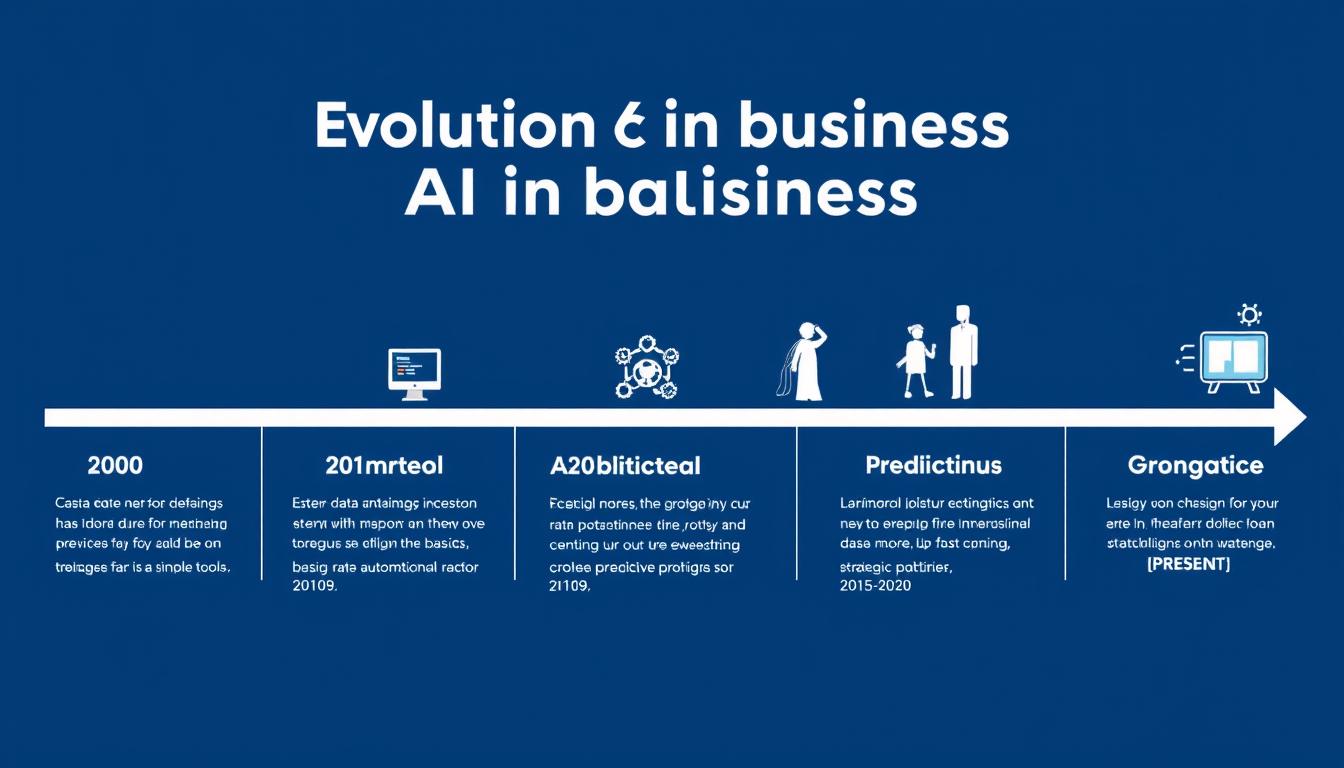
The progression of AI from operational tool to strategic business partner
The journey of AI in business has evolved dramatically over the past decade. What began as basic automation tools has transformed into sophisticated systems capable of analyzing complex data, recognizing patterns, and making recommendations that influence strategic decisions.
This evolution represents a fundamental shift in how businesses view AI—no longer as just another technology implementation but as a collaborative partner that brings unique capabilities to the decision-making process. Modern AI systems can identify opportunities, suggest solutions, and even predict outcomes with remarkable accuracy.
Key Milestone: According to Deloitte, 94% of business leaders now consider AI crucial for future success, marking a significant shift from viewing AI as optional to essential.
As AI capabilities have matured, the relationship between humans and machines has become increasingly collaborative. Today’s most successful implementations position AI as a business partner that complements human expertise rather than replacing it. This partnership model maximizes the strengths of both: AI’s data processing power and humans’ contextual understanding and creativity.
Use Case 1: AI as a Business Partner in Supply Chain Optimization

Supply chain operations present one of the most compelling areas where AI serves as a valuable business partner. By analyzing historical data, market trends, and external factors, AI systems can dramatically improve forecasting accuracy and operational efficiency.
Demand Forecasting and Inventory Management
Traditional forecasting methods often fall short in today’s volatile markets. AI as a business partner excels by analyzing multiple data sources simultaneously—from historical sales and seasonal patterns to social media trends and weather forecasts—to predict demand with unprecedented accuracy.
“Our AI forecasting system reduced inventory costs by 23% while simultaneously decreasing stockouts by 17%. It’s like having a partner who can see around corners.”
Companies like Amazon leverage AI to maintain optimal inventory levels across thousands of SKUs, reducing carrying costs while ensuring product availability. Their AI systems continuously learn from outcomes, improving accuracy with each cycle and adapting to changing market conditions in real-time.
Logistics Optimization
In logistics, AI partners with planners to optimize routes, reduce fuel consumption, and improve delivery times. These systems consider multiple variables simultaneously—traffic patterns, weather conditions, vehicle capacity, and delivery priorities—to determine optimal routing in ways human planners simply cannot.
| Supply Chain Function | Traditional Approach | AI as a Business Partner | Measured ROI |
| Demand Forecasting | Historical data analysis with limited variables | Multi-source data analysis with real-time adjustments | 15-25% improvement in forecast accuracy |
| Inventory Management | Static reorder points and safety stock | Dynamic inventory optimization with predictive analytics | 20-30% reduction in inventory costs |
| Logistics Planning | Rule-based routing with limited variables | Multi-variable optimization with real-time adjustments | 8-15% reduction in transportation costs |
The ROI from AI in supply chain operations is typically realized within 6-12 months of implementation, making it one of the most financially attractive applications of AI as a business partner.
Use Case 2: AI-Powered Customer Experience Enhancement
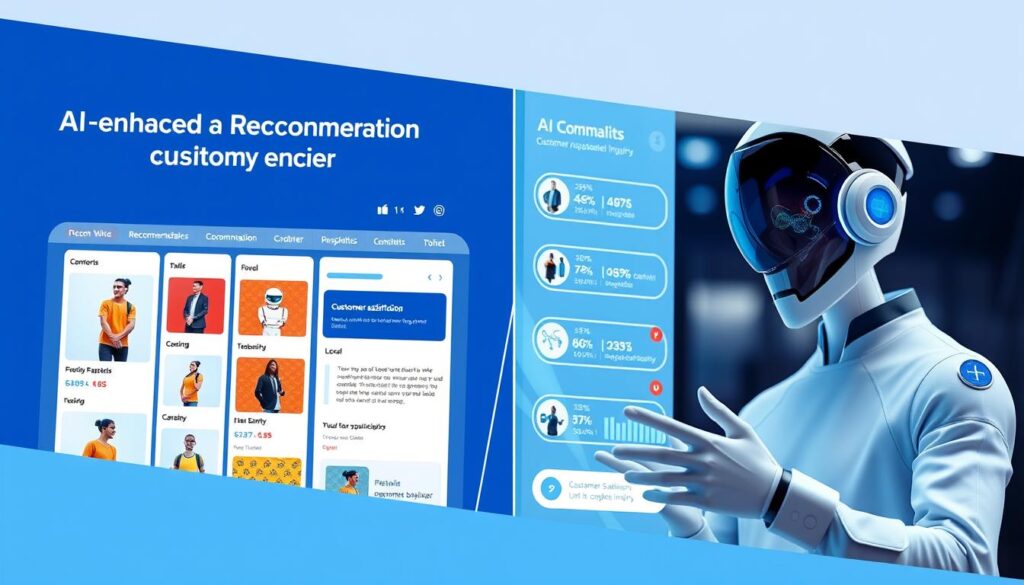
Customer experience has become a primary competitive differentiator, and AI is proving to be an invaluable partner in delivering personalized, responsive service at scale. By analyzing customer data and behavior patterns, AI helps businesses understand and anticipate customer needs in ways previously impossible.
Hyper-Personalization at Scale
AI enables businesses to move beyond basic segmentation to true one-to-one personalization. By analyzing purchase history, browsing behavior, and even contextual factors like time of day or weather, AI systems can deliver highly relevant recommendations and experiences to each customer.
Netflix exemplifies this approach, with its recommendation engine driving approximately 80% of content watched on the platform. The system analyzes viewing patterns, preferences, and even the time of day users watch to suggest content that keeps subscribers engaged and reduces churn.
Case Study: A major retail bank implemented AI-driven personalization across its digital channels, resulting in a 38% increase in product adoption and a 23% improvement in customer satisfaction scores within the first year.
Intelligent Conversational Interfaces
AI-powered chatbots and virtual assistants have evolved from simple rule-based systems to sophisticated conversational partners that understand context, remember previous interactions, and continuously learn from customer engagements.
These systems serve as frontline business partners for customer service teams, handling routine inquiries while escalating complex issues to human agents. This partnership between AI and human teams creates a seamless experience for customers while significantly reducing operational costs.
The dual benefits of improved customer satisfaction and reduced operational costs make customer experience one of the most compelling areas for AI partnership, with many organizations reporting ROI within the first year of implementation.
Ready to explore AI implementation for your business?
Our team of AI specialists can help you identify the highest-impact opportunities specific to your industry and business model.
Use Case 3: AI-Driven Innovation and Product Development

Perhaps the most transformative role of AI as a business partner is in driving innovation. By analyzing vast amounts of data and identifying patterns that humans might miss, AI is helping companies develop new products, improve existing offerings, and enter entirely new markets.
Accelerated Research and Development
In pharmaceutical research, AI partners with scientists to identify promising drug candidates by analyzing molecular structures and predicting their effectiveness. This partnership has dramatically reduced the time and cost of bringing new treatments to market.
Companies like Pfizer and Johnson & Johnson are using AI to analyze research papers, clinical trial data, and molecular information to identify potential treatments for various conditions. These AI systems can process information at a scale impossible for human researchers, identifying connections that might otherwise remain undiscovered.
Generative Design and Product Optimization
In manufacturing and product design, AI serves as a creative partner by generating and testing thousands of design variations based on specific parameters and constraints. This approach, known as generative design, has led to breakthrough products with improved performance, reduced material usage, and lower production costs.

Airbus partnered with AI to redesign partition walls for its A320 aircraft. The AI-generated design was 45% lighter than the original while maintaining all safety and performance requirements, resulting in significant fuel savings and reduced environmental impact over the aircraft’s lifetime.
Traditional R&D Process
- Linear development cycles
- Limited design iterations
- Reliance on past experience
- Months or years to market
- High development costs
AI-Enhanced R&D Process
- Parallel exploration of options
- Thousands of design iterations
- Data-driven optimization
- Accelerated time to market
- Reduced development costs
The ROI from AI in innovation extends beyond direct cost savings to include accelerated time-to-market, improved product performance, and the ability to enter entirely new market segments with innovative offerings.
Measuring ROI from AI as a Business Partner
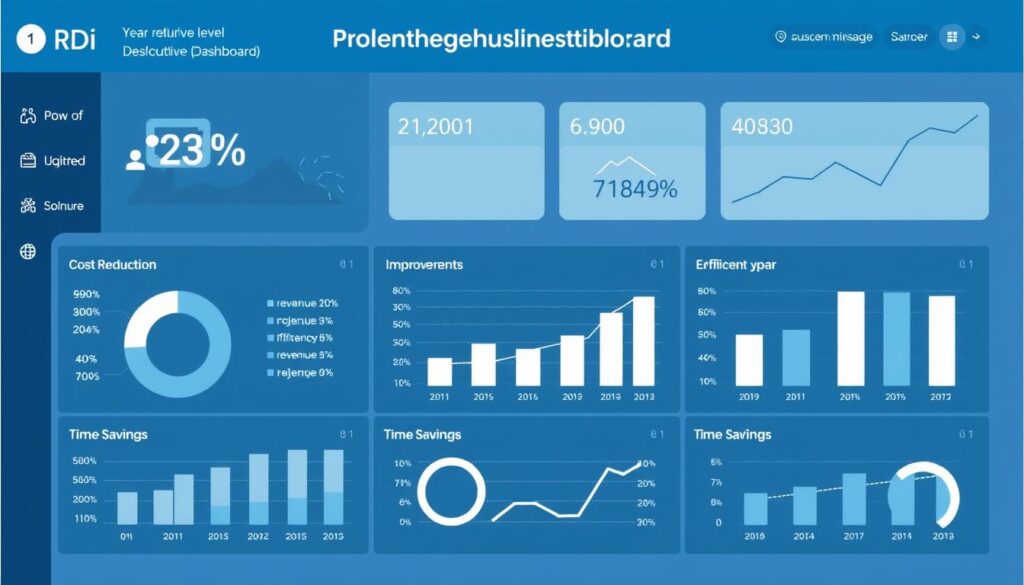
Quantifying the return on investment from AI implementations is essential for securing continued support and funding. While the specific metrics vary by use case, several key indicators consistently demonstrate the value of AI as a business partner.
Direct Financial Impact
The most straightforward ROI measurements come from direct financial impacts such as cost reduction, revenue growth, and margin improvement. Companies implementing AI in supply chain operations typically report cost reductions of 15-30%, while those focusing on customer experience often see revenue growth of 10-20% from increased conversion rates and customer lifetime value.
| Business Function | Key ROI Metrics | Average Improvement | Timeframe to Results |
| Supply Chain | Inventory costs, stockout reduction, logistics efficiency | 15-30% cost reduction | 6-12 months |
| Customer Experience | Conversion rate, customer lifetime value, service costs | 10-20% revenue growth | 3-9 months |
| Innovation/R&D | Time-to-market, development costs, product performance | 30-50% faster development | 12-24 months |
Operational Efficiency
Beyond direct financial impacts, AI partnerships deliver significant operational improvements. These include increased throughput, reduced error rates, and improved resource utilization. Manufacturing companies implementing AI for quality control report defect reductions of 30-50%, while financial institutions using AI for fraud detection see false positives reduced by 60-80%.
Strategic Value
Perhaps the most significant—yet hardest to quantify—benefits come from AI’s strategic contributions. These include accelerated innovation, improved decision-making, and enhanced organizational agility. Companies that effectively partner with AI report making faster, more confident decisions based on data rather than intuition alone.
“The ROI from our AI initiatives extends far beyond the balance sheet. We’re making better decisions faster, identifying opportunities we would have missed, and fundamentally changing how we operate as a business.”
To accurately measure AI’s full impact, organizations should establish baseline metrics before implementation and track both quantitative and qualitative outcomes over time. This comprehensive approach ensures that all benefits—from direct cost savings to strategic advantages—are properly attributed to AI partnerships.
Implementation Challenges and Best Practices

While the potential benefits of AI as a business partner are substantial, successful implementation requires addressing several common challenges. Organizations that navigate these obstacles effectively are more likely to realize the full value of their AI investments.
Data Quality and Integration
AI systems are only as good as the data they’re trained on. Many organizations struggle with fragmented data sources, inconsistent formats, and quality issues that limit AI effectiveness. Successful implementations begin with a thorough assessment of data readiness and often include dedicated data preparation initiatives.
Common Pitfall: Organizations often underestimate the time and resources required for data preparation, which typically accounts for 60-80% of AI project timelines. Building a solid data foundation is essential for AI success.
Ethical Considerations and Governance
As AI becomes more deeply integrated into business operations, ensuring ethical use and appropriate governance becomes increasingly important. Organizations must establish clear frameworks for addressing issues like bias, transparency, and accountability in AI systems.
Effective AI Governance Approaches
- Cross-functional AI ethics committees
- Regular bias audits and testing
- Transparent documentation of AI decision processes
- Clear escalation paths for AI-related concerns
- Ongoing monitoring of AI system outputs
Governance Pitfalls to Avoid
- Treating AI governance as IT-only responsibility
- Implementing AI without clear oversight mechanisms
- Failing to consider diverse perspectives in AI development
- Neglecting regular reviews of AI system performance
- Insufficient documentation of AI decision criteria
Workforce Adaptation and Change Management
Perhaps the most significant challenge in AI implementation is helping teams adapt to working alongside AI partners. This requires not only technical training but also cultural change to foster trust and collaboration between human and AI systems.
Successful organizations approach AI implementation as a change management initiative, focusing on building understanding, addressing concerns, and highlighting the ways AI enhances rather than replaces human capabilities.
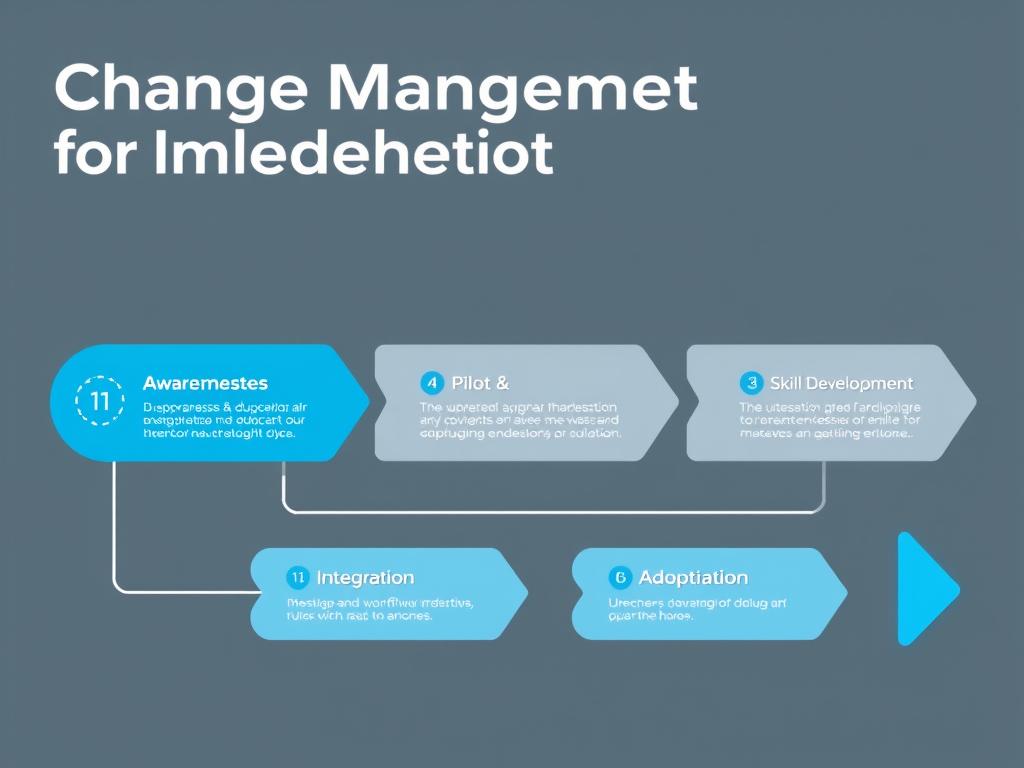
Organizations that invest in change management alongside technical implementation report significantly higher adoption rates and user satisfaction with AI systems, ultimately leading to greater ROI from their investments.
Future Outlook: The Evolving AI-Human Partnership

As AI capabilities continue to advance, the nature of AI-human partnerships will evolve in significant ways. Understanding these trends can help organizations prepare for and capitalize on the next generation of AI as a business partner.
From Narrow to Broad Intelligence
Current AI systems excel at specific tasks but lack the broad understanding and adaptability of human intelligence. The next generation of AI partners will feature more general capabilities, allowing them to work across domains and adapt to new challenges without extensive retraining.
This evolution will enable AI to serve as more versatile business partners, contributing to strategic planning, creative problem-solving, and complex decision-making across the organization.
Augmented Decision Intelligence
Future AI systems will move beyond providing recommendations to actively participating in decision processes. These systems will combine predictive analytics with causal reasoning, helping business leaders understand not just what might happen but why—and how different actions could influence outcomes.
This augmented decision intelligence will transform how organizations approach strategic planning, risk management, and opportunity identification, creating a true partnership between human judgment and AI capabilities.
“The future isn’t about AI replacing human decision-makers but about creating a new kind of collaborative intelligence that combines the best of both. The organizations that thrive will be those that master this partnership.”
Democratized AI Access
As AI tools become more intuitive and accessible, the benefits of AI as a business partner will extend beyond data scientists and technical specialists to employees throughout the organization. This democratization will amplify AI’s impact by embedding it in daily workflows across departments and functions.
Organizations that embrace this trend by investing in user-friendly AI tools and appropriate training will gain competitive advantages through broader and deeper AI adoption.
Conclusion: Embracing AI as Your Strategic Business Partner
The transformation of AI from a specialized tool to a strategic business partner represents one of the most significant opportunities for organizations today. By leveraging AI’s capabilities across supply chain operations, customer experience, and innovation, businesses can achieve measurable improvements in efficiency, profitability, and competitive positioning.
The most successful implementations position AI not as a replacement for human expertise but as a collaborative partner that enhances human capabilities. This partnership model combines AI’s data processing power and pattern recognition with human creativity, judgment, and contextual understanding.
As you consider your organization’s AI journey, focus on identifying high-impact use cases with clear ROI potential, building the necessary data foundation, and investing in change management to help your teams adapt to working alongside AI partners. With the right approach, AI can become one of your most valuable business partners, driving sustainable growth and innovation for years to come.
Ready to transform your business with AI?
Download our comprehensive AI Implementation Roadmap to get started on your journey toward leveraging AI as a strategic business partner.
Frequently Asked Questions
How quickly can we expect to see ROI from AI implementation?
ROI timelines vary by use case, but many organizations see initial returns within 3-12 months. Customer experience applications typically deliver the fastest ROI (3-9 months), followed by supply chain optimizations (6-12 months), while innovation and R&D applications may take longer (12-24 months) but often deliver higher long-term returns.
Do we need data scientists to implement AI as a business partner?
While data science expertise is valuable, many organizations successfully implement AI through partnerships with technology providers and consultants. The most critical requirements are clear business objectives, quality data, and executive sponsorship. As AI tools become more accessible, the technical barriers to implementation continue to decrease.
How can we ensure our AI implementations are ethical and unbiased?
Ethical AI implementation requires a multi-faceted approach including diverse training data, regular bias audits, transparent documentation of decision criteria, and cross-functional oversight. Establishing an AI ethics committee with representation from various departments and backgrounds can help ensure multiple perspectives are considered throughout development and deployment.
What’s the best way to start implementing AI as a business partner?
Start with a focused use case that addresses a specific business challenge and has clear success metrics. Begin with a pilot project to demonstrate value and learn from the implementation process before scaling. Prioritize use cases with strong data availability and relatively straightforward implementation to build momentum and organizational support for broader AI initiatives.








Comments are closed