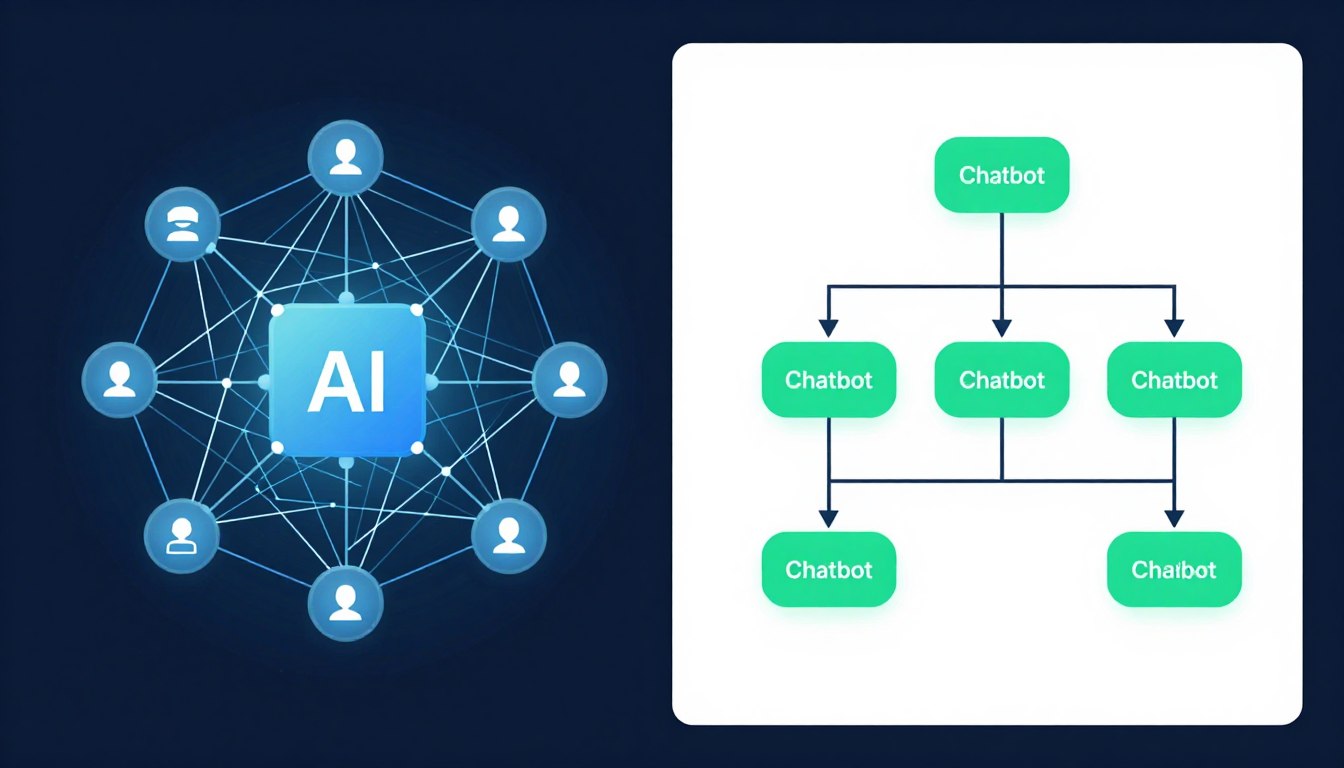
The landscape of customer service and business automation has transformed dramatically. Organizations face a critical decision between implementing AI agents or traditional chatbots. Understanding this distinction determines whether your business achieves true automation or simply adds another rigid system.
Both technologies promise improved customer experience and operational efficiency. Yet they operate on fundamentally different principles. One follows predefined scripts while the other makes autonomous decisions.
This comprehensive guide examines what separates these technologies in 2026. You will discover practical applications, implementation considerations, and future trends that impact your business strategy.
Navigate This Guide
Jump to the sections most relevant to your needs:
Understanding the Fundamental Differences
The distinction between AI agents and traditional chatbots extends beyond surface-level features. These technologies represent different evolutionary stages in conversational AI development.
What Defines Traditional Chatbots
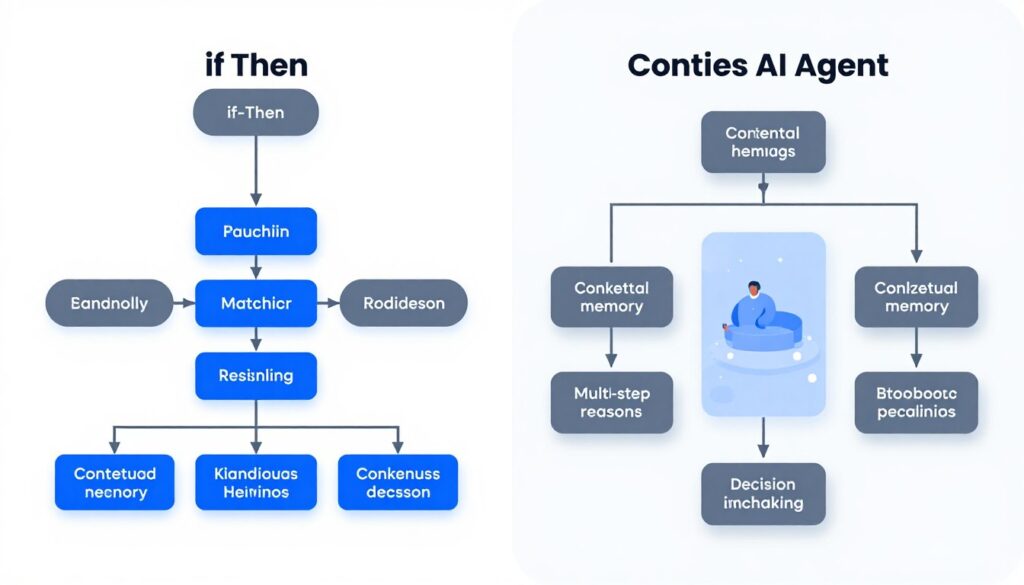
Traditional chatbots operate on predetermined rules and scripts. They match user input against programmed patterns and deliver corresponding responses. This rule-based approach limits their flexibility.
These systems excel at handling frequently asked questions and simple customer inquiries. They follow decision trees coded by developers. When users ask questions outside programmed scenarios, chatbots typically fail or redirect to human agents.
Most traditional chatbots lack contextual understanding. They process each interaction independently without remembering previous conversations. This creates repetitive experiences where customers must explain their issues repeatedly.
What Defines AI Agents
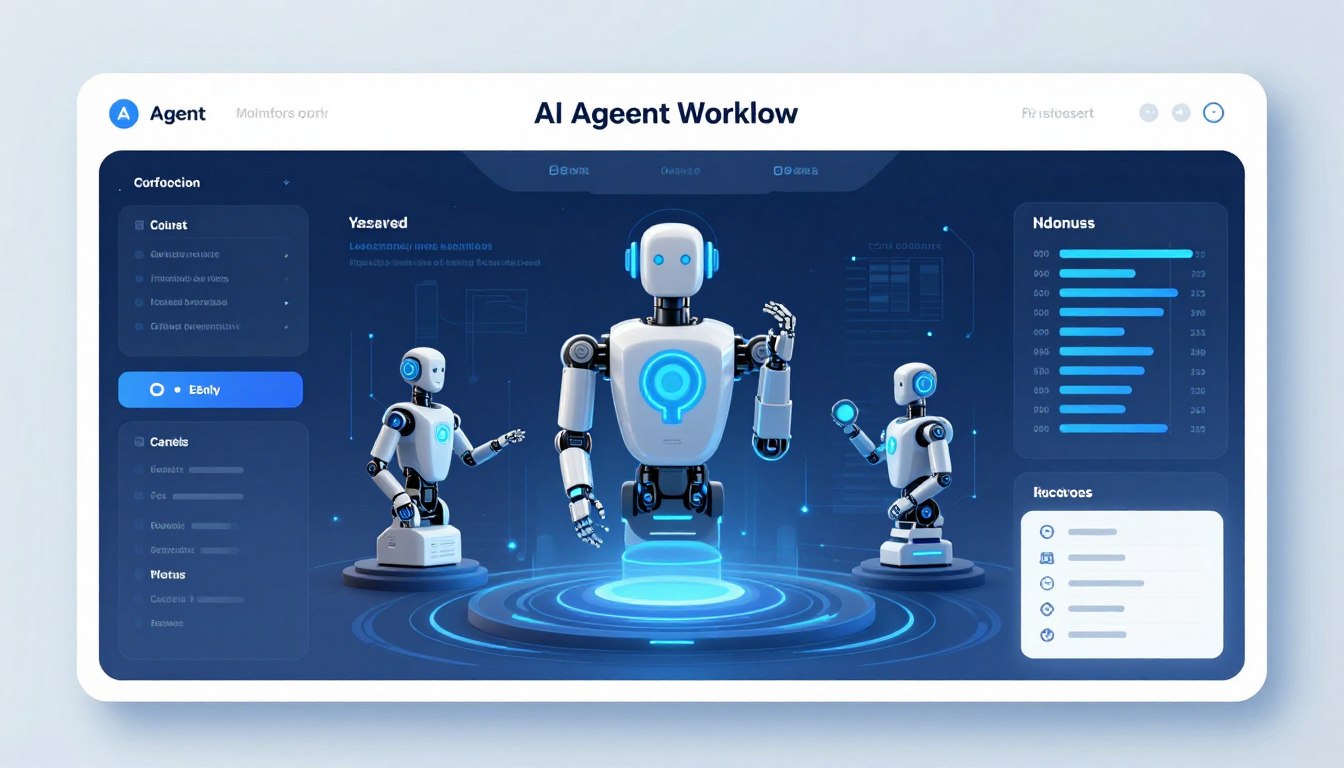
AI agents leverage large language models to understand context and intent. They process natural language with human-like comprehension. These systems learn from interactions and adapt their responses accordingly.
Unlike rule-based systems, agents require minimal coding for new scenarios. They use reasoning capabilities to handle complex, multi-step tasks autonomously. This autonomy enables them to make decisions without constant human oversight.
AI agents maintain conversation context across multiple interactions. They remember previous exchanges and use that information to provide personalized responses. This contextual awareness creates more natural conversations.
Processing Capabilities
Traditional chatbots parse keywords and match patterns. AI agents comprehend intent, emotion, and nuance through advanced natural language understanding. This fundamental difference affects every interaction quality metric.
Technical Architecture Distinctions
The underlying technology stack separates these solutions significantly. Traditional chatbots use simple natural language processing with predefined workflows. They require extensive scripting and manual updates.
AI agents built on large language models process information differently. They analyze text semantically rather than syntactically. This semantic understanding enables them to grasp meaning rather than just matching words.
Agents integrate with multiple data sources and tools autonomously. They can query databases, access knowledge bases, and execute tasks across systems. Traditional chatbots need explicit programming for each integration point.
AI Agent Advantages
- Autonomous decision-making without human intervention
- Contextual understanding across conversations
- Minimal coding for new use cases
- Continuous learning from interactions
- Natural language comprehension
- Multi-step task execution
Traditional Chatbot Limitations
- Rigid rule-based responses
- No conversation context retention
- Extensive manual programming required
- Limited to predefined scenarios
- Simple keyword matching
- Single-step task handling
Learning and Adaptation Capabilities
Traditional chatbots remain static unless developers manually update their scripts. Adding new responses or handling additional questions requires coding changes. This creates maintenance overhead and delayed responses to changing customer needs.
AI agents improve through exposure to conversations and data. They identify patterns in user behavior and adapt their strategies. This self-improvement happens without constant developer intervention.
The learning mechanisms differ fundamentally. Chatbots need retraining or reprogramming for new information. Agents integrate new knowledge through their language model foundations and can reason about unfamiliar situations.
Key Technical Capabilities Comparison
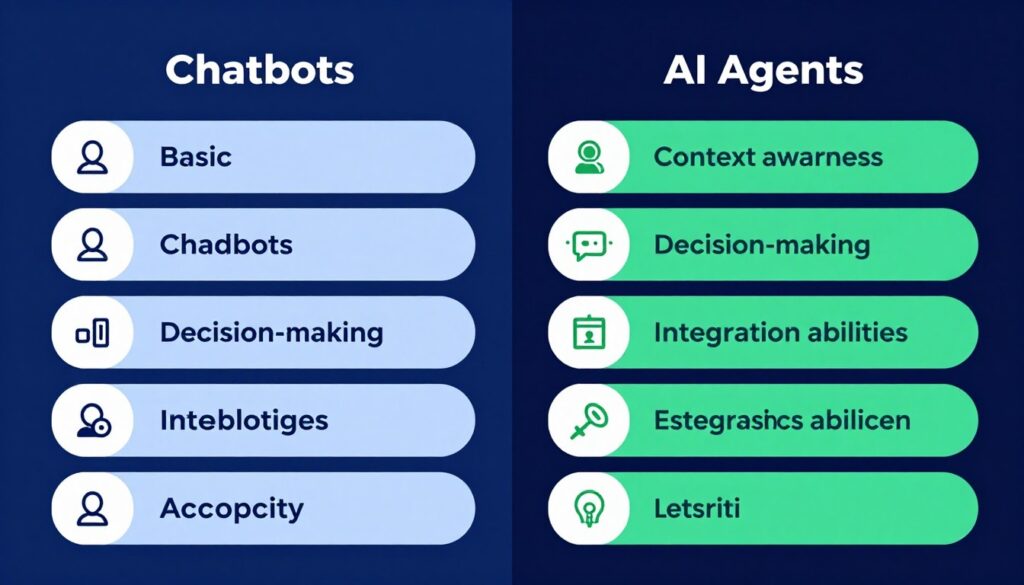
Context Awareness and Memory
Context retention separates basic automation from intelligent assistance. Traditional chatbots treat each message as isolated input. They cannot reference earlier conversation points without explicit programming.
AI agents maintain conversation history and context naturally. They remember what customers said five minutes ago or during previous sessions. This memory enables coherent, flowing conversations that feel human-like.
The practical impact shows in customer experience metrics. Users do not need to repeat information. Agents build upon previous exchanges to provide increasingly relevant responses.
Decision-Making Authority
Chatbots follow predetermined decision trees without deviation. They escalate to human agents when encountering scenarios outside their programming. This creates bottlenecks in customer support workflows.
AI agents evaluate situations and make autonomous decisions within defined parameters. They assess multiple factors, weigh options, and choose appropriate actions. This authority reduces the need for human intervention in routine matters.
Organizations can set guardrails for agent decision-making. These boundaries ensure agents operate within acceptable risk and compliance parameters while maintaining autonomy for standard decisions.
| Capability | Traditional Chatbots | AI Agents |
| Context Understanding | Single message scope | Full conversation history |
| Task Complexity | Single-step operations | Multi-step workflows |
| Learning Method | Manual programming | Autonomous improvement |
| Response Flexibility | Scripted answers only | Dynamic responses |
| Integration Complexity | Hard-coded connections | Adaptive system access |
| Maintenance Requirements | High manual effort | Low ongoing maintenance |
Integration and Tool Usage
Modern business operations require systems that work across multiple platforms. Traditional chatbots need specific coding for each integration. Adding a new data source means development work and testing cycles.
AI agents connect with tools and systems more fluidly. They can invoke APIs, query databases, and access information across platforms using natural language instructions. This reduces integration complexity significantly.
The ability to use tools autonomously expands agent capabilities. They can check inventory, process orders, schedule appointments, and update records without predefined workflows for each action.
Confused About Which Technology Fits Your Needs?
Download our comprehensive comparison framework. This decision matrix helps you evaluate AI agents versus chatbots based on your specific business requirements, technical capabilities, and customer service goals.
Business Applications and Use Cases
Understanding where each technology excels helps organizations make informed implementation decisions. Both chatbots and AI agents serve valuable purposes in different scenarios.

Customer Service and Support Applications
Customer service represents the most common deployment area for both technologies. The complexity of customer inquiries determines which solution works best.
Traditional chatbots handle straightforward questions effectively. They answer frequently asked questions about business hours, return policies, and account information. These repetitive inquiries drain human agent time unnecessarily.
AI agents tackle complex customer support scenarios. They understand nuanced questions, troubleshoot technical issues, and resolve multi-faceted problems. When customers describe issues in natural language, agents comprehend the underlying problem.
Real-World Customer Service Examples
A telecommunications company uses chatbots for billing inquiries and service plan information. These scripted interactions follow predictable patterns. The chatbot retrieves account data and presents it clearly.
The same company deploys AI agents for technical troubleshooting. When customers report connectivity problems, agents ask clarifying questions, analyze symptoms, and guide users through diagnostic steps. They adapt their approach based on user responses.
Chatbot Sweet Spot
Simple, repetitive customer inquiries work perfectly for traditional chatbots:
- Account balance checks
- Order status tracking
- Basic product information
- Store location and hours
- Password reset procedures
AI Agent Territory
Complex, variable customer support situations benefit from AI agents:
- Technical troubleshooting
- Complex product recommendations
- Multi-step problem resolution
- Complaint handling and escalation
- Personalized service recovery
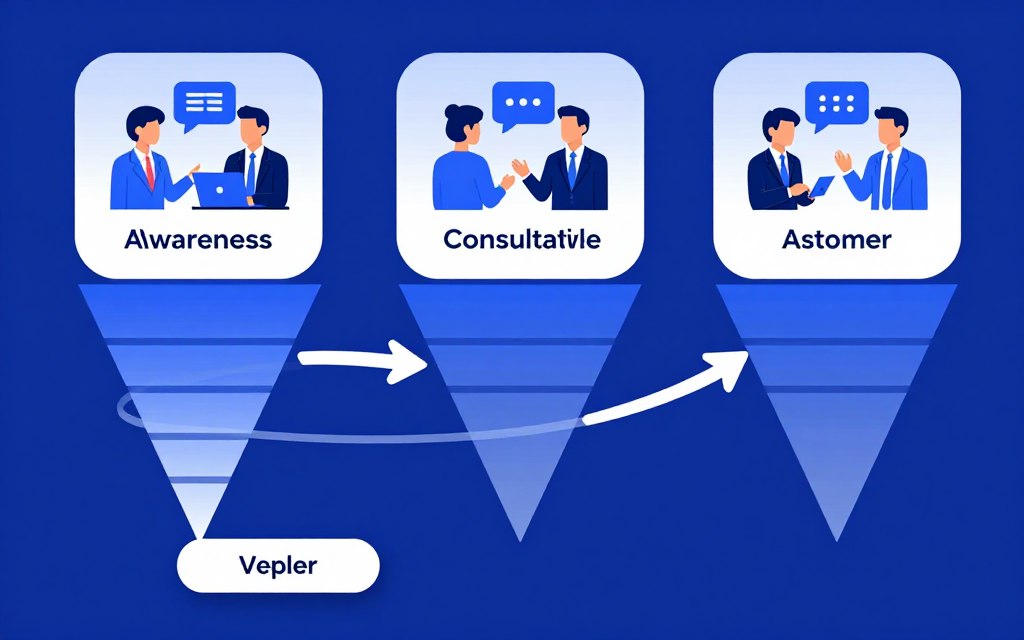
Sales and Lead Generation Use Cases
Sales processes involve qualifying prospects, understanding needs, and recommending solutions. These tasks vary greatly in complexity.
Chatbots capture basic lead information effectively. They collect names, contact details, and initial interest areas. This data flows into CRM systems for follow-up. The structured nature of lead capture suits chatbot capabilities.
AI agents engage in consultative selling conversations. They ask probing questions to understand customer needs. Based on responses, they recommend appropriate products or services. This dynamic interaction mirrors human sales conversations.
Operations and Internal Process Automation
Internal business operations offer significant automation opportunities. Both technologies streamline processes but at different sophistication levels.
Traditional chatbots automate routine employee requests. They handle vacation day inquiries, IT helpdesk ticket creation, and basic HR questions. These standardized processes follow clear workflows that chatbots execute reliably.
AI agents manage complex operational tasks requiring judgment. They coordinate project activities, analyze data for insights, and assist with decision-making. Their ability to process information and provide recommendations adds strategic value.
Industry-Specific Applications
Healthcare organizations use chatbots for appointment scheduling and medication reminders. These structured interactions follow predictable patterns. Patients receive timely information without staff involvement.
Healthcare AI agents assist with patient triage and preliminary diagnosis support. They gather symptoms, assess urgency, and recommend appropriate care levels. This requires understanding medical context and patient communication nuances.
Financial services deploy chatbots for balance inquiries and transaction history. These data retrieval tasks happen instantly without human assistance. Customers access information on their schedule.
Banking AI agents provide financial planning advice and fraud detection support. They analyze spending patterns, identify unusual transactions, and explain complex financial products. This advisory role demands sophisticated reasoning.
Retail Sector
Chatbots: Size availability, store locations, shipping status
AI Agents: Personal shopping assistance, complex product comparisons, gift recommendations
Healthcare Industry
Chatbots: Appointment booking, prescription refills, clinic information
AI Agents: Symptom assessment, care navigation, treatment explanation
Technology Companies
Chatbots: Account setup, password resets, basic troubleshooting
AI Agents: Advanced technical support, integration consulting, optimization recommendations
E-commerce and Personalization
Online shopping experiences benefit from both automation approaches. The depth of personalization determines the appropriate technology choice.
Chatbots guide customers through standard purchase processes. They answer sizing questions using lookup tables and provide shipping information. These transactional interactions complete purchases efficiently.
AI agents create personalized shopping experiences. They understand customer preferences, suggest complementary products, and adjust recommendations based on conversation flow. This mimics in-store personal shopper experiences.
The e-commerce use cases demonstrate how businesses often deploy both technologies simultaneously. Simple questions route to chatbots while complex purchasing decisions engage AI agents.
Implementation Considerations for Business Leaders
Choosing between AI agents and chatbots requires evaluating multiple business factors. This decision impacts customer experience, operational costs, and competitive positioning.
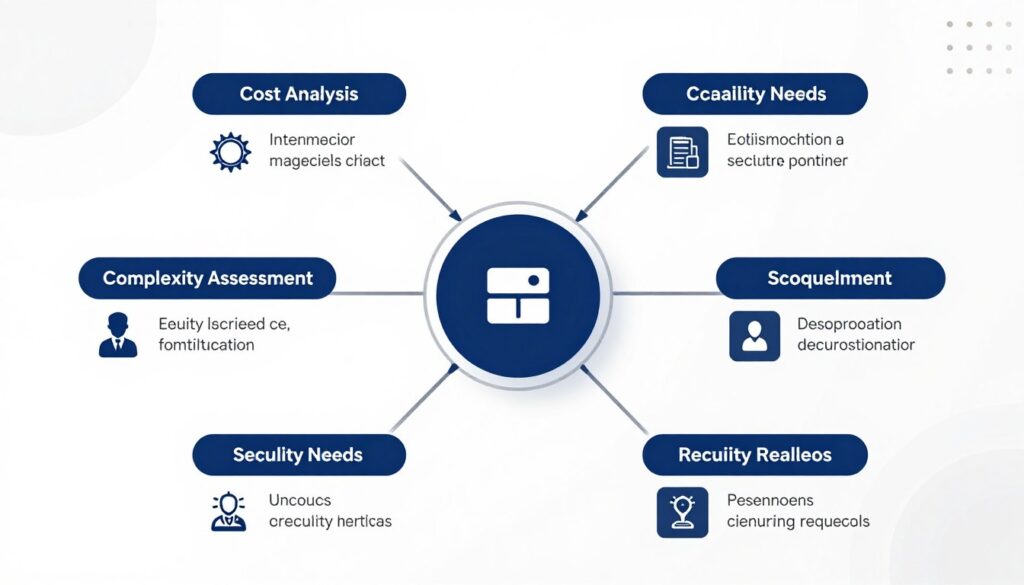
Cost Analysis and ROI Expectations
Budget constraints influence technology selection significantly. Traditional chatbots typically require lower initial investment. Development costs center on scripting conversations and building decision trees.
Ongoing chatbot maintenance creates hidden costs. Each new scenario requires developer time for programming and testing. As business needs evolve, these maintenance costs accumulate.
AI agents demand higher upfront investment in technology and infrastructure. Organizations must access large language models and implement proper security measures. However, ongoing costs remain lower due to reduced maintenance requirements.
Return on investment calculations should consider total cost of ownership. While chatbots cost less initially, agents often deliver faster ROI through reduced operational overhead and improved customer satisfaction.
Technical Complexity and Resource Requirements
Implementation complexity varies dramatically between these technologies. Traditional chatbots require development teams skilled in scripting and workflow design. The technical barrier remains moderate.
Organizations need clear process documentation for chatbot development. Every possible conversation path must be mapped and programmed. This documentation burden increases with system complexity.
AI agents require different expertise. Teams need understanding of LLMs, prompt engineering, and AI safety principles. These skills remain scarce in many organizations currently.
The infrastructure requirements differ significantly. Chatbots run on standard application servers. AI agents often require cloud resources with GPU acceleration for optimal performance.
- Basic development skills
- Conversation design expertise
- Standard hosting infrastructure
- Ongoing script maintenance
- Manual testing processes
- Clear process documentation
Chatbot Requirements
- AI/ML technical knowledge
- Prompt engineering skills
- Cloud infrastructure with GPU
- Minimal maintenance needs
- Automated testing capabilities
- Security and privacy expertise
AI Agent Requirements
Security and Privacy Considerations
Data protection concerns affect both technologies but manifest differently. Traditional chatbots handle data through predefined channels. Security teams can audit specific data flows and implement controls.
Chatbots store conversation logs and customer information. Organizations must protect this data according to privacy regulations. The structured nature of data storage simplifies compliance efforts.
AI agents process information through language models raising additional security questions. Organizations must ensure sensitive data does not leak through model interactions. Proper safeguards prevent unauthorized information disclosure.
The autonomous nature of AI agents requires robust security frameworks. Organizations need governance around agent actions and decision-making authority. Clear boundaries prevent agents from taking inappropriate actions.
Compliance and Regulatory Factors
Regulated industries face additional constraints when implementing conversational AI. Healthcare organizations must ensure HIPAA compliance. Financial institutions navigate strict data protection requirements.
Traditional chatbots offer more straightforward compliance paths. Their limited capabilities and predictable behavior simplify regulatory approval. Audit trails clearly show system actions and decisions.
AI agents require more sophisticated compliance approaches. Their autonomous decisions and learning capabilities create new audit challenges. Organizations must demonstrate appropriate safeguards and oversight mechanisms.
Ready to Implement the Right Solution for Your Business?
Our AI strategy consultants help businesses navigate the complex decision between AI agents and chatbots. We assess your specific needs, technical capabilities, and business goals to recommend the optimal approach. Schedule a free consultation to discuss your automation strategy.
Scalability and Growth Planning
Future scalability should influence current technology decisions. Traditional chatbots scale horizontally by adding more server capacity. However, capability scaling requires significant development effort.
Adding new use cases to chatbots means extensive programming work. Each additional conversation type needs scripting, testing, and deployment. This creates bottlenecks as organizations expand automation scope.
AI agents scale more efficiently across use cases. Their language understanding adapts to new scenarios with minimal additional development. Organizations can expand agent responsibilities through configuration rather than coding.
Volume scaling considerations differ between technologies. Chatbots handle increasing conversation volume predictably. AI agents may require more computational resources as usage grows but maintain consistent quality.
Integration with Existing Systems
Technology stacks within organizations vary widely. Successful automation requires seamless integration with existing tools and systems.
Traditional chatbots integrate through standard APIs and webhooks. Development teams build specific connectors for each system. This approach works reliably but requires ongoing maintenance.
AI agents leverage language understanding to interact with systems more flexibly. They can adapt to API changes and work with multiple data formats. This reduces integration brittleness over time.
Organizations should audit their current technology landscape before implementation. Understanding data sources, user authentication systems, and workflow tools helps determine integration complexity.
2026 Trends and Innovations
The conversational AI landscape continues evolving rapidly. Understanding emerging trends helps organizations prepare for future opportunities and challenges.
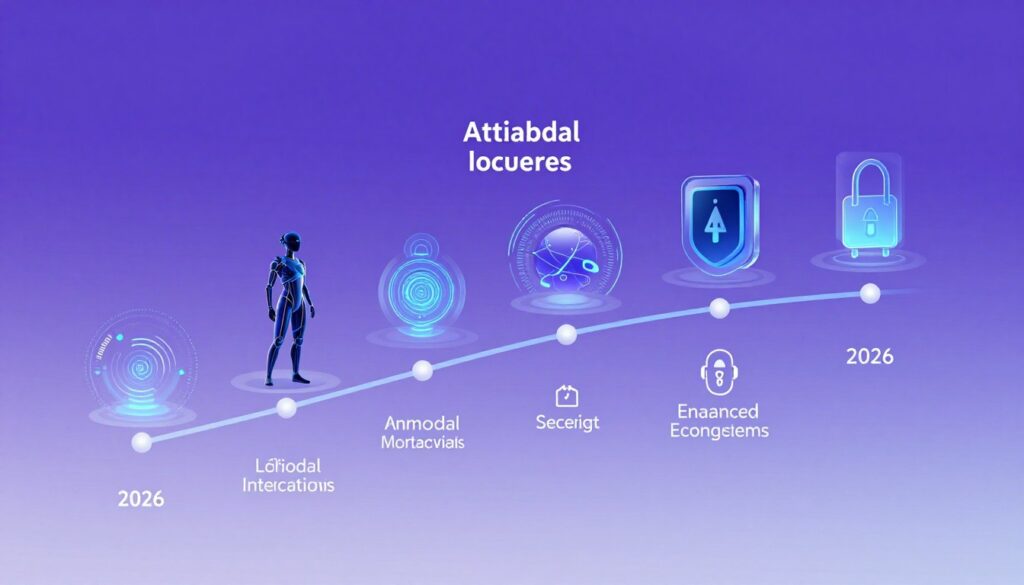
Advancements in Language Models
Large language models powering AI agents improve constantly. Model capabilities expand while computational requirements decrease. This makes sophisticated AI more accessible to organizations of all sizes.
New models demonstrate enhanced reasoning abilities. They handle complex logical problems and mathematical calculations more reliably. This expands the range of business problems agents can solve autonomously.
Multimodal capabilities represent a significant advancement. Modern language models process images, audio, and video alongside text. This enables richer interactions and broader application scenarios.
Enhanced Autonomous Capabilities
AI agents gain increasing autonomy in decision-making and task execution. They coordinate multi-step workflows across systems without human intervention. This automation depth transforms operational processes.
Agents now plan complex activities and adjust strategies based on outcomes. They learn from successes and failures, improving performance over time. This self-improvement cycle reduces the need for constant optimization by developers.
The ability to handle ambiguous situations continues improving. Agents make reasonable judgments when facing incomplete information. They request clarification appropriately rather than making poor assumptions.
Emerging Agent Capabilities
- Cross-system workflow orchestration
- Proactive problem identification
- Complex reasoning and planning
- Emotional intelligence in responses
- Continuous autonomous learning
- Adaptive strategy adjustment
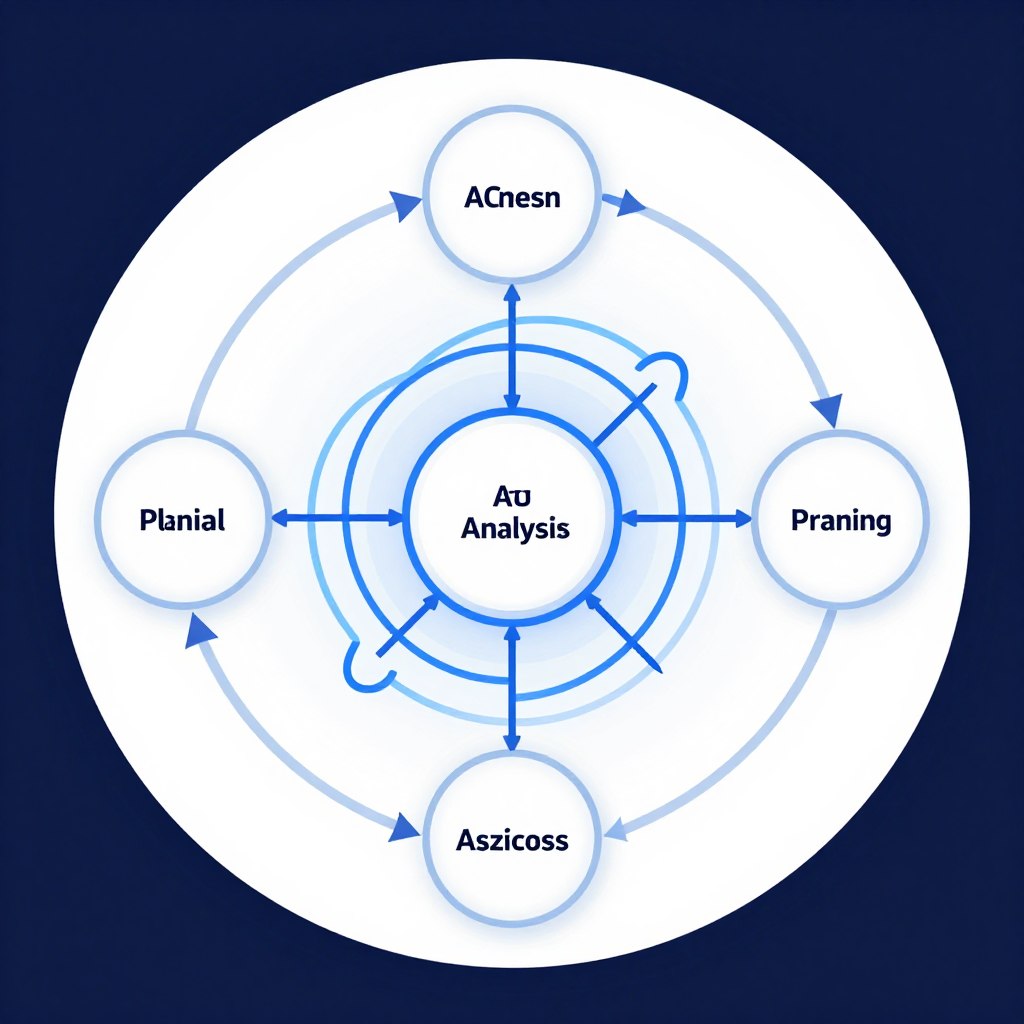
Integration Ecosystem Evolution
The tools and systems that agents can access expand continuously. New integration frameworks simplify connecting agents to enterprise software. This reduces implementation complexity significantly.
Industry-specific agent platforms emerge addressing vertical market needs. Healthcare agents understand medical terminology and compliance requirements. Financial services agents navigate regulatory frameworks automatically.
Open standards for agent communication develop across the industry. This interoperability allows agents from different vendors to collaborate. Organizations can choose best-of-breed solutions without lock-in concerns.
Traditional Chatbot Evolution
Traditional chatbots do not disappear despite AI agent advances. They evolve to incorporate selective AI capabilities while maintaining core simplicity.
Hybrid approaches combine scripted flows with limited language understanding. This provides some flexibility benefits without full AI complexity. Organizations use these enhanced chatbots for specific controlled scenarios.
Chatbot platforms add better analytics and optimization tools. Developers identify conversation bottlenecks and improve flows systematically. These improvements extend chatbot viability for appropriate use cases.
Regulatory and Ethical Developments
Governments worldwide develop frameworks governing AI deployment. These regulations affect how organizations implement agents and ensure transparency.
Requirements for AI explainability grow stronger. Organizations must demonstrate how agents reach decisions. This accountability proves challenging with complex language models but becomes mandatory.
Ethical AI practices become competitive differentiators. Companies demonstrating responsible AI usage build customer trust. Clear policies around data usage and agent behavior matter increasingly to consumers.
Key Regulatory Trends for 2026
Organizations should prepare for increased oversight in several areas. Data protection regulations tighten globally. AI systems face mandatory bias testing and fairness audits. Transparency requirements mandate clear disclosure of automated decision-making. Consumer rights to human review strengthen across jurisdictions.
User Experience Expectations
Customer expectations for conversational AI continue rising. Users demand natural interactions that feel human-like. Tolerance for robotic responses decreases as technology improves.
Personalization becomes table stakes rather than a differentiator. Customers expect systems to remember preferences and previous interactions. Generic responses frustrate users accustomed to sophisticated AI.
The bar for acceptable user experience rises consistently. Organizations must evaluate whether their current solutions meet evolving standards. Falling behind customer expectations damages brand reputation.
Discover Which Technology Aligns With Your Business Goals
Take our interactive assessment to evaluate your organization’s readiness for AI agents versus traditional chatbots. This 5-minute questionnaire analyzes your technical capabilities, use case complexity, and resource availability to provide personalized recommendations.
Making the Right Choice for Your Organization
The decision between AI agents and traditional chatbots depends on specific organizational circumstances. No universal answer fits every business situation.
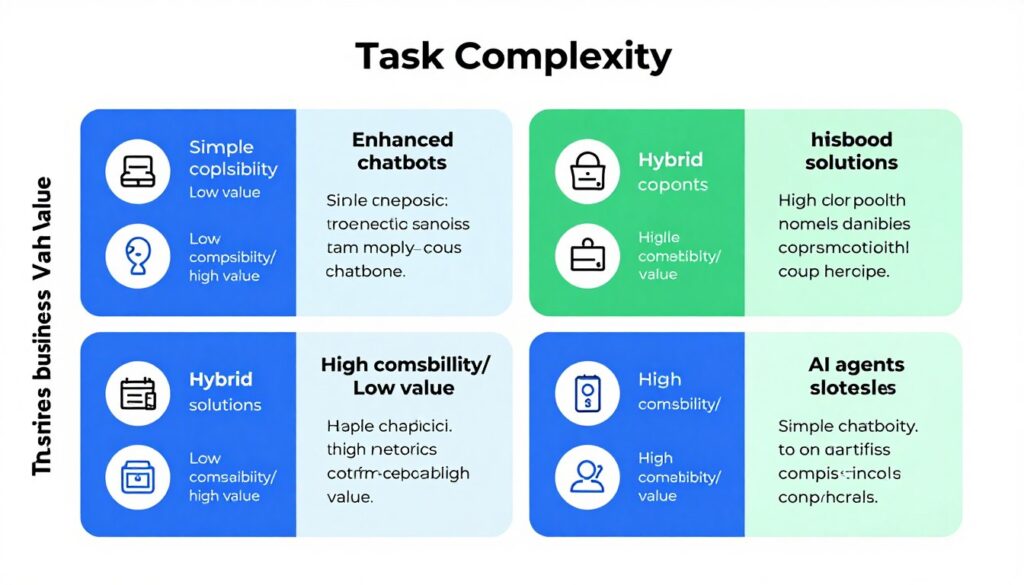
When Traditional Chatbots Make Sense
Certain business scenarios favor traditional chatbot implementations. Organizations handling primarily structured, repetitive inquiries benefit from chatbot simplicity.
Limited budgets and technical resources make chatbots attractive. They deliver automation benefits without requiring specialized AI expertise. Small and medium businesses often start with chatbots for this reason.
Highly regulated environments sometimes favor chatbots due to predictability. When organizations need complete control over every possible interaction, scripted approaches provide that certainty.
Use cases with stable, unchanging requirements suit chatbots well. When conversation patterns remain constant over time, the development investment pays long-term dividends.
When AI Agents Provide Superior Value
Complex customer interactions requiring judgment benefit tremendously from AI agents. When customers describe problems in varied ways, agents understand intent regardless of phrasing.
Organizations prioritizing customer experience should consider agents seriously. The natural, personalized interactions agents provide significantly improve satisfaction scores and loyalty metrics.
Businesses facing rapidly changing environments favor agent flexibility. As products, services, and policies evolve, agents adapt without constant reprogramming.
High-value interactions justify agent investment. When each customer conversation generates substantial revenue or prevents significant costs, agent capabilities deliver measurable ROI.
Choose Chatbots When
Your situation aligns with traditional automation needs:
- Questions follow predictable patterns
- Responses are standardized
- Budget constraints are significant
- Technical resources are limited
- Regulatory predictability is crucial
- Requirements change infrequently
Choose AI Agents When
Your needs demand sophisticated capabilities:
- Interactions are complex and varied
- Personalization drives value
- Context across conversations matters
- Autonomous decisions are acceptable
- Business needs evolve rapidly
- Customer experience is differentiating
Hybrid Implementation Strategies
Many organizations successfully deploy both technologies simultaneously. This hybrid approach leverages each technology’s strengths for appropriate use cases.
Simple inquiries route to chatbots automatically. These interactions complete quickly without consuming expensive AI resources. Customers receive instant answers to straightforward questions.
Complex scenarios escalate to AI agents seamlessly. The transition happens transparently from the customer perspective. Agents access conversation history from chatbot interactions, maintaining context.
This tiered approach optimizes cost and performance. Organizations allocate resources efficiently based on interaction complexity and business value.
Transition Planning and Change Management
Moving from chatbots to AI agents or implementing either technology requires careful planning. Organizations must consider stakeholder impacts across the business.
Customer-facing teams need training on new capabilities and limitations. They must understand when to let automation handle interactions versus intervening personally.
Internal processes often require adjustment to accommodate new automation. Workflows designed around previous systems may not fit AI capabilities optimally.
Communication strategies help customers understand and embrace new interaction methods. Clear explanations of benefits and capabilities set appropriate expectations.
Implementation Best Practices
Start with pilot programs in controlled environments before full deployment. Measure key performance indicators rigorously to validate ROI assumptions. Gather user feedback continuously and iterate based on real-world usage. Maintain human oversight especially during initial deployment phases. Document lessons learned to inform subsequent rollouts.
Future Outlook and Strategic Recommendations
The trajectory of conversational AI points toward increasingly capable and accessible systems. Organizations should prepare for rapid evolution in this space.
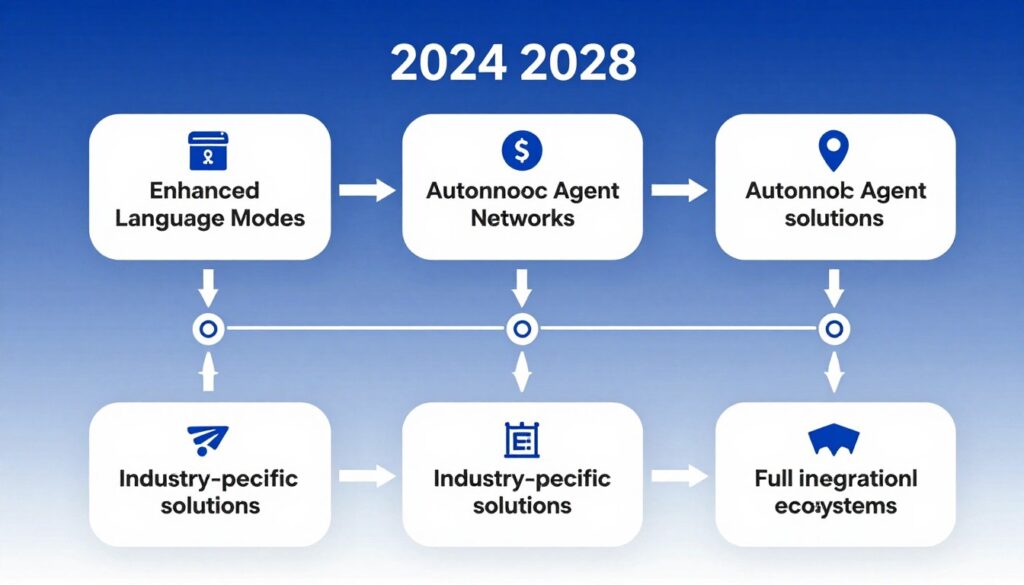
The Convergence of Technologies
The distinction between chatbots and AI agents will blur over time. Traditional chatbot platforms incorporate more AI capabilities. Simple agent platforms offer more control and predictability.
Organizations benefit from this convergence through more flexible solutions. The choice becomes less binary as middle-ground options emerge. Businesses can match automation sophistication precisely to their needs.
Technology vendors recognize this trend and adapt their offerings. Platforms increasingly support both scripted flows and AI-powered conversations within unified frameworks.
Preparing Your Organization for AI Evolution
Forward-thinking organizations build foundational capabilities now. Developing internal AI literacy across teams creates competitive advantages. Understanding AI principles helps businesses leverage new capabilities quickly.
Data infrastructure investment pays long-term dividends. Quality data feeds AI systems and enables sophisticated automation. Organizations with robust data governance and access frameworks adapt faster to new technologies.
Experimentation culture encourages innovation and learning. Companies that test new approaches and learn from failures develop expertise ahead of competitors. This experimentation should happen systematically with clear success metrics.
Skills and Capabilities to Develop
Organizations need new competencies as conversational AI advances. Prompt engineering skills help teams work effectively with language models. Understanding AI safety and ethics ensures responsible deployment.
Conversational design expertise remains valuable across both technologies. Creating effective user experiences requires understanding human conversation patterns and expectations.
Data science and analytics capabilities enable organizations to optimize AI performance. Teams must measure effectiveness, identify improvement opportunities, and implement enhancements systematically.
Competitive Implications
Conversational AI adoption creates widening gaps between leaders and laggards. Companies leveraging advanced automation deliver superior customer experiences at lower costs.
Customer expectations set by AI leaders force competitors to match capabilities. Organizations that delay adoption risk falling behind irreversibly as customers come to expect sophisticated interactions.
The competitive advantage extends beyond customer-facing applications. Internal process automation through AI agents dramatically improves operational efficiency. These efficiency gains compound over time creating significant cost advantages.
Investment Priorities for 2026 and Beyond
Organizations should allocate resources strategically across several priority areas. Foundation building deserves investment even before deploying specific solutions.
Cloud infrastructure supporting AI workloads enables future flexibility. Organizations locked into legacy systems face migration challenges and delayed benefits.
Security and privacy capabilities must scale with AI adoption. As systems handle more sensitive decisions and data, robust protection becomes non-negotiable.
Partnerships with technology vendors and consultants accelerate implementation. Organizations rarely build all necessary expertise internally. Strategic partnerships fill capability gaps efficiently.
Conclusion: Navigating Your AI Automation Journey

The choice between AI agents and traditional chatbots shapes your organization’s automation strategy significantly. This decision impacts customer experience, operational efficiency, and competitive positioning.
Traditional chatbots serve valuable purposes for structured, repetitive interactions. They provide cost-effective automation when requirements remain stable and responses follow predictable patterns. Organizations with limited technical resources often find chatbots accessible and manageable.
AI agents transform complex customer interactions through autonomous decision-making and contextual understanding. They adapt to varied situations, learn from experience, and handle multi-step tasks independently. Businesses prioritizing superior customer experience and operational flexibility benefit tremendously from agent capabilities.
The landscape continues evolving rapidly with both technologies advancing constantly. Organizations should view this decision not as permanent but as part of an ongoing automation journey. What works today may require reevaluation as capabilities expand and business needs change.
Success requires alignment between technology choices and business objectives. Understanding your specific use cases, resource constraints, and strategic priorities guides effective decision-making. No universal solution fits every organization perfectly.
The future belongs to businesses that embrace conversational AI strategically. Whether starting with chatbots or jumping directly to AI agents, taking action matters more than achieving perfection immediately. Learning through implementation builds capabilities that compound over time.
Transform Your Customer Experience With the Right AI Solution
Stop guessing which technology fits your needs. Our AI implementation specialists have helped over 200 businesses successfully deploy chatbots and AI agents. We provide comprehensive assessments, strategic planning, and hands-on implementation support tailored to your specific requirements and budget. Let’s build your competitive advantage together.
Frequently Asked Questions

What is the main difference between AI agents and chatbots?
AI agents use large language models to understand context and make autonomous decisions across multi-step tasks. Traditional chatbots follow predefined scripts and rules, responding only to programmed scenarios. Agents adapt to new situations while chatbots require manual updates for each new use case.
Are AI agents more expensive than traditional chatbots?
Initial implementation costs for AI agents typically run higher due to infrastructure requirements and specialized expertise. However, total cost of ownership often favors agents because they require minimal ongoing maintenance. Traditional chatbots demand continuous developer time for updates and new scenarios, creating hidden long-term costs.
Can AI agents replace human customer service representatives?
AI agents handle routine and moderately complex customer inquiries effectively, reducing workload on human representatives. They augment rather than completely replace human agents. Complex situations requiring empathy, creative problem-solving, or policy exceptions still benefit from human involvement. The optimal approach combines agent automation with human expertise.
How long does it take to implement AI agents versus chatbots?
Simple chatbot implementations may launch in weeks with basic functionality. AI agent deployment typically requires several months for proper setup, testing, and optimization. However, agents expand to new use cases much faster after initial deployment. The time investment balances differently based on your automation scope.
What security risks do AI agents present compared to chatbots?
AI agents introduce unique security considerations around data privacy and autonomous decision-making. Their ability to access multiple systems and process sensitive information requires robust governance frameworks. Traditional chatbots present simpler security profiles with more predictable behavior. Both technologies require appropriate safeguards based on your data sensitivity and regulatory requirements.
Should small businesses use chatbots or AI agents?
Small businesses should evaluate their specific use cases rather than company size. If customer inquiries follow predictable patterns and budgets are constrained, chatbots provide accessible automation. If customer interactions are complex and personalization drives competitive advantage, AI agents may justify the investment despite higher initial costs.






Comments are closed