
ChatGPT can help you plan software, write code, test features, and automate daily work. It cannot replace market demand, customer trust, or careful product decisions.
This guide covers five realistic products for freelancers, solo founders, and small businesses. Each idea includes the problem, audience, build path, technology choices, costs, marketing options, and key risks.
Start with a useful idea, not a flashy demo
Use the comparison and validation steps below to choose a product that solves a clear problem before you spend serious time or money.
How to choose one of these AI tools
A good idea is not simply an app that uses natural language. It connects a repeated customer problem to a clear workflow. The product should save time, reduce errors, increase access, or improve results enough that a buyer can understand its value.
Use the five-part opportunity test
- Problem frequency: Does the customer face the problem weekly or daily?
- Existing spending: Does the audience already pay for software, services, or staff time?
- Reachable market: Can you find the first users through a community, agency, local network, or social media channel?
- Simple first version: Can the product deliver one useful result without a large model or complex team?
- Safe data boundary: Can you protect the information needed to produce the result?
Do not confuse a model with a product
ChatGPT is a development and automation assistant. It can help create prompts, code, tests, support replies, database queries, and process maps. A fully independent AI model is different. It requires training data, infrastructure, evaluation, safety work, and a much larger budget.
Validate demand before building an app
Validation is the fastest way to reduce risk. You do not need a finished product. You need evidence that a defined audience has a painful problem and will consider a solution.
A practical seven-day validation flow
- Choose one narrow customer group.
- Write a problem statement in the customer’s words.
- Interview five to ten people without pitching too early.
- Ask what they do now, what it costs, and what fails.
- Create a manual version of the result.
- Offer a small paid pilot or a clearly defined trial.
- Track repeated use, objections, and requests for improvement.
Validation rule: Interest is not payment. A positive comment, email signup, or free trial can support research, but a paid pilot or repeated use is stronger evidence.
ChatGPT prompt for customer research
“Act as a product researcher. I want to serve [specific audience] with a tool that helps them [specific job]. Create ten neutral interview questions. Avoid leading questions. Include questions about current workflow, time cost, software cost, errors, privacy concerns, and what would make them switch.”
Turn an idea into a one-page test
Write down the audience, painful job, current workaround, first result, cost limit, and success measure before choosing your app stack.

Tool 1: Niche content assistant
A niche content assistant helps one audience create useful, consistent content. It should not be a generic text generator. The strongest version understands a particular brand voice, audience, format, and approval process.
What it does
The app can turn a brief into article outlines, social media posts, email drafts, product descriptions, or repurposed content. A real estate team might use it for listing summaries and local market explainers. A healthcare marketing agency may need stricter review and approved language.
Target audience and problem
Potential buyers include small agencies, consultants, local companies, coaches, and online stores. Their problem is not a lack of words. It is the time needed to create on-brand drafts and move them through approval.
Build path with ChatGPT
- Collect examples of approved content and brand rules.
- Ask ChatGPT to turn those rules into a structured prompt.
- Create a form for audience, topic, format, claim limits, and call to action.
- Send the form data to a language model through a secure server.
- Display the draft with citations, warnings, and an edit history.
- Add human approval before automatic publishing.
Example development prompt
“Design a small content assistant for independent real estate agencies. Define the user flow, data fields, system prompt, error states, approval steps, and tests for unsupported property claims. Keep the first version limited to listing summaries and social media drafts.”
Features, stack, and monetization
- Brief intake form and saved brand profile
- Output templates for each content channel
- Revision, approval, and export controls
- Usage limits and team permissions
- A web interface, server-side API calls, and a hosted database
- Subscription tiers, agency plans, or a managed service
A small MVP may cost about $50 to $300 per month in software, hosting, model usage, and email tools. This is an estimate, not a quote. Costs rise with longer documents, more users, and image or voice features.
Marketing and limitations
Market through niche communities, partnerships with agencies, useful social media examples, and direct outreach to businesses with visible content gaps. Show before-and-after workflow improvements rather than claiming guaranteed revenue.
The main risks are inaccurate claims, repetitive writing, copyright concerns, and brand damage. Add source review, approval gates, clear terms, and a policy against confidential input.
Build a focused content workflow
A niche assistant works best when it serves one format and one customer group first.

Tool 2: Customer-support chatbot
A customer-support chatbot answers common questions and routes complex cases to a person. It is most useful when a company has repeated questions about booking, shipping, account access, pricing, or basic troubleshooting.
Target audience and problem
Small software companies, online stores, clinics, property managers, and service businesses may benefit. Their support team loses time answering the same questions. Customers may also leave when answers are slow or hard to find.
Build path with ChatGPT
Start with a controlled knowledge base. Collect help articles, service rules, hours, escalation contacts, and prohibited answers. Use retrieval to provide relevant passages to the model. The chatbot should answer from approved material and say when it does not know.
Example system prompt
“You are a support assistant for [company]. Answer only from the approved knowledge base. If the answer is missing, say that you cannot confirm it and offer a human handoff. Never request passwords, full payment details, or sensitive personal data. For urgent cases, follow the escalation rule.”
Recommended features and technology
- Website chat and optional social media channel
- Source-linked answers and confidence warnings
- Human handoff with conversation history
- Admin panel for document updates
- Conversation logs with retention controls
- Rate limits, abuse protection, and service monitoring
A basic product may use a web front end, server-side application, vector search, a hosted database, and a model API. Early operating costs may range from $75 to $500 per month, depending on traffic and document volume.
Monetization and risks
Possible models include a monthly subscription, setup fee plus support plan, or agency service. Price based on conversation volume, channels, integrations, and human review needs.
Do not position the chatbot as a replacement for staff in high-risk settings. Incorrect answers, prompt injection, data leakage, and poor escalation can harm trust. Test refusal behavior and review logs before launch.
Strengths
- Clear business pain
- Recurring usage
- Easy value demonstration
Limitations
- Needs current source material
- Requires careful privacy controls
- Human escalation remains necessary
Tool 3: Document-analysis assistant
A document-analysis tool helps users find, compare, summarize, or classify information in files. It can serve accountants, property managers, procurement teams, recruiters, researchers, or small legal operations, but sensitive use cases need extra controls.
Problem and audience
Many teams spend hours searching contracts, invoices, policies, proposals, or reports. A focused product can extract dates, obligations, costs, missing fields, or action items without asking the customer to learn a complex enterprise system.
Minimum viable product
- Accept one or two supported file types.
- Extract text with a reliable parser or optical character recognition.
- Split content into sections and preserve page references.
- Ask the model for structured fields rather than free-form guesses.
- Show the source passage beside every important result.
- Allow a reviewer to correct and export the output.
Example extraction prompt
“Extract the renewal date, notice period, payment amount, responsible party, and service scope from this document. Return valid JSON. If a field is absent, return null. Include the page number and exact supporting passage for every non-null field. Do not infer legal meaning.”
Features, stack, and revenue
Useful features include file upload limits, workspace access, source citations, templates, redaction, export, audit records, and deletion controls. The stack may include a secure file store, text extraction service, model API, database, and role-based access.
Monetization can include per-document pricing, a team subscription, or a managed review service. Estimated early costs may range from $100 to $700 per month. The number depends on file size, OCR use, storage, and model requests.
Compliance and risk
Tell users what data is stored, where it is processed, how long it remains available, and how deletion works. Use encryption in transit and at rest. Limit staff access. Do not train a model on customer files without clear permission.
For regulated work, obtain qualified legal and security advice. A document assistant should support professional review, not present itself as a lawyer, financial adviser, or medical decision-maker.
Make document review traceable
If your product cannot show the source passage behind a key result, the MVP is not ready for trust-sensitive work.
Tool 4: Workflow automation service
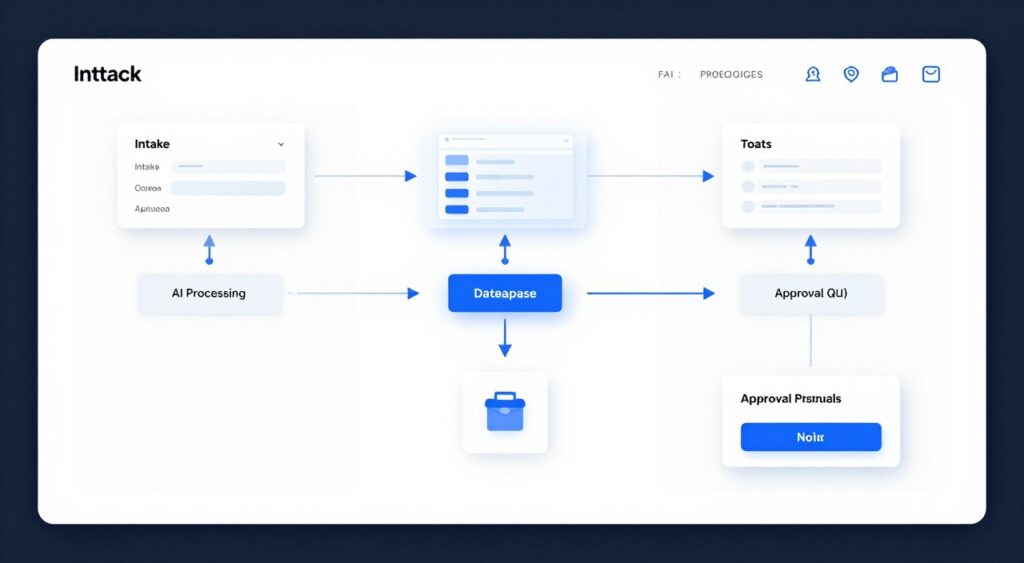
A workflow automation service connects the tools a company already uses. It can move form data into a database, create a draft reply, summarize a meeting, update a project record, or alert a team member when a condition is met.
Who needs it
Small companies often have disconnected software and manual copy-and-paste work. Good customers include agencies, recruiters, home-service businesses, online stores, and professional services teams.
Build the first workflow
- Map the current process from trigger to result.
- Find the slowest repeated step.
- Define the data needed and the action allowed.
- Add a human approval point for risky output.
- Log every action and failed connection.
- Test unusual inputs before enabling automation.
Example planning prompt
“Map a workflow for a small recruiting agency. When a candidate form arrives, validate required fields, create a record, draft a neutral summary, flag missing consent, and send the draft to a recruiter for approval. List failure states, privacy risks, and tests.”
Technology, pricing, and marketing
You can combine a web form, automation platform, database, model API, and secure server functions. ChatGPT can help write connectors, test payloads, explain errors, and create documentation. Start with one integration path rather than promising to connect everything.
Revenue may come from setup fees, monthly monitoring, per-workflow plans, or a service package. Market through process audits, industry-specific examples, local business networks, and partnerships with consultants.
Key risks include duplicate actions, permission errors, broken integrations, hidden costs, and poor customer understanding. Add retry rules, approval steps, activity logs, and a manual pause switch.
Tool 5: Personalized education assistant
A personalized education tool adapts practice, explanations, or feedback to a learner’s level. It can focus on language learning, workplace skills, test preparation, or internal company training.
Audience and problem
Potential users include adult learners, tutors, training teams, schools, and professional communities. The product should address a narrow learning goal, such as practicing customer-support English or preparing for a specific certification topic.
Build path
- Define the learning objective and permitted content.
- Create a short diagnostic assessment.
- Generate practice tasks at several difficulty levels.
- Provide feedback tied to a rubric.
- Track progress without collecting unnecessary data.
- Give educators control over content and review.
Example tutor prompt
“Act as a patient workplace English tutor. The learner works in hotel reception and is at an intermediate level. Create one role-play about a booking change, ask one question at a time, correct only the most important error, explain the correction in plain language, and end with a short practice task.”
Features and business model
- Diagnostic quiz and learner profile
- Practice sessions with controlled difficulty
- Feedback rubric and progress history
- Teacher or manager dashboard
- Content approval and age-appropriate settings
- Subscription, school license, or tutor service
A small product may cost $50 to $400 per month during early testing. Estimate model usage, hosting, analytics, support, and content review separately. Do not use income forecasts as proof of demand.
Limits and safety
AI feedback can be wrong, biased, or confusing. It may also encourage learners to rely on instant answers. Include explanations, source material, educator review, and a way to report harmful or incorrect content.
Test one learning outcome
Choose one learner, one skill, and one measurable result. A narrow education assistant is easier to improve than a general tutor for everyone.
How to build with ChatGPT when you have limited coding experience
ChatGPT can shorten the path from idea to working prototype, but it works best when you provide small, testable tasks. Ask for one component at a time. Review every generated answer and run tests before using code with customer data.
A beginner-friendly build sequence
- Describe the user, problem, result, and constraints.
- Ask for a simple architecture and a list of unknowns.
- Choose a narrow user flow for the MVP.
- Generate the data model and sample records.
- Build the interface with placeholder data.
- Connect the server to the model API.
- Add authentication, logging, limits, and error states.
- Test normal, unclear, malicious, and empty inputs.
- Ask three to five users to complete a real task.
- Fix the largest failure before adding features.
Prompt for a technical plan
“Act as a senior product engineer. I am a beginner building [product] for [audience]. The MVP must support [three actions]. It must not support [out-of-scope actions]. Recommend a simple stack, folder structure, database tables, API flow, security controls, tests, and launch checklist. Explain each choice in plain English.”
Do not skip the human layer
AI-generated code can contain security flaws, outdated methods, and hidden assumptions. Use version control, dependency updates, secret management, access controls, and code review. If you cannot review a sensitive system, hire someone who can.
Startup and operating costs to plan for
Costs vary by usage, security needs, integrations, and support. Treat the figures below as planning estimates. Test with a small budget and measure cost per useful customer result.
| Cost area | Early MVP estimate | What changes the cost |
| Domain and email | $10–$60 per year, plus email fees | Provider, inbox count, and deliverability tools |
| Hosting and database | $20–$200 per month | Traffic, storage, backups, and uptime needs |
| Model usage | $20–$500 per month | Input length, output length, model choice, and volume |
| Design and development help | From a few hundred dollars upward | Scope, integrations, security, and specialist skills |
| Marketing and support | $0–$1,000 per month | Distribution channel, paid ads, and service level |
Keep a cost-per-task dashboard. If one customer request uses too many tokens, shorten context, cache repeated information, use structured outputs, or change the workflow. Never cut privacy or safety controls simply to lower the bill.
Marketing strategies that fit small AI products
Distribution is often harder than development. Choose a channel where your audience already discusses the problem. A narrow product can compete through relevance, support, and trust rather than a large advertising budget.
Expert content
Publish practical examples, workflow breakdowns, prompt guides, and failure cases. Use social media to show the problem and link to a deeper guide.
- Teach one useful task
- Show realistic limits
- Invite feedback
Direct discovery
Speak with businesses that already perform the workflow. Ask for permission before sending a pilot offer. Personalize the message around a known problem.
- Target one category
- Offer a small test
- Measure a real result
Partners and agencies
Agencies, consultants, tutors, and software providers may already have access to your target market. Offer a clear service boundary and referral terms.
- Define the handoff
- Protect customer data
- Document support duties
CTA design for this article
The best CTA here is not “make money now.” It is an invitation to complete a useful next step. Use a validation worksheet for cold readers, a build-plan prompt for warm readers, and a request form for companies that need implementation help.

Protect user data and comply with relevant rules
Privacy is part of the product, not a page added at the end. Collect only what the feature needs. Explain the purpose, retention period, processors, deletion process, and support contact in clear language.
Minimum protection checklist
- Use HTTPS and secure secret storage
- Limit employee and contractor access
- Separate test data from live customer data
- Offer deletion and correction paths
- Set retention periods and automatic deletion
- Log important access and administrative actions
- Review vendor terms and data processing settings
- Test prompt injection and malicious uploads
Regulatory questions
Requirements vary by location, audience, and data type. Consider privacy laws, consumer protection rules, accessibility duties, copyright, advertising rules, and sector-specific requirements. If the product serves children, health, finance, education, employment, or legal work, obtain specialist advice before launch.
Never claim that an AI system is accurate, private, compliant, or unbiased without evidence. Explain the role of human review. Give users a way to challenge an output and report a problem.

Improve the product through customer feedback
Early feedback should focus on completed tasks, not feature wish lists. Watch where users stop, what they correct, and which outputs they copy into their real workflow.
Useful feedback questions
- What were you trying to finish?
- What did you expect the tool to do?
- Where did the result fail or slow you down?
- What did you do before using the product?
- Would you use it again next week?
- What data would you never enter?
- What result would justify paying?
Metrics that matter
Track activation, time to first useful result, repeat usage, correction rate, successful handoffs, support requests, churn, and cost per task. Revenue matters, but it should be read with retention and delivery cost.
Do not optimize for raw usage alone. A customer may generate many outputs because the tool is confusing. Measure whether the product helps finish a valuable job.
Invite feedback before adding features
Ask a small group to complete the same task twice. Compare the first experience with the second and fix the largest repeated obstacle.
Comparison of the five AI tools
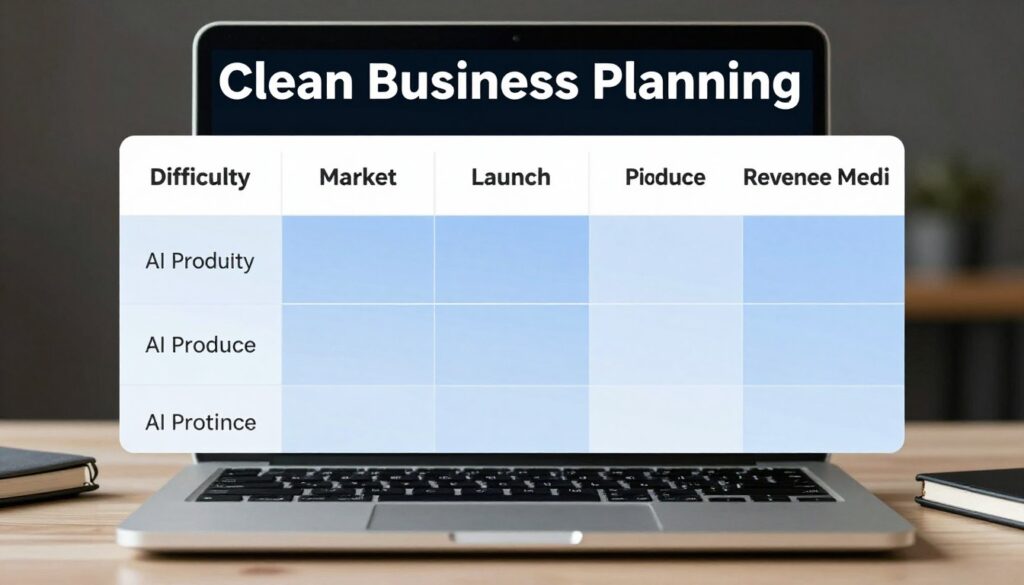
The ranking below is a planning guide, not a promise of earnings. Earning potential depends on customer value, distribution, pricing, retention, competition, and execution.
| Tool | Difficulty | Earning potential | Target market | Time to launch | Best first offer |
| Niche content assistant | Low to medium | Medium | Agencies and small companies | 2–6 weeks | Paid pilot or managed service |
| Customer-support chatbot | Medium | Medium to high | Service businesses and software companies | 3–8 weeks | Support audit and setup |
| Document-analysis assistant | Medium to high | High in focused niches | Operations and professional teams | 4–10 weeks | Limited document pilot |
| Workflow automation service | Medium | Medium to high | Small businesses and agencies | 2–8 weeks | Workflow mapping session |
| Personalized education assistant | Medium | Medium | Learners, tutors, and training teams | 3–8 weeks | Small learning pilot |
Which idea should you choose?
Choose the content assistant if you understand a niche and can reach agencies or creators. Choose the chatbot if a company has repeated support questions and approved information. Choose document analysis if you can handle privacy and source accuracy. Choose workflow automation if you know a process with obvious manual steps. Choose personalized education if you understand a specific learning outcome.
Frequently asked questions about building AI tools with ChatGPT
Can a beginner build an AI app with ChatGPT?
Yes, a beginner can create a narrow prototype with low-code tools and ChatGPT’s help. You still need to learn basic product design, data handling, testing, and deployment. Sensitive products need experienced review.
Does ChatGPT create a fully independent AI model?
No. ChatGPT can help you build an application that calls a model through an API or uses an existing service. Training an independent model is a different project with major data, infrastructure, and evaluation requirements.
How much money does it cost to launch?
A small test can begin with modest monthly software and model costs. The total depends on traffic, storage, integrations, security, support, and development help. Treat every figure as an estimate and measure real usage.
Which AI tool has the highest earning potential?
No category guarantees profit. Tools connected to expensive workflows may support higher prices, but they also require stronger accuracy, privacy, support, and distribution. Validate the customer and problem before judging the category.
Should I sell software or a service first?
A service can help you learn the workflow and collect payment before investing in a polished app. Once the process is repeated and understood, you can turn stable steps into software.
Build the smallest useful product
The best AI tools you can build using ChatGPT to make profit in 2026 will not win because they use the newest model. They will win by solving a narrow problem for a reachable audience with dependable results.
Start with interviews, a manual pilot, and one measurable outcome. Use ChatGPT to speed up planning, coding, prompts, tests, and documentation. Protect user data, disclose limitations, keep human review where it matters, and improve the product from real customer feedback.
Choose one problem and test it this week
Write the audience, problem, current workaround, first result, cost limit, and success measure. That short brief is a stronger beginning than a large feature list.