

The artificial intelligence landscape continues to evolve at a breathtaking pace. Each week brings groundbreaking developments that reshape industries and push the boundaries of what’s possible. Staying informed about these rapid changes is crucial for professionals, enthusiasts, and anyone interested in how AI is transforming our world. This week has been particularly eventful, with historic milestones and innovative releases that signal significant shifts in the AI ecosystem.
1. NVIDIA Becomes First Company to Hit $5 Trillion Valuation
In a historic milestone for the technology sector, NVIDIA has become the first company ever to reach a $5 trillion market valuation. This unprecedented achievement, recorded on November 1, 2025, underscores the critical role of AI hardware in the ongoing technological revolution.
The valuation surge comes amid relentless demand for NVIDIA’s advanced AI chips, particularly the Blackwell series that powers the most sophisticated AI models currently in development. This milestone wasn’t reached in isolation – it coincides with new large-scale investments in AI infrastructure globally and significant partnerships with major cloud providers.
“NVIDIA’s achievement isn’t just about stock price – it represents market consensus that computational power is the foundation of the entire AI ecosystem,” noted industry analyst Maria Chen.
The implications extend far beyond NVIDIA’s balance sheet. This valuation signals that the market views AI hardware as the most critical component of the current technology boom, positioning NVIDIA at the center of the entire AI ecosystem. For investors and industry watchers, it confirms that the computational demands of next-generation AI models represent both a challenge and an enormous opportunity.
2. OpenAI Launches ‘Aardvark’: Agentic Security Researcher
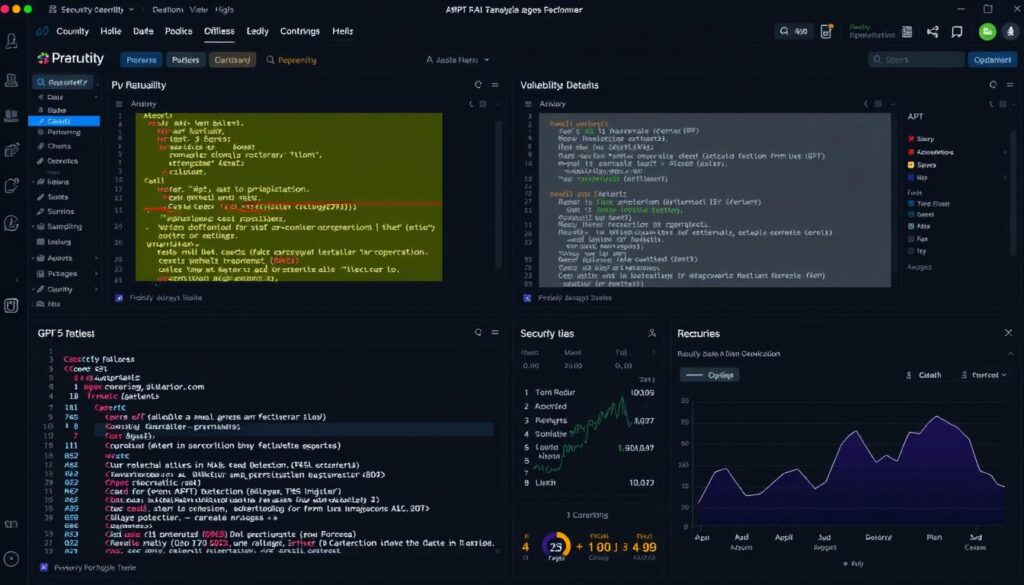
On October 30, OpenAI unveiled ‘Aardvark,’ a groundbreaking GPT-5–powered agentic security researcher now available in private beta. This specialized AI system represents a significant advancement in autonomous security tools, capable of identifying vulnerabilities in software with remarkable accuracy.
According to OpenAI, Aardvark has been benchmarked at approximately 92% recall on seeded “golden” repositories, meaning it can identify the vast majority of intentionally placed security flaws. More impressively, the system has already been credited with 10 CVE-tracked disclosures – officially recognized security vulnerabilities discovered by the AI.
Key Capabilities of Aardvark:
- Autonomous scanning of codebases for security vulnerabilities
- Natural language explanations of discovered issues
- Suggested remediation steps for each vulnerability
- Integration with existing security workflows
- Continuous learning from new vulnerability patterns
This development marks a significant step in using AI for complex, real-world cybersecurity applications. An AI that can proactively find and help fix security flaws at machine speed could fundamentally alter the landscape of digital defense, potentially creating a new dynamic between AI-powered attackers and defenders.

3. Universal Music Group and Stability AI Partner to Develop AI Music Tools
In a significant shift for the music industry, Universal Music Group (UMG) and Stability AI announced a major partnership on October 30 to create licensed, ethical AI music tools. This collaboration comes following UMG’s recent settlement with Udio, another AI music generation platform, and signals a new approach to AI in the creative industries.
The partnership aims to develop AI music generation tools trained on UMG’s vast, fully-licensed catalog while establishing new standards for artist rights and data integrity. Rather than fighting against AI music generation, UMG is now actively participating in shaping how this technology develops.
Benefits for Artists
- Fair compensation for use of their work in AI training
- Protection of artistic identity and style
- New creative tools for music production
- Potential new revenue streams from AI-assisted content
Benefits for Consumers
- Ethically created AI music tools
- Higher quality AI-generated music
- Clear licensing and rights information
- Reduced legal concerns when using AI music tools
This partnership marks a pivotal shift from the previously adversarial relationship between the music industry and AI developers. Instead of focusing solely on lawsuits over copyright, a major industry player is now co-developing AI tools. This could establish a new standard for ethical AI training data and create innovative revenue streams for artists in the AI era.

4. California Enacts Sweeping AI Safety and Child Protection Laws
On October 31, California Governor Gavin Newsom signed a landmark package of AI bills that establish some of the most comprehensive AI regulations in the United States. The legislation focuses heavily on safety protocols, transparency requirements, and protections for vulnerable users, particularly children.
Two key pieces of legislation stand out in this regulatory package:
| Bill | Name | Key Provisions | Impact |
| SB 53 | Transparency in Frontier AI Act | Mandates safety protocols and risk reporting for major AI developers; requires documentation of training data and potential harms | Creates accountability for AI companies developing advanced models; establishes transparency standards |
| SB 243 | AI Child Safety Act | Requires AI chatbots to identify and support users expressing suicidal thoughts; prevents minors from accessing explicit content; mandates age verification | Protects vulnerable users, especially children; establishes duty of care for AI developers |
As the home of Silicon Valley, California’s regulations often set a de-facto national standard for technology governance. This legislative push represents one of the most assertive moves by a U.S. state to regulate AI, focusing heavily on consumer safety, mental health, and child protection.
Industry experts anticipate these California regulations will likely influence federal policy and developer practices worldwide, potentially establishing a template for AI governance in other jurisdictions.

5. Researchers Unveil AI That Computes at the Speed of Light
On October 28, researchers from Tsinghua University published a groundbreaking paper detailing a new optical processor called the “Optical Feature Extraction Engine” (OFE2). This revolutionary chip processes data using light (photons) instead of electricity, allowing it to perform AI computations at 12.5 GHz—orders of magnitude faster and more energy-efficiently than current electronic chips.

The energy consumption and processing speed of current AI systems represent major bottlenecks in advancing artificial intelligence. Traditional electronic processors generate significant heat and consume substantial power when running complex AI models. Photonic computing, as demonstrated by this breakthrough, offers a potential path past these limitations.
Advantages of Optical AI Processing
- Dramatically faster computation speeds (12.5 GHz)
- Significantly reduced energy consumption
- Lower heat generation
- Potential for parallel processing at unprecedented scale
- Reduced environmental impact from AI operations
Current Limitations
- Early-stage technology not yet ready for mass production
- Integration challenges with existing systems
- Higher initial manufacturing costs
- Limited to specific types of AI operations
- Requires specialized expertise to implement
This breakthrough could lead to dramatically faster, more powerful, and more sustainable AI systems in the future. If successfully commercialized, optical AI processors could enable entirely new applications that are currently impractical due to computational limitations.

Honorable Mention: AI in Healthcare Ethics Debate
A widely-discussed session at the Association of American Medical Colleges (AAMC) Annual Meeting on November 2 sparked significant debate about the role of AI in healthcare. The panel warned that the accelerating use of AI for administrative tasks threatens to weaken the crucial doctor-patient relationship, potentially undermining the human elements of care.
Healthcare professionals expressed concerns that while AI offers tremendous efficiency benefits, it could also distance providers from patients if implemented without careful consideration of relationship dynamics. This conversation highlights the ongoing tension between technological advancement and maintaining human connection in sensitive fields like healthcare.

The Broader Impact: What This Week’s News Tells Us
This week’s top AI developments reveal several important trends shaping the future of artificial intelligence:
Infrastructure Investment
NVIDIA’s historic valuation demonstrates the massive capital flowing into AI infrastructure. The computational foundation of AI continues to attract unprecedented investment, signaling confidence in AI’s long-term growth.
Practical Applications
Tools like OpenAI’s Aardvark show AI moving beyond research into specialized, high-value applications. We’re seeing AI systems designed for specific complex tasks rather than just general capabilities.
Industry Adaptation
The UMG-Stability AI partnership illustrates how traditional industries are finding ways to collaborate with AI developers rather than resist change, potentially creating new business models.
Together, these developments suggest we’re entering a new phase of AI integration where the technology is becoming more specialized, regulated, and embedded in existing industries. The focus is shifting from general capabilities to specific applications that deliver clear value.

Looking Ahead: What to Watch For
As we move forward, several key developments are worth monitoring. The regulatory landscape continues to evolve, with California’s new laws potentially setting precedents for other regions. The race for more efficient AI computing solutions is accelerating, with optical processing representing just one promising approach. And industries from music to healthcare are actively negotiating their relationships with AI technology.
The pace of innovation shows no signs of slowing, making it more important than ever to stay informed about the latest developments. Each week brings new breakthroughs that collectively shape how AI will impact our work, creativity, and daily lives.
Frequently Asked Questions
How is NVIDIA’s trillion valuation significant for the AI industry?
NVIDIA’s historic valuation represents market recognition that AI hardware is the foundation of the entire AI ecosystem. It signals that computational power is viewed as the most critical resource for advancing AI capabilities, and indicates strong investor confidence in continued AI growth and adoption across industries.
What makes OpenAI’s Aardvark different from other security tools?
Aardvark represents a new generation of agentic AI security tools that can autonomously hunt for vulnerabilities in software. Unlike traditional security scanners, it leverages GPT-5’s advanced reasoning capabilities to understand code context, identify complex vulnerabilities, and provide natural language explanations with remediation steps. Its 92% recall rate on test repositories demonstrates significantly higher accuracy than most conventional tools.
Why is the Universal Music Group partnership with Stability AI significant?
This partnership marks a pivotal shift from the previously adversarial relationship between the music industry and AI developers. Instead of focusing solely on copyright lawsuits, a major music label is now actively participating in developing AI music tools. This collaboration could establish new standards for ethical AI training, fair compensation for artists, and create innovative revenue streams in the creative industries.
How might optical AI processors change the future of computing?
Optical processors like Tsinghua University’s OFE2 could overcome fundamental limitations of electronic computing by using light instead of electricity. This approach offers dramatically faster processing speeds (12.5 GHz), significantly lower energy consumption, and reduced heat generation. If successfully commercialized, optical AI could enable entirely new applications currently impossible due to computational constraints, while also reducing the environmental impact of AI operations.